
Marcus Lillard acquitted in strangulation death of University of Georgia professor
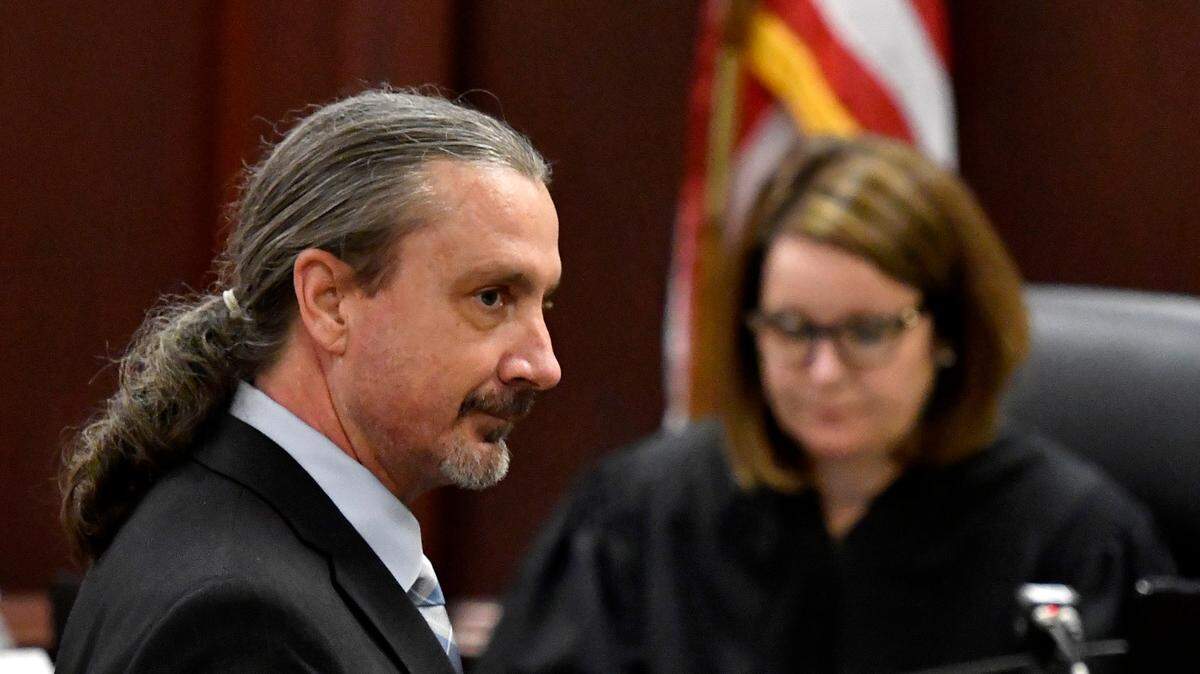
The boyfriend of beloved University of Georgia entomology professor Marianne C. Shockley was acquitted Friday in her 2019 strangulation death at a friend’s house east of Milledgeville.
After hearing four days of testimony, a jury of four women and eight men deliberated for about 35 minutes before returning its verdict.
Marcus Allen Lillard, 44, was found not guilty of felony murder, aggravated assault, involuntary manslaughter and reckless conduct. He was, however, sentenced by Judge Alison T. Burleson to serve an eight-year term for violating his probation on a drug charge. How long he may be incarcerated was not immediately clear.
Shockley, 43, and Lillard first met decades earlier while both were students at Georgia College. That school’s campus lies across the street from the Baldwin County Courthouse where this week four days of at-times-bizarre and lurid testimony in Shockley’s death was heard by jurors.
Shockley and Lillard and reconnected a year or so before her death late on the night of May 11, 2019, the Saturday before Mother’s Day. Shockley had planned to travel to Ecuador three days later, with Lillard tagging along as part of a study-abroad program that Shockley, a noted entomology professor, had organized for some of her students.
She traveled to Milledgeville that May 11 to hang out with Lillard, who most recently had worked in the finance department of a Kia dealership in Albany. They visited his father’s home and went to some local eateries in downtown Milledgeville before dropping by the home of Clark Heindel, just east of town across the Oconee River. The three spent the evening listening to music, drinking and doing drugs, including ecstasy.
Late that night, sometime in the 11 o’clock hour, female acquaintances of Lillard’s, including a pair of respiratory therapists, began receiving calls and text messages from him. He was, they testified, seeking advice on how to revive an unconscious person. One told him to call 911, but prosecutors said evidence showed that 911 wasn’t alerted until about 1 a.m. on May 12.
Lillard later told the police that he had found Shockley unconscious in Heindel’s hot tub after he had wandered into some nearby woods in search of firewood. He was placed in a sheriff’s patrol car. Before Heindel could be detained, Heindel went into his house, wrote a suicide note that said he hadn’t known what happened to Shockley and then committed suicide with a shotgun blast to the head.
At trial this week, Lillard did not testify. His lawyer pointed a finger at Heindel and suggested that it was he who killed Shockley.
It was the prosecution’s contention that Lillard and Shockley were in Heindel’s hot tub alone and that while they were having sex, Lillard, who past lovers testified he had choked them during intercourse, strangled Shockley.
During his closing statement, defense attorney Matthew A. Tucker said Heindel had drugged Shockley and Lillard the night Shockley died. Tucker attributed Lillard’s intoxication as part of the reason he may not have called 911 in a timely manner.
Tucker said the fact that Shockley’s sister had testified earlier in the week and referred to Lillard as “a loser,” that “being a loser doesn’t make you a killer.”
There was, Tucker said, “no evidence” that showed Lillard as having strangled Shockley. He implored jurors not to draw conclusions from “evidence that wasn’t there.”
The case was rife with questions, uncertainties and unknowns.
“No evidence was put up ever that (Shockley) put his hands on Marianne,” Tucker told the jury. “The state has not proven that Marcus put his hands around her (neck) and strangled her. ... They didn’t prove their burden.”
Assistant Baldwin District Attorney Nancy Scott Malcor began her closing argument with Shockley’s own words, words from a letter Shockley had written to herself at some point since she began seeing Lillard. The letter, found by relatives in her bedroom in the wake of her death, was about Shockley’s failed relationships with men and how she sometimes dated men she should not.
“And still I go,” Malcor began, quoting Shockley’s journal-like note. “I know he isn’t right for me.”
Said Malcor: “The victim’s private words ... tragically prophetic.”
Across the courtroom at the defense table, the ponytailed Lillard sat reading a small copy of the New Testament.
Malcor pointed out inconsistent narratives that Lillard had shared with investigators, with his own family and with friends after he was jailed. He has been locked up since the night of Shockley’s death.
Malcor said that at first Lillard told the GBI that Heindel couldn’t have been the culprit, but upon learning that Heindel had killed himself Lillard promptly suggested Heindel may have killed Shockley. More recently in recorded phone call from jail, Lillard was heard saying that after he saw a report of Shockley’s cause of death that she must have choked on her own vomit in the hot tub, that Heindel wasn’t the killer after all.
“The liar in this courtroom is the defendant. ... That’s all he’s done,” Malcor said.
She later told the jury, “The defendant is guilty. Tell him you know it. Tell (Shockley’s) family you know it and return a verdict of guilty.”