
Thursday updates from the trial of UGA professor Marianne Shockley’s alleged killer
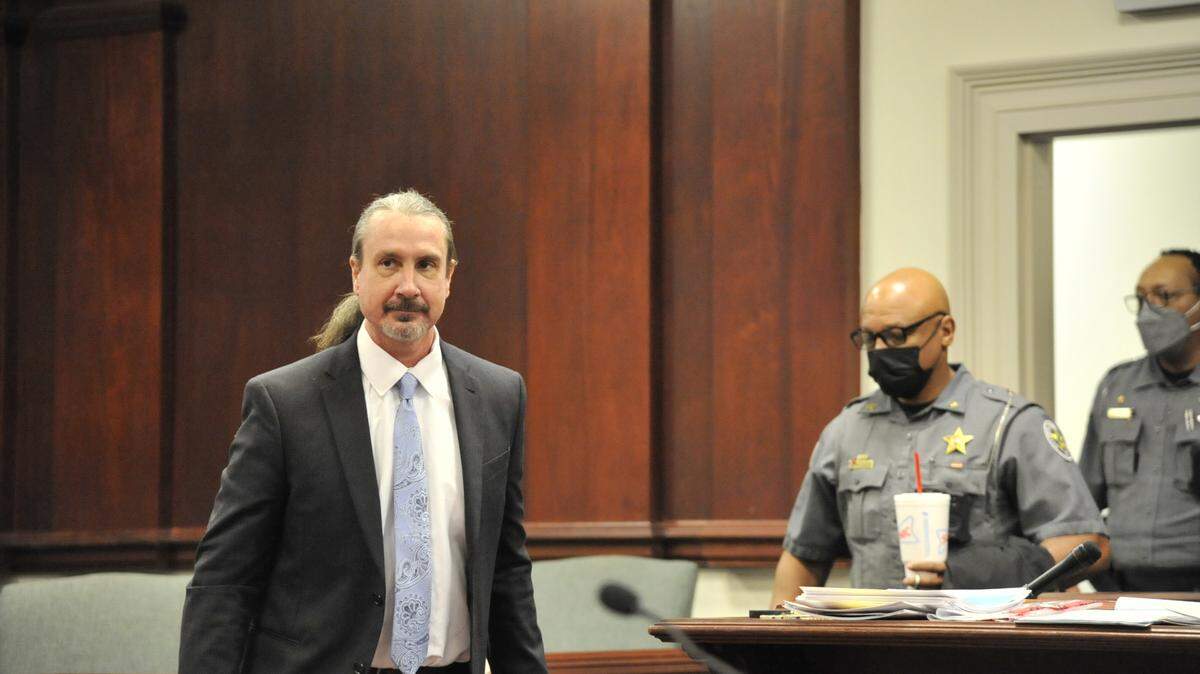
The third day of testimony was underway here in Baldwin County Superior Court in the murder trial of Marcus Allen Lillard. Lillard, 44, is accused of felony murder, aggravated assault, involuntary manslaughter and reckless conduct in the 2019 death of his sometimes-girlfriend, University of Georgia entomology professor Marianne C. Shockley. Testimony in the trial began Tuesday and continued Wednesday.
The following chronology will be updated throughout the day Thursday:
9 a.m. update: Lawyers from both sides conferred with Judge Alison T. Burleson. Jurors had yet to enter the courtroom for the morning session.
10 a.m. update: The day’s first witness was former GBI agent Niki Simmons, who said she spoke to a longtime acquaintance of Marcus Lillard’s in June 2019, a month after Marianne Shockley’s death. The friend, Johnny “Bud” Mitchell, took the stand on Wednesday and said he had in the past talked to Lillard about Lillard’s alleged propensity for choking women during sex. The issue is crucial in the case because Shockley died of manual strangulation. But on the stand Wednesday, Mitchell was at times hazy in his recollection of what he and Lillard had discussed. . . . Simmons’ testimony was used to clarify Mitchell’s June 2019 statement to the GBI. Simmons said she interviewed Mitchell back then while he was incarcerated at the Baldwin County jail in an unrelated matter. Simmons said Mitchell told her that he and Lillard had been friends for 20 years or so. They had been co-workers at a midstate auto dealership. Simmons said she asked Mitchell whether he had past knowledge of Lillard choking women and that Mitchell said he did. “Marcus was wanting to ‘screw and choke the women that he was involved with,’” Simmons said of what Mitchell told her. “Mitchell told (Lillard) he ‘was gonna kill one of those (women).’ ... (Mitchell) told him, ‘You better be careful.’”
11:30 a.m. update: Two women, past sexual partners of Clark Heindel’s, testified and said Heindel had not choked them and was never violent with them. Prosecutors called the women to the witness stand to further buttress their contention that Heindel, whose poolside was the place Shockley was found dead, was not responsible for strangling her. . . . One of the women said Heindel was “very introspective” and was known to “pace” at times when he was upset. Her testimony seemed to be an effort from prosecutors to portray Heindel as appearing calm or quiet during times of distress, much the way he seemed in police body-camera footage the night of Shockley’s death. Heindel and Lillard were good friends and at times partied at Heindel’s home on the east side of Milledgeville. They were there with Shockley the night of her death, investigators have said. . . . Lillard’s 23-year-old son also took the stand and told how Heindel, a former family therapist, had helped him through some difficult times as a teenager. The son said Heindel was “kind and gentle” as a person.
12:15 p.m. update: More to follow shortly on surprising developments in the past hour.
1:15 p.m. update: A woman whose husband was friends with Lillard testified that her husband received a letter from Lillard, who was in jail awaiting trial in Shockley’s death, last October. In the letter, Lillard wrote how he felt he was “close to the end of this debacle or disaster or redemption or whatever you want to call it.” . . . Prosecutor Nancy Scott Malcor asked the woman to read the letter aloud for the jury to hear. A lengthy portion of it described, in Lillard’s words, what happened after he and Shockley arrived at Clark Heindel’s place the night she died. Though some of the writing was illegible to the woman, the following italicized passage is an account of her reading of the letter. The passage was condensed and lightly edited for clarity:
Here’s the very simple ... truth about what happened to Marianne. Feel free to share the truth. The lies are over. So Marianne’s plans changed around noon on Saturday, May 11, (2019). ... We were set to leave for Ecuador that Wednesday. ... We stopped by Clark’s. ... We just had a six-pack and we brought weed. We shot the breeze inside for a while then went to the porch to smoke and listen to music. We all had a normal buzz, no big deal. We got there at 7:30 and around 8:45 to 9 we were about to leave when I asked Clark about some acid or LSD one of our friends said he had. But he (had) hid it because he was scared of it. I wanted to take the acid to Ecuador, to the trip. Drug dogs won’t catch it. So he says, “No, I lost it, but I have some ecstasy.” Marianne and I look at each other and nod OK. She wouldn’t have smoked crack cocaine but she likes mushrooms, LSD and ecstasy even though it had been a long time since she had done any except shrooms. Her words as she took the piece, maybe one-third or one fourth of the pill were, “Oh, my gosh. It’s been so long.” Clark took his one-fifth-size piece then he gave me a whole one. Fifteen minutes later, I could barely speak English. Marianne and I got into the hot tub (next to Heindel’s swimming pool). Clark was a gentleman and respectful. He got in the pool to give us privacy or at least be alone. It’s a long story but some ... stuff I had been watching ... gave me the bright idea to go to the woods and dig a hole to bury myself. It’s a thing they do. I left Marianne in the hot tub to go in the woods and her last words were, “Baby, I need you back in this water now.” I said, “I’ll only be a minute.” ... I think it was 45 to 90 minutes later when I woke up from the blackout-paralysis in the woods. I came out in the end of the driveway by the road like 1,000 yards away. When I walked up the driveway, I saw Marianne floating in the Jacuzzi on her back with her head back against the corner and her nose and mouth underwater. It never occurred to me that she was dead until the time when finally ... called 911. But she was dead when I found her. I just thought she was too blacked out or passed out. That’s where I screwed up. ... I should have called 911 then. ... I may end up with some time for that, definitely (the crime of) reckless conduct, a misdemeanor but not murder or involuntary manslaughter. She was gone when I found her. She was floating already, bruising when I touched her which made them think I beat her up. ... When EMTs and cops got there, the drugs had us acting weird. Especially since we (waited) to call 911. It looked suspicious. I didn’t know Clark shot himself until the next day (committing suicide after the police arrived). ... I’ve never hurt a soul, not even (derogatory term) during sex.
Lillard’s letter mentioned that he believed an enlarged-heart condition that Shockley was unaware of that was discovered during her autopsy combined with the drugs and the heat of the hot tub and caused a heart attack. He also said that she choked on her own vomit. A state medical examiner testified Wednesday that Shockley, who did in fact have an enlarged heart, had died of strangulation. . . . Lillard’s defense attorney, in questioning the woman who read the letter from the stand on Thursday, emphasized that Lillard’s letter was only his “theory” of what happened to Shockley.
3:10 p.m. update: A GBI agent who questioned Lillard for more than an hour in the hours after Shockley’s death is on the stand. An 80-minute audio recording of that interrogation is being played for jurors. In the recording, Lillard explains or tries to explain what happened to Shockley. . . . A full account of Lillard’s statements and other developments will be posted here this evening.
7:30 p.m. update: One of Shockley’s sisters, Ayla Crippen, told of going to Shockley’s house in Morgan County after learning of Shockley’s death and noticing a journal-like note, a letter that Shockley had apparently written to herself, something of a reflection on her past relationships. The note, written on yellow legal paper, was tucked in a mirror in her bedroom. Crippen said her sister wrote in the note that “she saw a pattern of dating guys who were not good for her.” The letter, which her father later burned in a fireplace — in part because the family didn’t think it relevant at the time and also because of its deeply personal nature — mentioned Lillard. It also used a slang term for his supposed cocaine use. Crippen said the passage referring to Lillard, despite the note having been destroyed nearly three years ago, was seared in her memory: “When he does white lady, he gets violent.” Crippen said she knew that Shockley and Lillard had used cocaine in the past. From the stand, Crippen also referred to some of the men that her sister dated as “losers,” noting that her sister was very giving and generous, at times “to a fault.” Lillard’s lawyer asked Crippen, “You would characterize Mr. Lillard as one of those losers?” Crippen replied, “I would.” . . . Crippen’s husband, Richard, who first noticed the letter during their visit to Shockley’s house on what was for them a somber Mother’s Day in 2019, recalled that Shockley also wrote, “I know that Marcus isn’t right for me, but still I go.” . . . After the trial’s lunch break Thursday, an audio recording of GBI agent Michael Maybin’s interview with Lillard in the hours after he was taken into custody early on May 12, 2019, was played for the jury. Maybin said Lillard, who has proclaimed his innocence, denied hurting Shockley and at first said she must have drowned. Maybe, however, said that Lillard, who was unaware of Heindel’s suicide, suggested other possibilities upon learning that Heindel had killed himself. “Within a minute,” Maybin said, Lillard changed his story to, “It must have been Clark Heindel that killed her.” . . . As the recording began, Maybin could be heard reading Lillard his rights. Later, Lillard mentioned that he and Shockley had been scheduled to travel to South America three days later as part of a study-abroad program that Shockley organized for her UGA entomology students. . . . Lillard said later that he and Shockley spent much of the evening at Heindel’s listening to music, chatting, having dinner and drinking alcohol. At one point Heindel played an accordion and Lillard banged on some drums. Lillard said that at about 11 p.m. on May 11, a Saturday, that he and Shockley got into Heindel’s hot tub alone. Lillard’s recollection was sketchy or incomplete about much what happened next. He mentioned that at some point he got out of the tub and went “traipsing around” in the woods near Heindel’s house. He was hunting firewood, he said, to start a fire near the hot tub. . . . Lillard said that when he returned, Shockley was unconscious in the hot tub. He said that after he tugged her out and began toting her across the pool deck that he fell and Shockley’s body also hit the concrete. “It split her head wide open,” he said. . . . For reasons not clear to Lillard or the investigator, Lillard said that then lugged Shockley into the nearby swimming pool and, with Shockley on his back, swam to the other end of the pool, pulled her out and then he and Heindel began CPR. . . . Why not call 911, Maybin asked. Lillard said he knew he should have but instead phoned a respiratory therapist he knew for advice. He also messaged some women he referred to as yoga instructors for life-saving instructions on how to revive Shockley, hoping one of them could come over “and fix it.” . . . Lillard said Shockley had been drinking “a lot,” but that “she’s not some frail little idiot. ... She’s got herself under control.” He said he wasn’t intoxicated. He said Heindel wasn’t under the influence either. “Clark wasn’t freaking out so I didn’t freak out,” he said of their demeanor in the wake of Shockley’s unconsciousness. . . . Lillard said that he and Shockley had planned to sit in the hot tub and “smooch.” He said he never hit her or choked her. Maybin, the GBI agent, asked if there was any chance Shockley’s autopsy might reveal she had been strangled. Lillard said no. . . . Maybin then divulged that Heindel had killed himself. “You’re kidding,” Lillard said, adding that such a revelation “sheds some light. ... I would never in a million years think he would do that. ... There’s a very high chance that Clark got in the hot tub with (Shockley).” Lillard later added, “I feel very strongly” that Heindel got in the Jacuzzi with Shockley. . . . A minute or so later, Lillard told the GBI agent, “I’m a lot of (expletive), but a liar ain’t one.” . . . Lillard went on to say he “has that feeling” that Heindel, while Lillard was off in the woods, joined Shockley in the hot tub. Lillard referred to Heindel as a “cool philosopher guy” and said, “He’s a flirty guy, he’s gonna take a shot at” seducing Shockley. . . . Lillard later said he knew the whole episode sounded like “a Lifetime movie.” He said if he were to be charged with a crime it should be for being negligent, for not rushing Shockley to the hospital, the nearest of which was about five miles away. As the recording played on in court, Lillard for a time crouched in his chair, elbows resting on his knees, facing the floor. . . . The GBI agent said to Lillard in the recording, referring to Heindel’s suicide, “People don’t blow their brains out for no reason. ... Something happened to this woman. ... You look fishy.” Lillard said, “I agree 100 percent. ... If I did it, I’d just go ahead and tell you. ... If I knew, I would tell you.”
8:20 p.m. update: In speaking to the GBI at about daybreak on the morning after Shockley’s death, Lillard said their visit at Heindel’s place was “just good, clean, innocent fun.” He said he heard no commotion or distress back at the hot tub while he was on his firewood foray. He also said venturing into the woods barefoot had, of late, been his way “to tune into nature more. ... I do it at least once a week.” . . . He mentioned that perhaps ecstasy had been used by Heindel that night and had also possibly been given to Shockley by Heindel. . . . In a follow-up interview about six hours later that Mother’s Day afternoon, Lillard was questioned again by Maybin and by GBI agent Mary Chandler. Lillard again said he thought Heindel must have gotten into the hot tub with Shockley. He said he figured Shockley was “10 beers in” at that point. . . . Lillard also said that he and Heindel thought Shockley had just passed out. But, he added, “she was way past passed out.” He also said he now realized Shockley was probably dead in the hot tub. Even so, he said the traumatic situation had hampered his memory. “I hadn’t ever had a girlfriend die in my hands,” he said, adding, “my memory ain’t gonna be good.” Everything, he said, “is a blur.” . . . Then Lillard reiterated his new belief or theory that maybe Shockley and Heindel had sex in the hot tub. Chandler, the GBI agent asked, “Do you think he killed her?” Lillard said, “If he did, I don’t think he did it on purpose. ... Here’s the only thing I can picture, and this is strictly speculative. ... I think when I went off into the woods that he got in the hot tub with her and I think they probably fooled around a little bit, and I think, prior to that, that they ingested something.” Lillard said Shockley and Heindel had, to his knowledge, done nothing of the sort in the past. But he said “she looked up to his wisdom and he liked her academic-ness.” Lillard said Heindel was a “suave guy” and that Shockley was “a very amorous person too.” . . . Lillard told the GBI agents that his plan had been to get firewood, set a fire and climb back into the water with Shockley and have sex. But Maybin said he couldn’t understand such a scenario, that it didn’t ring true. “How are you gonna get out of a hot tub with a naked woman to go build a fire?” Maybin asked. Lillard couldn’t explain, but said if Maybin “could figure out my pattern of behavior, please let me know.” . . . Lillard later said he wasn’t “gonna be able to live with myself after this” as he continued trying to recall the night’s events to the detectives. “I left her alone. ... She was in my care,” he said, adding that her family would never forgive him and “I will never forgive myself. ... I just want to crawl in bed. I’m not going to be able to function again.” . . . Later, Lillard said that a year or so back, early his relationship with her, that he had choked — or tried to choke — Shockley during sex, an act thought to heighten sensation. He said Shockley hadn’t liked the choking. It is the prosecution’s contention that such an action, at Lillard’s hand, killed her. . . . Testimony was to resume Friday at 9 a.m.
Case Background
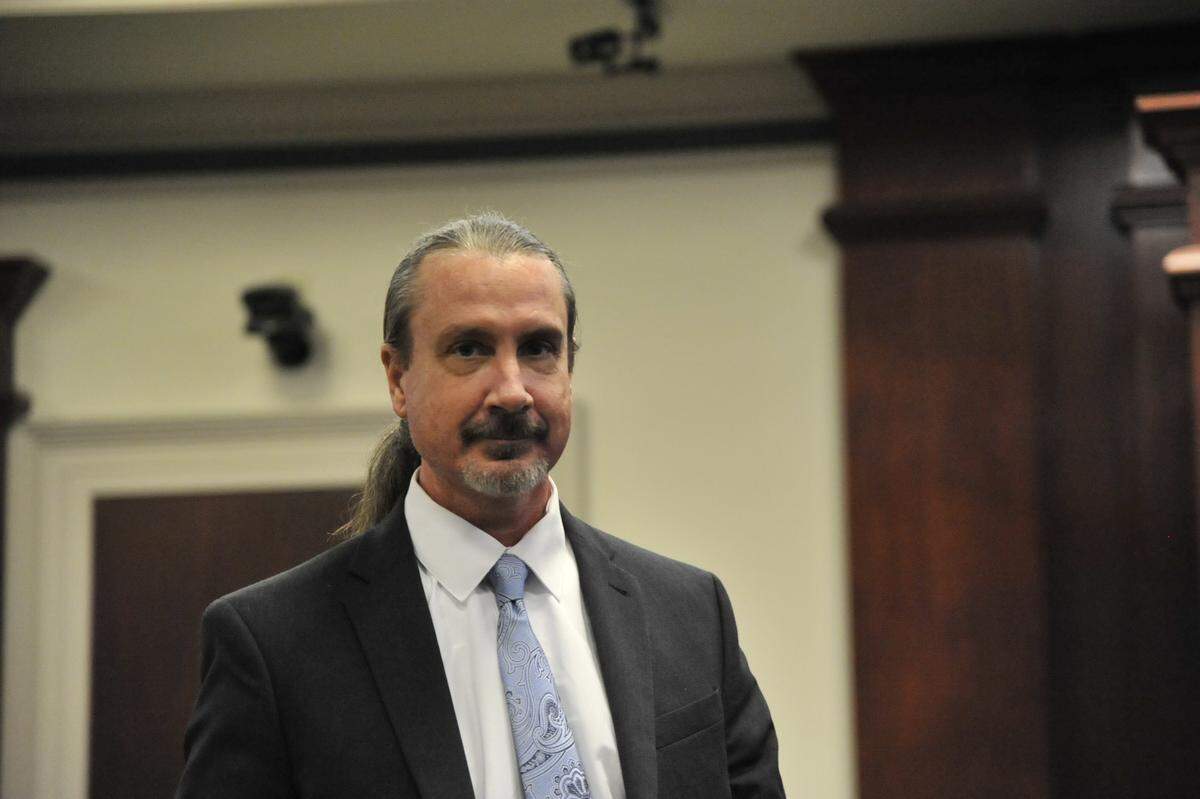
Paramedics and sheriff’s deputies were called to a home on the eastern outskirts of Milledgeville in the small hours of May 12, 2019. Lillard and Shockley, a divorced mother of two teenagers, had arrived at 115 Watson Reynolds Road the evening before to visit Clark Heindel, an acquaintance of Lillard’s, who lived there.
Shockley was found lying dead at a poolside. At first it appeared she may have drowned. Lillard and Heindel were seen by deputies and EMTs apparently trying to resuscitate her. Investigators later learned that the trio had beer, smoked marijuana and possibly used other drugs. An autopsy revealed that Shockley, 43, who lived in Morgan County between Madison and Athens, had been strangled. Investigators have suggested she may have died a couple of hours before the 911 call.
What happened to Shockley — who killed her and why — have largely remained a mystery. Lillard first met Shockley when they were in college. They later reconnected, dated and traveled together. Lillard has been jailed since his arrest the day after Shockley died.
Soon after the authorities arrived at Heindel’s house the night Shockley died, Heindel shot himself, committing suicide. A GBI agent testified at a hearing a month later that Lillard had given varying accounts of Shockley’s fatal episode. It is likely that his defense will point a finger at the late Heindel.
This story was originally published April 7, 2022 at 9:08 AM.