
Friday’s live updates from the trial of UGA professor Marianne Shockley’s alleged killer
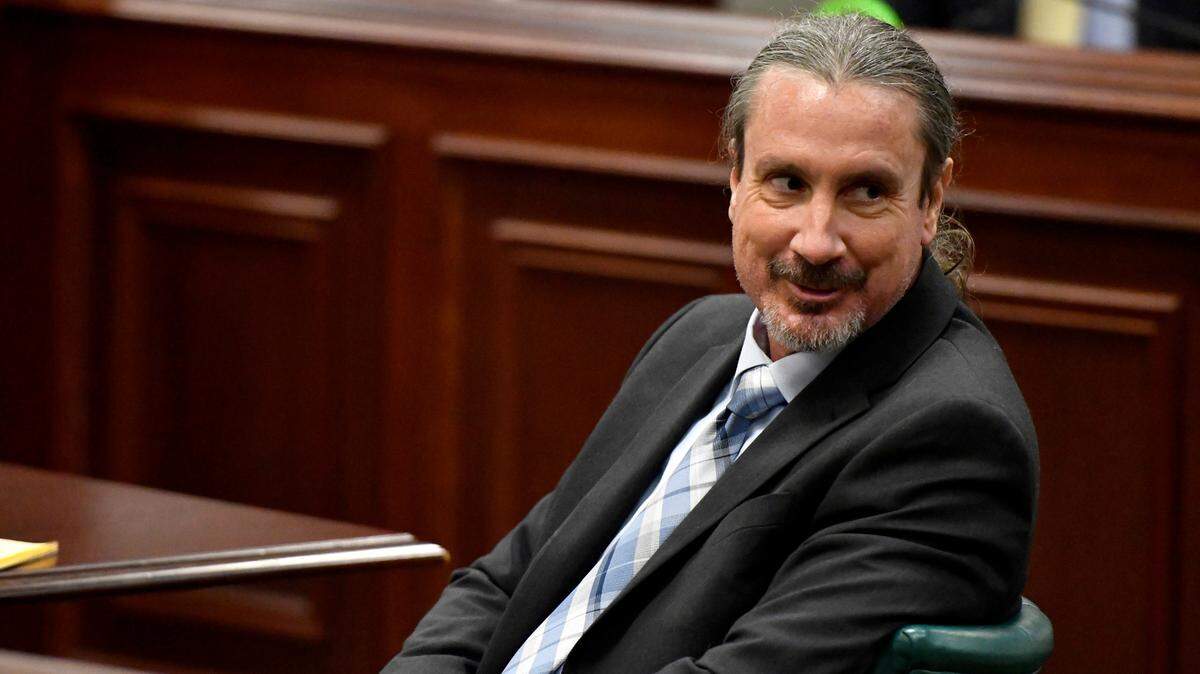
The fourth day of testimony is underway here in Baldwin County Superior Court in the murder trial of Marcus Allen Lillard. Lillard, 44, is accused of felony murder, aggravated assault, involuntary manslaughter and reckless conduct in the 2019 death of his sometimes-girlfriend, University of Georgia entomology professor Marianne C. Shockley. Testimony in the trial began Tuesday and continued Wednesday and Thursday.
The following chronology will be updated throughout the day Friday:
11 a.m. update: In a recording of an interview from the afternoon of Mother’s Day 2019, in the hours after Marianne Shockley’s death, GBI agent Mary Chandler informed Marcus Lillard that past sex partners of his had told investigators he had “a history of choking women almost to unconsciousness.” Lillard said, “We did not fool around yesterday at all,” referring to himself and Shockley, who had been boyfriend and girlfriend off and on for about a year. . . . In some of the most bizarre revelations of the trial, as an audio recording of that interview continued, Chandler asked Lillard why he thought Clark Heindel, whose house the death happened at, had gotten into the hot tub with Shockley while Lillard was off in the woods, as he has said, to gather firewood. “When he was doing CPR (on Shockley),” Lillard said, “he was being very affectionate with her. He was telling her how beautiful she was” and that it appeared he was “kissing her” instead of doing CPR. “My instincts tell me that he (had sex) with her,” Lillard said of Heindel. “He was whispering sweet nothings in her ear in between (CPR) breaths.” Lillard went on, telling the GBI that he “picked up on” a sense that Heindel was attracted to Shockley. “He kept talking about how beautiful she was, over and over.” Chandler asked Lillard if he thought Heindel was French kissing the unconscious Shockley during CPR? “I think so,” Lillard said. . . . Lillard then said for Heindel to have killed himself soon after authorities arrived at Heindel’s home in the early morning hours of May 12, 2019, “there had to be some reason.” . . . In a recorded interview the next day that was conducted by GBI agent Michael Maybin, Lillard said that he now recalled having gone into the woods “for a long time” and that he was “laying down ... a long time.” It is during that time, Lillard suggested, that Shockley’s fatal episode happened out of his presence. . . . He also said that he may have been drugged. “For me to not have a memory about it, there’s something else to this. Lillard wondered if Heindel “slipped us something. ... I went from coherent to incoherent.” Lillard said he wondered now whether Heindel had done so to get Shockley to have sex with Heindel. “Why else would he kill himself?” Lillard asked. . . . Lillard repeatedly denied harming Shockley. “I did not do it.” . . . Maybin, the GBI agent, then offered up his own theory of what may have happened: “I think Clark couldn’t live with himself because he helped you sit there and think about how to cover it up and let that girl die on that (expletive) pool deck. That’s what I think. ... Did you just get too rough with her during sex?” To that, Lillard said, “No, I promise you I didn’t. We didn’t have sex yesterday.” . . . Lillard later said he was so baffled by it all that “I don’t even care about my life at this point. I know that no matter what happens ... my life is over. ... I’m fine with being incarcerated, but I am not going to admit to something I didn’t do.” . . . Maybin told Lillard that not calling 911 until two hours had passed “screams that I’m guilty.” Maybin said, “You text from (Heindel’s) phone other women, other yoga clients of his, to come over and help. What the hell is that?” Said Lillard: “Maybe I got drugged and it was something I didn’t realize.” Then he said, “I am not gonna admit to a murder that I” didn’t commit. Lillard did, however, admit in the interview that he may be guilty of involuntary manslaughter, which he is now charged with along with felony murder, among other charges of aggravated assault and reckless conduct. . . . Maybin at one point in his interrogation of Lillard used what he described on the witness stand as “an interview tactic.” He told Lillard a lie that investigators had found “forced-contact DNA” from Lillard on Shockley’s neck. They had not. Lillard, unaware, wondered if such material could have come from him performing CPR. “If I remembered having my hands around her neck,” Lillard said, “I would tell you.” . . . Lillard’s defense attorney, Matthew A. Tucker, will no doubt ask Maybin about that “tactic” during his cross-examination in the coming hour.
1:45 p.m. update: During his cross-examination of the GBI’s Michael Maybin, Lillard’s lawyer, Matthew A. Tucker, asked the agent repeatedly about why investigators hadn’t tested a pair of shorts found on the steps of Heindel’s hot tub. The defense’s hope is that jurors will believe the shorts belonged to Heindel, thus possibly leading them to believe the defense’s contention that Heindel entered the hot tub at some point the night Shockley died. Lillard, in his statements to police, has said he never saw Heindel in the hot tub but said Heindel could have entered it while Lillard was off in the woods away from Shockley. . . . Maybin said that there was no solid way to determine whose shorts they were, that it had rained and that there were other clothes at the house and by the pool. The agent said investigators tried to match whose clothes were whose as best they could. . . . Tucker also noted that there was evidence that Heindel had viewed pornography on a computer the night of Shockley’s death. The attorney wondered why the state hadn’t noted that finding in its case. . . . After another line of questioning from Tucker, Maybin said investigators did not blindly zero in on Lillard. “We didn’t know who” killed Shockley, Maybin said. “We looked at both men and we talked to people that knew them. ... Every piece of evidence was important.” . . . Tucker also pressed Maybin on interview techniques that law enforcement is allowed to use when interrogating suspects, such as minimizing the severity of possible crimes and telling the suspects falsehoods and, at times, flat-out lies. Maybin had told Lillard during one interview that investigators had found Lillard’s DNA on Shockley’s neck, which wasn’t true, hoping that such a claim might compel Lillard to confess to strangling Shockley. “The GBI lets you go in and lie to people,” Tucker said, suggesting that Maybin could have used other possible evidence gathered at the scene to try to induce a confession from Lillard. “And you say that the GBI trains you ... to come in there and lie to a devastated man on a circumstance and then turn around and tell him he’s a liar?” To which Maybin said, “We’re allowed to lie to people we’re interviewing.” Said Tucker: “No further questions.” . . . The trial’s lunch break was set to end at 2 p.m. The prosecution may have one more witness to call before it rests. As of the noon-hour break, Lillard apparently had not yet decided whether he will testify.
3:25 p.m. update: The prosecution has rested and Lillard has decided not to testify. Closing arguments are expected to begin shortly. The jury may begin deliberating sometime late this afternoon.
Case Background
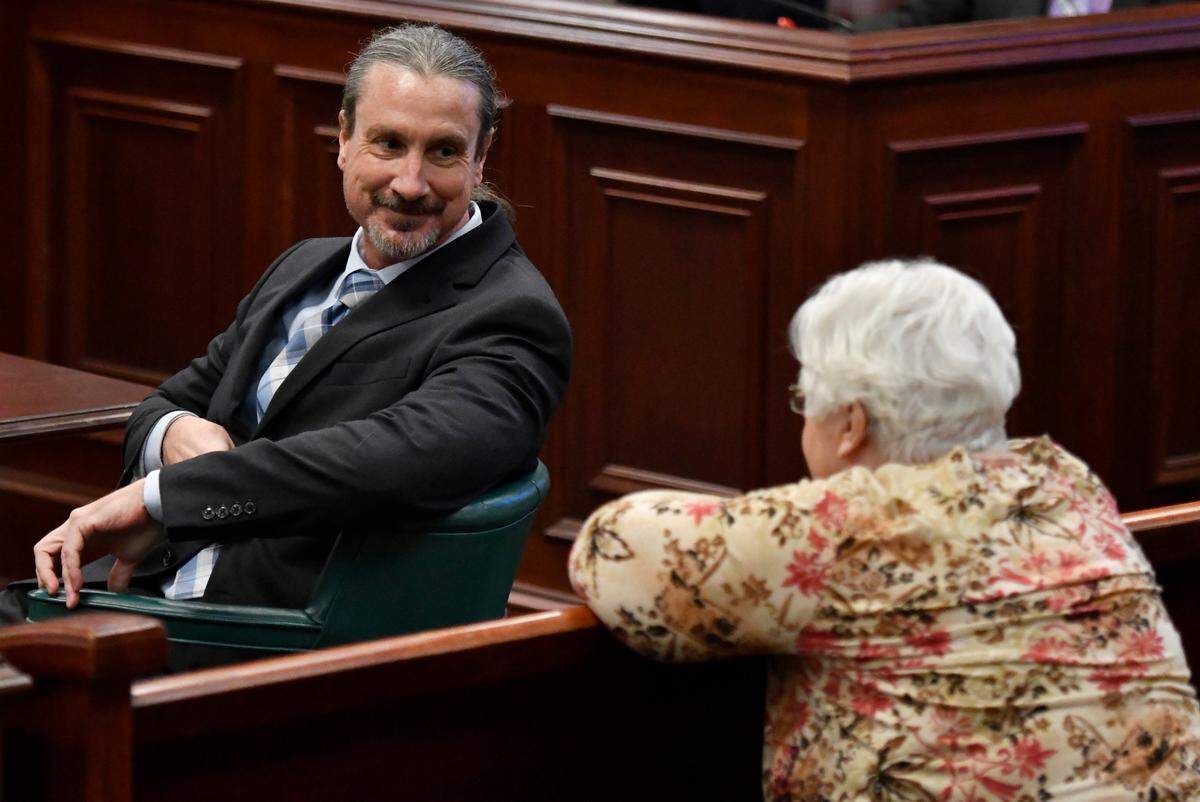
Paramedics and sheriff’s deputies were called to a home on the eastern outskirts of Milledgeville in the small hours of May 12, 2019. Lillard and Shockley, a divorced mother of two teenagers, had arrived at 115 Watson Reynolds Road the evening before to visit Clark Heindel, an acquaintance of Lillard’s, who lived there.
Shockley was found lying dead at a poolside. At first it appeared she may have drowned. Lillard and Heindel were seen by deputies and EMTs apparently trying to resuscitate her. Investigators later learned that the trio had beer, smoked marijuana and possibly used other drugs. An autopsy revealed that Shockley, 43, who lived in Morgan County between Madison and Athens, had been strangled. Investigators have suggested she may have died a couple of hours before the 911 call.
What happened to Shockley — who killed her and why — have largely remained a mystery. Lillard first met Shockley when they were in college. They later reconnected, dated and traveled together. Lillard has been jailed since his arrest the day after Shockley died.
Soon after the authorities arrived at Heindel’s house the night Shockley died, Heindel shot himself, committing suicide. A GBI agent testified at a hearing a month later that Lillard had given varying accounts of Shockley’s fatal episode. It is likely that his defense will point a finger at the late Heindel.
This story was originally published April 8, 2022 at 11:03 AM.