Georgia Power settlement trims customer bills but data center, coal questions remain
Most Georgia Power customers could see their monthly electric bills drop by about $4 under a stipulation reached Monday with state regulators that now awaits a final vote.
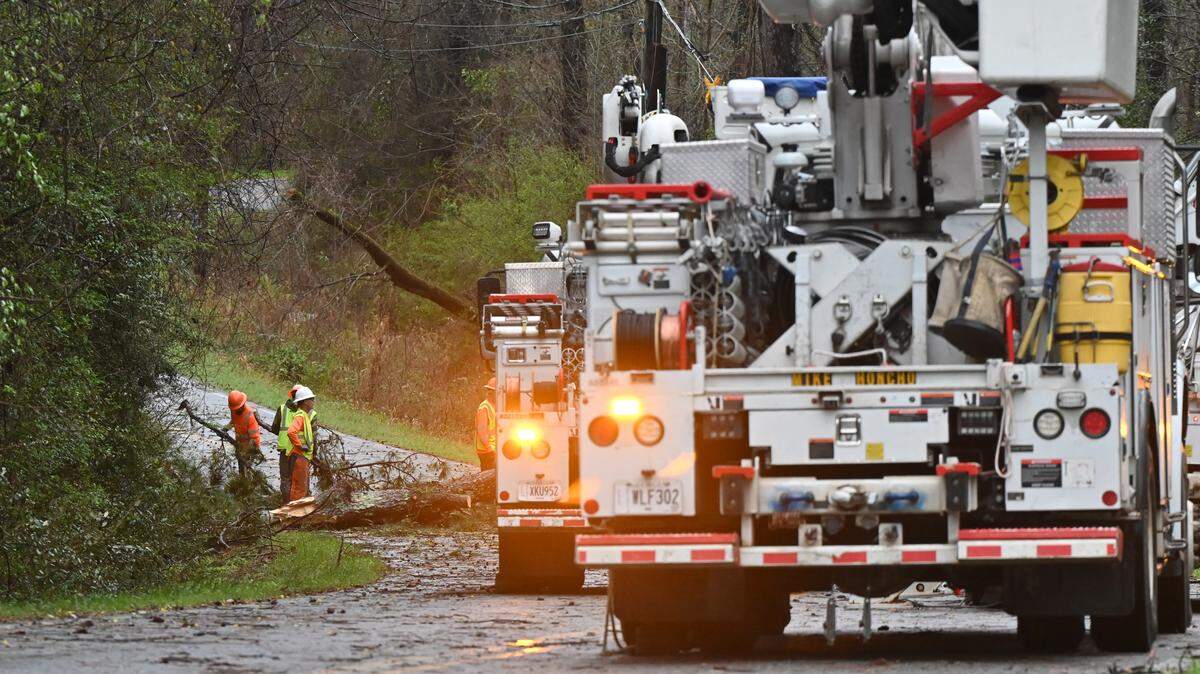
The agreement before the Georgia Public Service Commission resolves two long-running disputes: one over how the utility recovers the cost of fuel it burns to generate electricity, and another over how it charges customers for repairing power infrastructure after major storms.
Georgia Power had originally sought roughly $270 million in storm damage recovery alone — a figure the stipulation cuts by nearly 60%, according to PSC documentation on the deal.
Advocates, however, said the stipulation left a critical question unanswered: whether large data centers will pay their fair share of fuel costs or shift the burden onto residential customers.
The commission is expected to vote on the deal later this month. If approved, the new rates would take effect June 1.
“We know that our customers depend on us to keep their power reliable and affordable every day, and to be ready to restore power safely and quickly following devastating storms like Hurricane Helene. Thanks to the hard work and diligence of our teams, the Georgia PSC PIA Staff, and many others involved in this open process over the last several months, we expect to be able to provide significantly more savings than we anticipated in February when we filed these cases,” a Georgia Power spokesperson said in an emailed statement Thursday.
Bill relief comes with caveats
The lower bills stem not from Georgia Power charging less, but from customers paying off a debt tied to a 2022 natural gas price spike that had been adding more than $10 a month to bills for several years, according to a press release from the Southern Environmental Law Center, which intervened in the proceedings.
New fuel and storm charges would push bills up by about $6 a month — an improvement over the nearly $9 increase the company originally sought, according to the release from the SELC.
“If approved, the agreement offers $285 million in annual savings for Georgia Power customers, with lower bills beginning in June, with the typical residential customer using an average of 1,000 kilowatt-hours a month saving $4.04 per month (nearly $50 annually),” the Georgia Power spokesperson’s statement said.
The settlement also scales back Georgia Power’s natural gas hedging program after regulators denied the company’s request to expand it, according to the stipulation.
The utility uses a practice called hedging — essentially locking in fuel prices in advance — and the deal puts new caps on how much of its gas supply Georgia Power can hedge at any one time. The company will be limited to hedging no more than 20% of its budgeted natural gas fuel burn in any given month, with a maximum hedging window of 36 months, according to the stipulation.
Storm cost request cut by nearly 60%
Georgia Power had originally sought a rate increase of approximately $270 million to recover storm damage costs, according to the stipulation. Under the deal, that figure drops to roughly $109 million.
Those costs would be spread over 67 months, from June 2026 through December 2031, the stipulation said.
The deal also raised the threshold at which Georgia Power would begin earning a profit on storm repair work, increasing it from $50,000 to $500,000 per storm event. The utility would absorb a larger cost share from minor storms before collecting a return from customers, according to the stipulation.
Within 90 days of the commission adopting the stipulation, Georgia Power and commission staff must meet to discuss industry best practices for storm response and are required to hold at least two meetings before a storm cost accounting report is due June 30, 2027, according to the stipulation.
Advocates argue deal doesn’t go far enough
Among the biggest unresolved concerns is how Georgia Power is handling the surging electricity demand from large data centers moving into the state.
The Southern Environmental Law Center and other intervening parties argued during the proceedings that Georgia Power has been spreading a portion of those facilities’ fuel costs across all other customers — a question the stipulation leaves unaddressed, but the commission agreed to examine in a separate proceeding, according to the stipulation.
“We are glad that the Commission Staff has negotiated some big improvements, including some much-needed bill relief for customers,” said Jennifer Whitfield, a senior attorney at the Southern Environmental Law Center. “However, it is alarming that Georgia Power’s definition of ‘no cost shift’ for data centers means that everyone else pays for costs the data centers plainly cause.”
Coal purchases, next rate case
The deal requires that no more than 15% of Georgia Power’s coal purchases can be bought at above-market prices, meaning the utility can no longer routinely pay more for coal than it needs to, according to the stipulation.
The utility has argued that burning more coal is necessary to keep the electric grid reliable, according to hearing testimony in the case. Critics, including the Southern Environmental Law Center, said much of that burning is uneconomic — meaning it costs more than it is worth — and that those costs ultimately land on customers’ bills. The stipulation does not address the company’s overall coal burning plans.
Coal is the most carbon-intensive fossil fuel, and scientists have long linked burning it to accelerating climate change, according to the U.S. Environmental Protection Agency. Researchers have said that same warming is making severe storms more frequent and more destructive, in turn driving up the recovery costs Georgia Power is now charging customers to pay off.
“Georgia Power can’t continue to invest in fossil fuels, making storms worse and then profit off those storms,” said Codi Norred, executive director of Georgia Interfaith Power and Light. “Nor can they pass the costs of supplying fossil fuels to data centers on to everyday Georgians.”
Georgia Power agreed to file its next fuel cost case, known as FCR-28, no later than Feb. 28, 2029, according to the stipulation.
This story has been updated to include statements from Georgia Power.
This story was originally published May 13, 2026 at 4:39 PM.