
When county governments outsource jail health care, Georgia inmates pay the price
Early one morning in December 2014, an Atlanta police officer pulled up to a Midtown gas station and found a man outside with a handful of change.
The officer ran the man’s name: Demetrie Jones. 32. Active warrant.
Jones was placed in handcuffs, arrested, and transported to a jail nearly 40 miles away in Cherokee County, Georgia, where he had violated probation.
Jones was HIV positive and had been diagnosed as bipolar, but the medical staff, employed by a private company named CorrectHealth, had ruled him fit to join the jail population, though he was still monitored by medical staff. On his second day behind bars, Jones complained he was having trouble breathing. Bay day three, a CorrectHealth doctor suspected Jones had pneumonia but didn’t immediately send him to the hospital. By the next morning, he was dead.
In the months after Wanda Turner learned of her son’s death, a deep, unsettling thought lingered.
As a former correctional officer, she had escorted sick inmates to and from their medical appointments. And she knew that the 10 million people booked to local jails experienced a great American irony: They would lose most of their rights upon entering custody but gain one available to few others—health care largely funded by taxpayers, thanks to the U.S. Constitution. As Turner searched for the truth of what went wrong in her son’s final days, she hired a lawyer and ultimately sued CorrectHealth, which provides medical care to thousands of inmates in roughly four-dozen Southern correctional facilities.
“My son didn’t deserve to die that way,” Turner told The Telegraph.
Inadequate health care in prisons?
As America’s cities and counties grapple with the chronic overcrowding and underfunding of jails, they have increasingly outsourced medical services. The correctional health care sector has grown from a niche field into a $12 billion industry.
But a growing subset of private for-profit providers have come under fire for providing inadequate care to one of the nation’s most unhealthy and vulnerable populations.
Despite the need for medical care, elected officials award contracts that incentivize for-profit companies to skimp on health care services in part due to lax accountability measures. Against the societal backdrop of an ever-growing indifference to the plight of the accused and the convicted, politicians have largely failed to adequately increase jail medical funding or strengthen regulations.
A yearlong Telegraph investigation—based on dozens of interviews, more than 100 open records requests, and thousands of pages of contracts, depositions, emails, medical files, coroner’s reports, and internal company records—offers a rare look inside the world of privatized jail medicine.
For this three-part series, the Telegraph focused on CorrectHealth Companies, the largest provider of its kind in Georgia and Louisiana.
Since 2000, inmates and families have sued CorrectHealth, and its subsidiary companies, more than 160 times for allegedly not meeting the medical needs of inmates. Over the five years ending in 2018, CorrectHealth was sued at a rate roughly twice that of its largest competitor, Wellpath, according to a Telegraph analysis of CorrectHealth’s lawsuits. (The rate was compared against a similar analysis of Wellpath’s lawsuits from a recent New Yorker investigation and adjusted for the number of inmates each provider serves.)
Dr. Carlo Musso, CorrectHealth’s president, says the comparison “isn’t apples to apples” because his larger competitors tend to serve a higher percentage of prisons. He wouldn’t, however, answer questions about individual lawsuits or allegations, which he downplayed as a “part of being in this business.”
CorrectHealth has promised counties to provide inmates with “unimpeded access to health care services without exception,” according to sales documents. Yet its sales proposals tout a “cost-effective” model that transports patients to off-site specialists as a last resort. CorrectHealth execs have positioned the company as one that “fully satisfies” state and national accrediting standards for jail medical providers, even though most of the jails it serves remain unaccredited.
Musso, who declined interview requests and only responded to some of the Telegraph’s questions in writing, has elsewhere described safeguards that include reviewing potentially fatal mistakes, assessing employee performance, and improving care delivery. “What we do has a profound impact on public health and provides a safety net for those in society in deepest need,” Musso wrote in his statement.
But CorrectHealth’s marketing does not always square with its performance, which has caused multiple counties to end their relationships with the company, the Telegraph found.
An independent monitoring group found that the company’s data showed it had missed intake screenings at the Chatham County jail, potentially failing to meet its contractual obligations. Following a suicide at the Bibb County Jail, a CorrectHealth nurse was fired after violating a company policy related to “doing check-ups on inmates while they are in isolation,” according to an internal affairs investigation.
Patients were typically seen by nurses instead of doctors, and received tooth extractions at more than double the rate of fillings, a cheaper course of care that at times failed to provide the best outcomes for patients, according to independent experts who reviewed CorrectHealth records for the Telegraph.
Court records obtained by the Telegraph show that at least 22 of the more than 160 lawsuits involved wrongful death claims. And former patients allege that CorrectHealth’s practices have resulted in amputated toes, disabled legs, renal failure, hip replacement, and impaired eyesight, according to court records, medical files, and interviews. CorrectHealth declined to comment on individual cases of care.
“Nobody should have to go through what I experienced,” said Ronald Olivet, an inmate who alleges he was denied pain medication after surgery to repair a broken femur. (His lawsuit was dismissed without prejudice. The chief jailer for Barrow County, which hired CorrectHealth, declined to comment.) “They treated me like I was a piece of trash.”
Outsourced services for inmates
The story of how inmates became the only group of Americans guaranteed health care begins in east Texas.
In Nov. 1973, a prisoner named J.W. Gamble was injured when a 600-pound cotton bale fell onto him. He filed a handwritten lawsuit, which went all the way to the U.S. Supreme Court. He lost.
But future inmates won: Justice Thurgood Marshall later wrote that any jailer who showed “deliberate indifference” to an inmate’s serious medical need violated his or her constitutional rights. Further cases clarified that inmates should receive “adequate” care that’s “reasonably commensurate with modern medical science.”
In the decades since, the notion of what’s “adequate” has remained fungible, prone to the whims of shifting budgets and moral priorities. What, for example, constitutes adequate care for an overweight inmate with hypertension and diabetes? What if someone displayed minor symptoms—a headache, cough, or the sniffles? Initially, three main options existed for correctional health care: Contract with local doctors, hire them outright, or partner with a hospital. But as America’s jail population doubled between 1984 and 1996, and finding enough doctors became more difficult, for-profit correctional health care stepped in to address the shortage.
No one knows exactly how many of America’s 3,160 jails have outsourced medical services. The National Commission for Correctional Health Care, which has inspected about 10 percent of America’s jails, says roughly two-thirds of those facilities work with private providers. Most of Georgia’s 159 counties rely on private companies, according to a Telegraph analysis. One of the benefits of privatization is that it brings costs down, thanks to economies of scale, according to NCCHC Managing Director Dr. Brent Gibson. In interviews with six correctional health care researchers, a consensus emerged that the lack of mandatory data collection makes it difficult to assess whether privatized correctional health care works better or worse than other models.
Private companies not only offer specialized care at a lower cost through spreading overhead across multiple jails; they also purchase multimillion-dollar insurance plans that allow sheriffs to offload some legal risk. But lax federal and state oversight, along with a lack of local funding, creates an incentive to skimp on health care, according to David Fathi, director of the ACLU’s National Prison Project. Accrediting groups like the NCCHC and the Medical Association of Georgia have drafted guidelines designed to improve health care delivery for inmates and prisoners. But few—including roughly a quarter of the jails working with CorrectHealth—are accredited. Nor, unlike most hospitals, are they required to be.
“Jails and prisons officials want to believe that, for an unbelievable low price, they can get high-quality health care,” said Dr. Owen Murray, vice president of the University of Texas–Medical Branch’s correctional managed care program. “It’s not like any of these companies are so innovative that they can bring substantial cost savings. There are fixed costs: staffing, drugs, and levels of off-site hospitalization.”
In his statement to the Telegraph, Musso said a physician-owned company is less likely to “put profits over clinical care” than a corporation run by “number-crunching” businesspeople. Musso touted an early success from the early 2000s, when he claimed to help the Clayton County Jail lower the number of costly ER visits, though he did not offer data to back up this point. He did not provide more recent examples, though a few of his jails has received accolades from various correctional health care accrediting agencies, a spokesperson for the company noted.
“Our ultimate decision point isn’t ‘What makes the most profit?’” Musso wrote. “It’s, ‘What’s best for the patient?’”

Tough to get health care in Georgia prisons?
A leaky shower changed the course of Jessica Wooten’s life. In early 2017, the 28-year-old Monroe, Ga., mother was serving time on an assault charge in the Walton County Jail. When water overflowed into a common room, Wooten slipped, fell, and landed on her hip. A nurse provided muscle relaxers, but Wooten was denied additional requests for treatment, according to Wooten’s lawyer.
The pain was “excruciating,” she said. “I would rather have a baby without an epidural.”
Nearly three weeks after the fall, with Wooten threatening a lawsuit, CorrectHealth sent Wooten to a hospital, where X-rays confirmed a hip fracture. Instead of one surgery immediately after the fall, Wooten underwent four. One happened while she was still in custody. Three more corrective surgeries happened after her release.
Overall, Wooten says she incurred over $500,000 in medical bills, forcing her to declare bankruptcy. Wooten, who is 30, was told by her doctor that she would need a hip replacement every 15 years for the rest of her life. Wooten’s lawyer has sent an ante litem notice, which informs potential defendants of a forthcoming lawsuit, to Walton County. (Musso declined to comment. A Walton County jail spokesperson did not respond to the Telegraph’s request for comment.)
While some inmates like Wooten say they struggled to receive specialty care through CorrectHealth, spawning allegations of new infections and improper healing of old injuries, others said they found barriers in getting care for basic medical needs. According to court records, a Louisiana inmate alleged she gave birth alone in her cell despite her crying out for help for hours. And a Georgia inmate said the company waited so long to schedule surgery on a broken hand that a doctor had to rebreak his bones and fuse them together with his wrist.
The 22 wrongful death lawsuits involved alleged medication errors, delayed medical care, and failures to prevent suicide. According to court records, Joshua Belcher, a 32-year-old musician, tried to hang himself in August 2017 inside a cell at the Jefferson Parish Correctional Center in Louisiana. Belcher was placed on suicide watch while he detoxed off heroin, meth, and alcohol. Two days later, Belcher told a social worker he was no longer having suicidal thoughts and was hopeful for the future. He was “feeling good.” The social worker, an employee of CorrectHealth, took Belcher off suicide watch. Two days later, Belcher ended his life by hanging himself with a sheet. His parents later learned their son was one of three people to commit suicide in a two-month period at the jail, which had just one psychiatrist present for four hours each week for a facility that, on average that year, held 950 inmates. The Belcher family is suing CorrectHealth in federal court in Louisiana, alleging a “policy of failing to prevent inmates who exhibit signs of suicide risk from committing suicide.” The case is still ongoing.
Musso’s company in the mid-2000s began to adopt a strategy to “aggressively” deflect legal risk, according to CorrectHealth documents. Attorneys have pursued protective orders to prevent proprietary company information from getting released during litigation and convinced judges to seal records. Legal counsel has sat in on mortality review committee meetings—allowing CorrectHealth to claim attorney-client privilege over sensitive records—and drafted affidavits for sheriff’s deputies who are codefendants in lawsuits. That broader strategy, too, doubled as a sales point. In a bid for the Muscogee County Jail’s medical contract, CorrectHealth boasted the company has “NEVER had a verdict rendered against it.” Musso won the five-year, $3.4 million contract.
When asked by Muscogee County officials about its litigation history, CorrectHealth said the company had been named 36 times in lawsuits filed between 2013 and 2018. Of the cases that had concluded, the company noted that six had ended in confidential settlements and 16 more had gotten dismissed. But this record only shows a partial list of their litigation over this five-year period and omits many “pro se” lawsuits, which are filed by inmates but typically get tossed because they haven’t made a proper legal case. Over that same period, The Telegraph found that inmates sued CorrectHealth in at least 40 more pro se cases—all of which were either dismissed or are still ongoing.
The settled cases often have potential for a jury trial, plaintiff lawyers said. According to court records, Chavis Poole Sr., a 33-year-old Macon father, swallowed a bag of meth before a police traffic stop to avoid serious charges. After getting arrested for a parole violation, he confessed out of a fear of a potential overdose. He was sent to the hospital initially, but they found nothing wrong. Later on, when the bag ruptured in Poole’s stomach, he felt a pain so sharp he screamed in agony, but CorrectHealth staff didn’t send him back to the hospital. He died at the Bibb County Jail. Bibb Sheriff David Davis referred the Telegraph to the settlement, which required the Poole family’s claims to be dropped in exchange for an undisclosed sum.
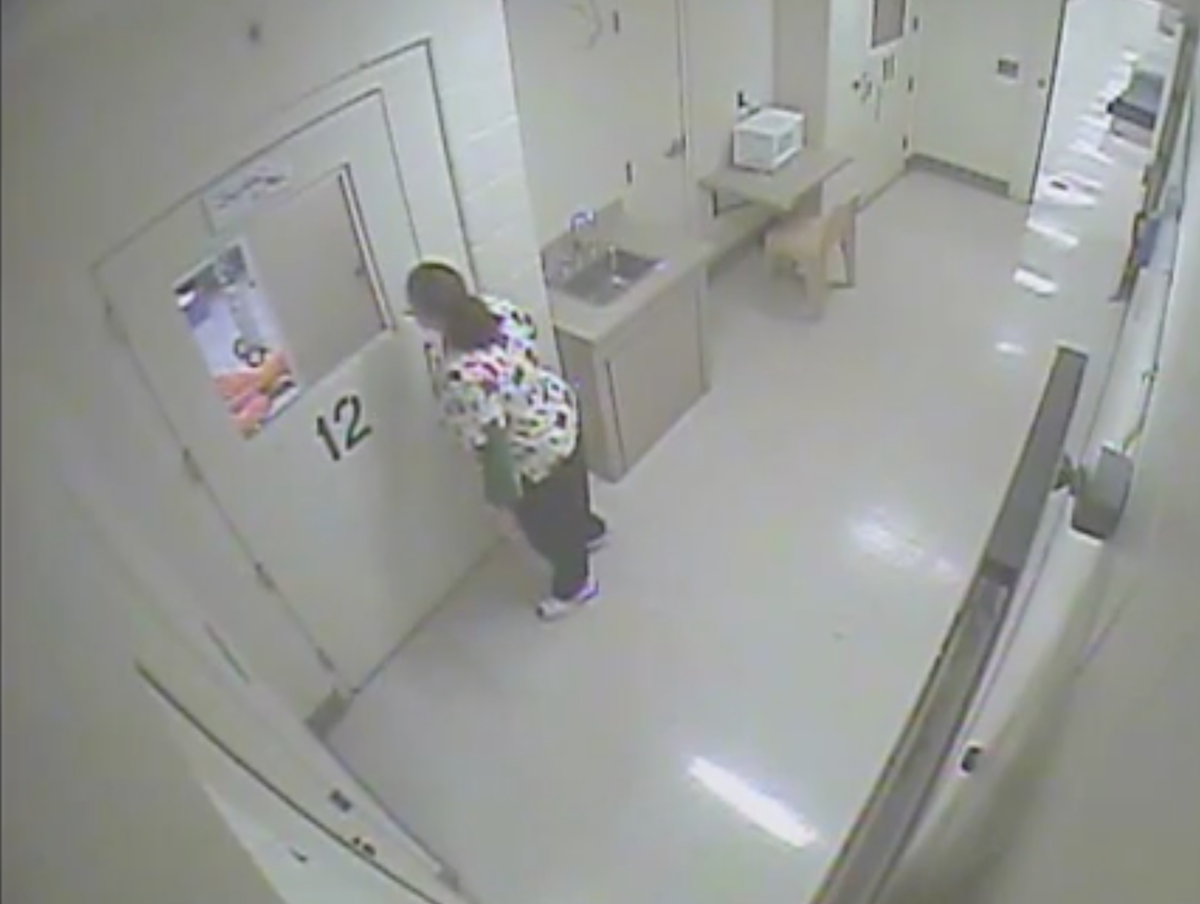
Another family member who settled, Wanda Turner, was the mother of Demetrie Jones, the Cherokee County inmate who died in December 2014. That morning at 4:50 a.m., 35 minutes after he first collapsed, a CorrectHealth nurse peered into Jones’s cell, surveillance footage shows. After five seconds, she walked away. Eleven minutes later, she again peered inside his cell but walked away. It wasn’t until a shift change, more than 90 minutes after Jones collapsed, that the same nurse entered Jones’s cell. By then, it was too late. The autopsy cited acute pneumonia related to AIDS as the cause of death. Turner’s lawyers eventually deposed CorrectHealth providers and obtained video footage of her son’s final moments. But instead of pursuing a trial, Turner took her lawyer’s advice and settled with CorrectHealth for an undisclosed sum—a choice she second-guesses to this day. “My only regret is that I didn’t take CorrectHealth to court,” Turner said. “The owner of the company should be held accountable.”
Some plaintiff attorneys, who front legal costs in exchange for a portion of any award, say two factors push even the strongest jail medical cases toward settlement. First, lawyers must reckon with the fact that, should their case go to trial, jurors are likely to be unsympathetic to their clients, given their criminal records. And the burden of proof for a deliberate indifference claim in federal court is higher than malpractice lawsuits, which are typically filed in state court and focus on whether a practitioner deviated from the standard of care. (Savannah attorney Will Claiborne says judges toss state suits because jail contractors, under Georgia law, can claim sovereign immunity, a centuries-old doctrine that prevents governments from being sued without their consent.) During a recent jail medical conference presentation, Alison Currie, an attorney who represented CorrectHealth in the Turner case, estimated that correctional facilities and their medical providers lose in court fewer than 1 percent of cases, in part because many inmates filed lawsuits alleging denials of minor treatment. To drive this point home, she quoted a judge’s past ruling involving Illinois inmates who said they were denied care for the sniffles and a headache: “The constitution is not a charter of protection for hypochondriacs.”

A case study involving Forsyth jail
In March 2018, Brenda Twitty drove to the Forsyth County Jail to pick up her son, Corey Martin, who was locked up for allegedly evading police in a car chase. Martin couldn’t afford the $12,000 bond, so he waited anxiously inside his cell for his day in court. But just before a potential trial, prosecutors dropped the charges due to insufficient evidence.
Twitty felt relieved at first. But she was also worried. Before his September 2017 arrest, Martin was diagnosed with Ependymoma. He knew this rare cancer well: He had defeated it once before, three years earlier, after a health foundation covered the costs of neurosurgery. Twitty believes CorrectHealth delayed Martin’s cancer care, which before had cost six figures. Forsyth County refused to release records to the Telegraph, citing privacy laws. But according to Martin’s handwritten calendar, which meticulously chronicled life behind bars, he didn’t see an oncologist until four months into his incarceration.
Upon Martin’s release, Twitty frantically called Martin’s doctors to resume treatment. But Martin’s oncologist couldn’t see him that day, or the day after that, or even the next week. So, Twitty just drove home, praying a slot might open on the doctor’s calendar. That weekend, Martin passed the time planning a boating adventure with his daughter, Sarah. But five days after his release, Martin collapsed inside Twitty’s house. She called 911. But neither Martin’s sister nor the paramedics could revive him. (The autopsy showed Martin died of a drug overdose.)
The following week, Twitty drove past the jail to her son’s funeral service. Every day since, she’s wondered if Martin might still be alive if he had received adequate and timely medical care from CorrectHealth, which through Musso declined comment. Though she’s been denied answers from the county, she hasn’t given up yet. Hope dies last. “I never want another family to go through this,” Twitty said. “What happened to my son can happen to anyone.”
This story is part of a collaboration between the Telegraph and Atlanta magazine. Blau’s series was supported by the Association of Health Care Journalists, the Commonwealth Fund, and the Fund for Investigative Journalism. Margaret Pfohl and Jade Abdul-Malik contributed reporting.