
Macon school board considers budget with closures, larger classes. What to know
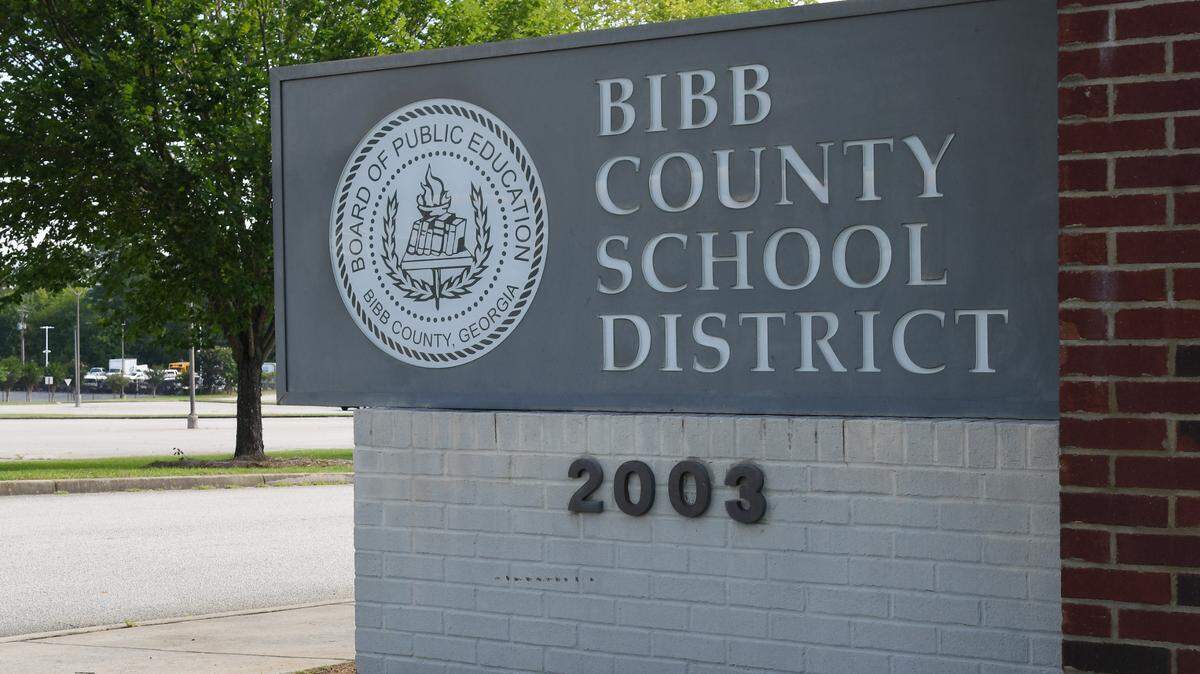
With lower student enrollment and exiting staff, Bibb County Schools is still working to stabilize finances and address its budget shortfall.
On June 2, the Bibb County Board of Education tentatively approved a budget option that would reduce instructional staff positions, remove central office vacancies, outsource paraprofessional hires and more. The plan is expected to save about $9.46 million, according to district memo presented at the meeting.
The moves come after school officials continue to describe this time as a “budget crisis,” working to identify cuts to account for declining revenue and rising costs after seeing a consecutive $20+ million budget deficit.
The budget also includes classroom waivers for larger classes for fourth grade through higher schools.
District officials said the class-size waivers will not affect the youngest students, but will instead target grades fourth through twelfth. Upper elementary and many high school classrooms could increase by about four students and middle school by roughly one student per class, BCSD Chief Financial Officer Erich Bush said.
Expanding class sizes could save about $3.6 million, according to the district.
The plan also calls for studying the possible consolidation or closure of two elementary schools, continuing a 2025 review of closures that ended without a decision.
A district getting smaller
According to data from Education Resource Strategies’ Edunomics Lab, a school finance think tank, Bibb County School District’s teaching staff and student enrollment declined between the 2018-19 and 2024-25 school years while administrative positions increased.
Bibb County Schools lost nearly 600 students from March 2025 to March 2026, according to Georgia Department of Education data.
The district is also losing employees. A recent efficiency study found that BCSD’s overall staff separation rates during the 2024-25 school year exceeded regional and national averages, with a teacher separation rate of 16.8%.
“We lost 25 people to other districts in the past two weeks, and the consistent word that we hear — pay,” Superintendent Dan Sims said at the June 2 meeting as board members discussed whether to include salary step increases among potential budget reductions.
Last month, district leaders presented the possibility of freezing salary step increases to save $2 million. At the time, Sims warned that such a move could damage staff morale and undercut the district’s ability to stay competitive.
District officials have long said recruiting and retaining high-quality employees is a top priority. But as budget pressures have mounted, discussions have shifted from pay raises to deeper cost-cutting measures.
“This has been a particularly difficult budget cycle for a lot of reasons,” Board President Daryl Morton said at the meeting. “One, we have less money than we normally have. We have people wanting more, and we can’t pay people as much as we might like to pay them, but we have to deal with reality at some point.”
Morton argued that he supports the “least problematic cuts,” including efficiency studies and consolidation, that can help make the system more fiscally responsible.
Student enrollment, which has been steadily declining since 2019, has long been tracked by district leaders. Before resigning in 2022, former Superintendent Curtis Jones cited declining headcounts and raised the possibility that consolidations could become necessary, as previously reported by The Telegraph.
The district’s student enrollment fell from 21,334 in October 2024 to 20,556 in March 2026, according to state data.
District leaders also projected an enrollment of 20,546 students for 2026-27, a drop of nearly 900 from last year’s estimate of 21,436.
Officials have previously attributed the trend to the expansion of school choice, Georgia’s school voucher program and, initially, the Academy for Classical Education’s transition to a state charter school during the 2019-20 school year.
What’s next?
The board will hold public hearings on June 17 and June 25 at the Professional Learning Center before final adoption of the FY27 budget.
If the budget is not approved by June 30, a spending resolution must be passed in order to continue operations as of July 1.
While the tentative budget did not include a millage rate increase, district officials have previously indicated that higher property taxes should be considered to stabilize finances.
Millage rate options will be presented in August, when the tax digest becomes available.