
Bibb County Schools lost hundreds of students, but enrollment still ‘stable’ in fall 2025
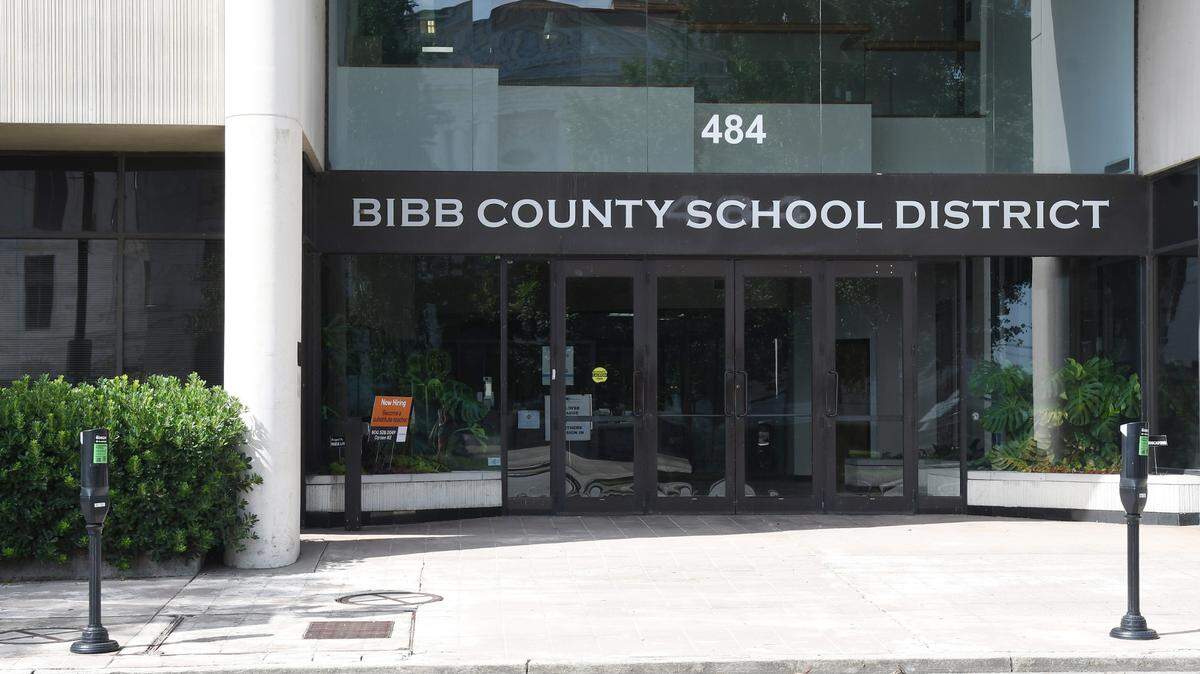
Despite concerns that the Georgia Promise Scholarship would accelerate student departures from Bibb County public schools, officials say district enrollment has remained steady so far this year — though final voucher participation numbers are still not available.
Bibb County School District officials say student enrollment is “holding steady,” although numbers are reportedly lower than they have been in the past three years.
Kevin Adams, the district’s chief information officer, said student headcount and full-time equivalent (FTE) figures have dipped but remain within expected ranges.
“Compared to the past five-to ten years, the enrollment is stable,” Adams said. “This year, our student head count and full-time equivalent numbers are slightly lower than the previous three years, but it’s not alarmingly so.”
Adams did not clarify what statistic would indicate an alarming decrease.
The Georgia Department of Education reports FTE figures biannually in March and October. Recent state data shows Bibb County’s enrollment was 20,783 students in October 2025, down from 21,146 in March 2025 and 21,334 in October 2024.
FTE figures fluctuate throughout the year, as some students are counted as less than full-time due to partially attended school days, according to Dara Foy, BCSD director of research, evaluation, assessment and accountability.
BCSD enrollment declined consistently between 2018 and 2021, with officials crediting the most noticeable decrease when the Academy of Classical Education shifted from a local to a state-authorized charter in 2019.
Declining enrollment is an ongoing issue and led to school consolidation discussions for the 2024-25 year after some elementary schools reported numbers below state averages, potentially impacting funding.
Officials proposed a district-wide rezoning process instead of school closures in April but have not provided more recent updates.
What’s contributing to an enrollment drop?
School officials have identified potential factors that may have contributed to the decrease in students, but could not specify the most significant contributors.
Leaders point to the Georgia Promise Scholarship Program as a possible influence. The state’s newly launched school choice initiative, sometimes referred to as a “voucher program,” provides up to $6,500 for eligible students to switch from identified failing public schools to private schools.
“SinceCOVID, there have been some post-pandemic shifts in the choices for alternative learning models,” Foy said. “Some families have embraced this school choice expansion, and they have chosen to either home school or do online schooling.”
More than 865 applications for the voucher program were submitted by Bibb County families between March and June for the fall 2025 semester, according to the Georgia Student Finance Commission. Of those, 582 students were found eligible as of July 22 — the third-highest number statewide.
The Georgia Student Finance Commission said it cannot disclose how many families have accepted the scholarship throughout the state as of publication.
BCSD spokesperson Stephanie Hartley said families who have withdrawn are not required to notify school officials if they have received the Georgia Promise Scholarship.
Despite the unknown, BCSD board member and President Myrtice Johnson said the district did not experience as large of a setback from the program as feared.
“It doesn’t look like it has affected us,” Johnson said. “... We don’t want any of our students to leave, and we’d like to have the hundreds of students we lost back, but I thought (the school choice voucher) would really hurt us pretty bad, but it didn’t.”
Jamie Cassady, BCSD assistant superintendent of student affairs, said another factor affecting student enrollment is the district’s internal “data cleaning” process, which removes students who no longer attend or have been withdrawn from school for lack of attendance — a significant issue the district has addressed over the past two school years.
“It could be a student that hadn’t come to school in 30 days to 45 days, and at some point we would withdraw that student. So of course, once you withdraw them, then you know you’re going to affect your enrollment,” he said.
What happens next?
Adams said no dramatic changes, such as updates on consolidation or rezoning, have been necessary due to the most recent enrollment numbers.
“The exploration last year or possibilities of consolidation, as well as any ongoing explorations of what is best for the district are simply looking at the overall situation and not any current changes,” Adams said.
Minor staffing and budget adjustments are based on annual enrollment data, Adams said. These may include reassigning teachers between schools or grades, he said.
“On some level, every year there’s an impact, whether that’s up or down in any district,” Adams said. “We’ve been blessed that we have not had to make radical decisions that some districts throughout the country have made. We just have to make those tweaks along the way to continue providing our students with the best experience.”
Cassady said the district is optimistic about enrollment figures due to residential growth development, particularly in the Rutland school zone.
Foy, a 40-year district employee who has seen many changes, said she believes the district is heading in the right direction regarding enrollment.
“We’re going to be positive,” Foy said. “Even though we’ve got some challenges, we’re going to focus on innovation, community engagement, strategic planning, and plan on some sustainable growth that that’s the plan.”