
Who brought race into controversy over Jason Aldean song? Hint: It wasn’t the singer | Opinion
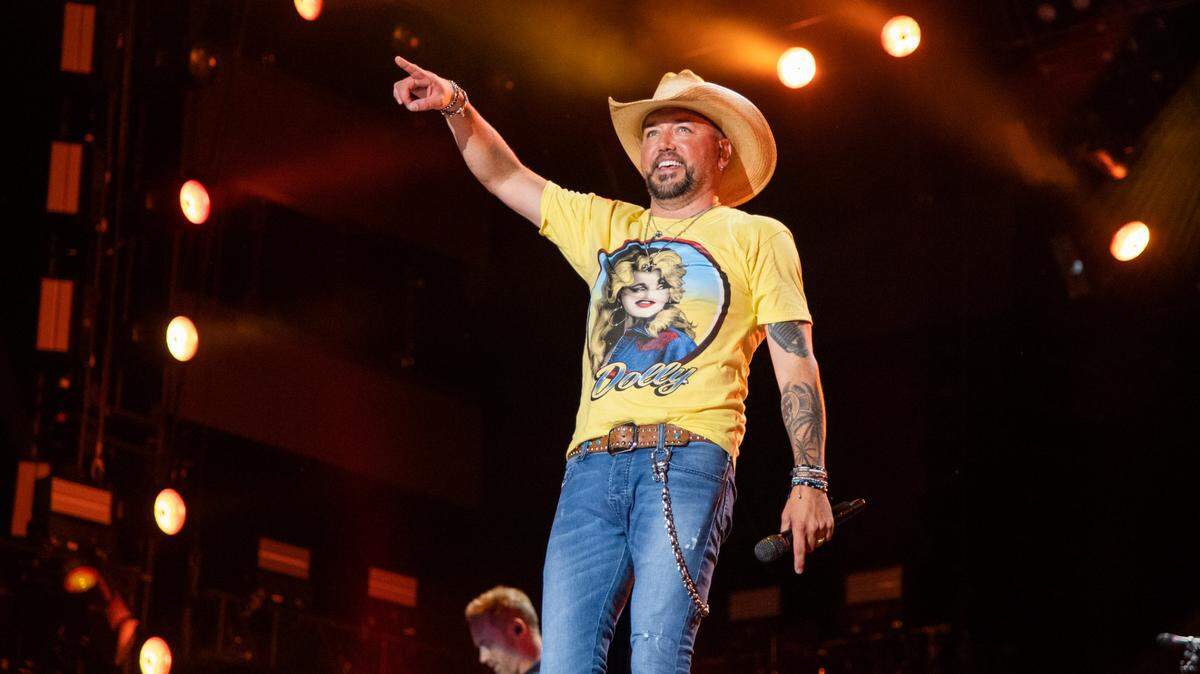
A musical career can be boosted in many ways. One is to release a song that everyone loves. Another is to release a song loved by many, but also loudly reviled.
Jason Aldean has now benefited from both. Red hot in the marketplace since his 2005 debut, he has notched 10 successful country albums and 27 No. 1 singles. Some of the titles have made clear his affection for bucolic America: “Hicktown,” “Dirt Road Anthem” and “Fly Over States” are evidence of an affinity for his Macon, Georgia, roots.
The values of the nation’s more rural regions are reflected in “Try That In a Small Town,” released in May from his upcoming 11th album. It reflects the mood of Americans who have had their fill of crime, riots and attacks on the Second Amendment.
“Sucker punch somebody on a sidewalk,” it begins. “Carjack an old lady at a red light/ Pull a gun on the owner of a liquor store. … Try that in a small town.”
Later comes the defense of gun rights: “Got a gun that my granddad gave me/ They say one day they’re gonna round up/ Well, that [expletive] might fly in the city/ Good luck, try that in a small town.”
The reviews have been, shall we say, mixed.
Critics have said the lyrics and accompanying video are a celebration of vigilantism and violence against Black people, going so far as to note the courthouse filming location in Columbia, Tennessee, the site of a lynching nearly a century ago. Aldean did not choose that location, and the production company strongly rejects any suggestion of a sinister motive in choosing a backdrop just outside Nashville used often for productions over the years.
When country music channel CMT buckled to the detractors by yanking the video (after running it for two months), Aldean responded to the growing mob out to disparage him, calling the charges “meritless” and “dangerous.”
“There is not a single lyric in the song that references race,” he continued, calling its theme “the feeling of community that I had growing up, where we took care of our neighbors, regardless of differences of background or belief.
He added: “A lot of us in this country don’t agree on how we get back to a sense of normalcy. … But the desire for it to; that’s what this song is about.”
This did little to quell the sniping, even from fellow artists. Sheryl Crow’s Twitter barb: “I’m from a small town. … This is not American or small-town-like.” A survey of the good people of Kennett, Missouri, might reveal how many of her hometown folk identify with his song and how many share her view that it promotes violence.
Aldean knows of violence all too well. He was onstage in October 2017 when a monster unleashed a hail of gunfire onto concert-goers at an outdoor festival on the Las Vegas strip, killing 60 and wounding nearly 900 more. Apparently, anyone surviving a mass shooting is required to become a gun control acolyte forbidden to speak out against rioting.
The wonderfully talented Jason Isbell, sidestepping any actual debate, opted for a clumsy, condescending slap: “I’m challenging you to write a song yourself,” he taunted. “All alone. If you’re a recording artist, make some art. I want to hear it.”
What Isbell may not want to hear is the list of legends who, like Aldean, have filled careers with works crafted by others. Like Linda Ronstadt or another pair of questionable artists named Sinatra and Elvis.
What propels misguided aggression like this? Has anyone currently bagging on Jason Aldean ever had a thing to say about art that absolutely does embrace criminal violence? “I’m about to dust off some cops,” current mainstream actor Ice-T rapped in “Cop Killer” in 1992. In 2003, the subject of Tupac Shakur’s “Runnin’” is “arrested and flipped/ He screamed ‘Thug Life!’ and emptied the clip/ Got tired of running from the police.”
So, the violence and misogyny of rap is acceptable, but unifying against crime and rioting is not. Got it.
It is Aldean’s tormentors who have made the leap from those social ills to race. From where does the notion come that an anti-crime and rioting song equates to anti-Black hostility? Not from the song, but from those who leap to that racist narrative to condemn it.
Everyone is free to criticize art in any way they like. But while recognizing that freedom, Aldean himself identifies the embarrassment that should be felt by those who now seek to cancel him: “I can try and respect others to have their own interpretation of a song. … This one goes too far.”
This story was originally published July 25, 2023 at 6:28 AM with the headline "Who brought race into controversy over Jason Aldean song? Hint: It wasn’t the singer | Opinion."