
Georgia scores ‘F’ for LGBTQ+ safety, study says. Macon couple feels the effects
AI-generated summary reviewed by our newsroom.
- Georgia received an 'F' safety grade for LGBTQ+ people in 2025 report.
- Anti-LGBTQ+ laws and hate crimes drove safety declines across southeastern U.S.
- Queer couple in Macon considered relocating for greater safety conditions.
Editor’s note: The Telegraph permitted some sources in this story to speak without being fully identified out of fear of repercussions.
Georgia was graded “F” for LGBTQ+ safety in 2025, according to a new annual report by SafeHome.org, an unbiased security research organization.
The state’s conservative-leaning political and social climate has prompted a local married couple – who identify as a queer person and a transgender masculine person – to consider moving to another state or country.
However, Megan and Liam H. weren’t sure if moving to a more progressive state would keep them safe from a slew of anti-LGBTQ+ statements and legislation amplified by President Donald Trump. The Trump administration and his allies have scraped federal funds for LGBTQ+ initiatives and research; made erroneous and discriminatory claims about the community; limited health care access for trans people, especially youth; censored discussions of gender and sexuality from schools, libraries and museums; and pushed other issues that harm the LGBTQ+ community.
They make up some of the 38% of LGBTQ+ people in the U.S. who have considered moving to new states in safer conditions, the report found.
Megan, 39, felt that the Constitution should protect people from discrimination, but recent legislation has restricted some rights for members of the LGBTQ+ community. Trump recently told NBC News that he wasn’t sure if he had to uphold the Constitution.
“Some of those guardrails are sticking. I mean really, some, not all,” Megan said. “...He tends to get retribution against his enemies, and I feel like he has specifically targeted blue states for certain things.”
In the months following Trump’s election, the couple began studying Spanish on Duolingo, a language learning app, in case they felt the need to leave the United States altogether.
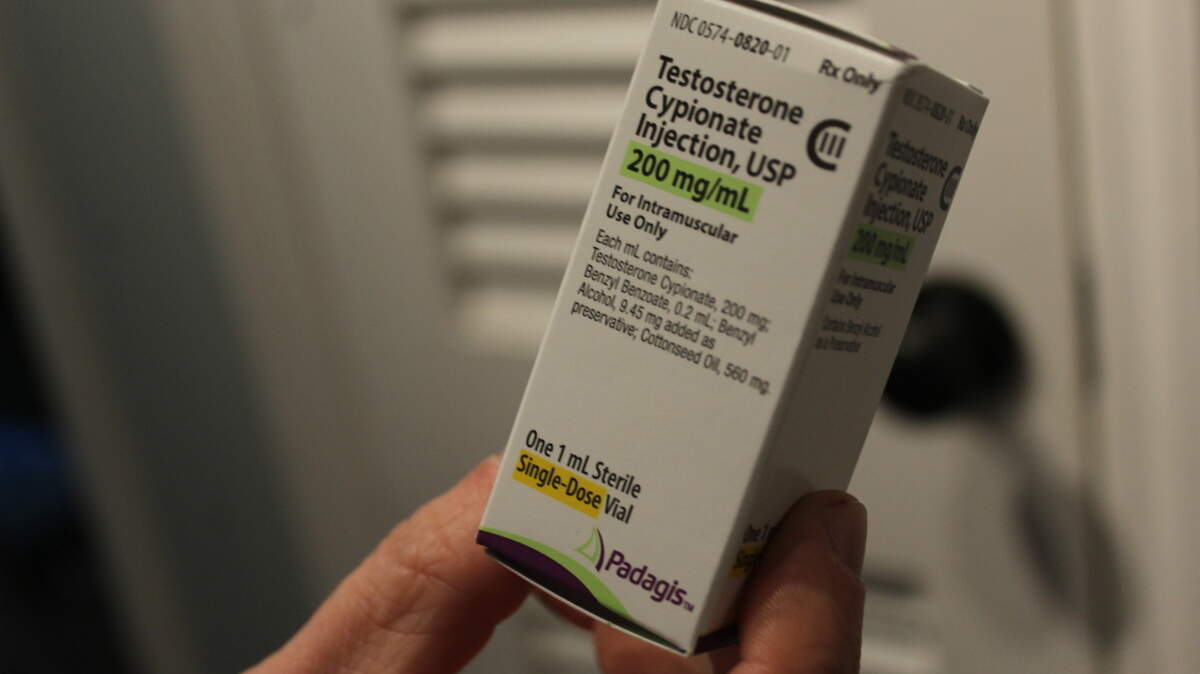
Though if they leave the U.S., Megan feared Liam would not be let back in because he presents masculine, but his passport, driver’s license and birth certificate still show his dead name and his gender assigned at birth, female, as the gender marker. He takes hormone replacement therapy in the form of testosterone injections.
“If we leave the country, we might have trouble at some point with his passport, with the American side,” Megan said.
The two have found a vibrant local LGBTQ+ community and feel safe as queer people in Macon, but they use caution in rural surrounding areas.
“If we’re stopping in a small town or a gas station, I always go with Liam and wait outside the bathroom and count the minutes, because I’m listening, making sure there’s nothing bad happening to him,” Megan, who works in Middle Georgia Regional Library, said.
More LGBTQ+ people have avoided public spaces in 2025 than in 2024, according to the safety research. This includes religious institutions, bars or nightclubs, Pride events, sporting events, public transportation and schools or universities.
Similarly, Liam often doesn’t feel comfortable telling strangers he is trans, and has avoided the topic of LGBTQ+ issues at his workplace in the health care field. But his coworkers are supportive of his transition.
“I distinctly remember overhearing patients talking extremely transphobic-ly to a nurse,” Liam, 38, said. “I know that thinking is widespread in a certain age group, so I would not necessarily feel comfortable disclosing being trans.”
Why Georgia scored so poorly for LGBTQ+ safety
Anti-LGBTQ+ legislation and high rates of hate crimes contributed to Georgia and 12 other states receiving an “F” score for LGBTQ+ safety, according to the recent report.
The community’s level of safety has worsened since 2024 in Georgia. It is considered one of the 10 least-safe places for queer people in the country.
While the state received the lowest letter grade, its conditions could be worse.
Georgia received a total safety score of 58, with the least safe being 35.7, and the most safe being 97.5.
Florida and Louisiana tied for the lowest score in the country. Rhode Island was the safest.
LGBTQ+ safety in about half of the country has declined since 2024.
States in the northeast and southwest were considered more safe than areas in the southeast and central U.S.
Only eight states received “A” grades for having “comprehensive pro-equality laws and low rates of hate crimes against LGBTQ+ people,” the organization said.
Bibb County, for example, does not have a comprehensive law that protects LGBTQ+ from discrimination, according to the local municipal code.
Safety scores were averaged by surveying 1,000 LGBTQ+ people about laws that impact them, research from the Human Rights Campaign, and statistics from the 2023 FBI Uniform Crime Report’s Hate Crime Statistics Collection.
“Substantial progress has been made across the grand arc of history for LGBTQ+ Americans, but as our rankings indicate, there is still far from a consensus view across the U.S. as to key questions and decisions related to equality under the law,” Safehome.org said.
This story was originally published June 9, 2025 at 6:00 AM.