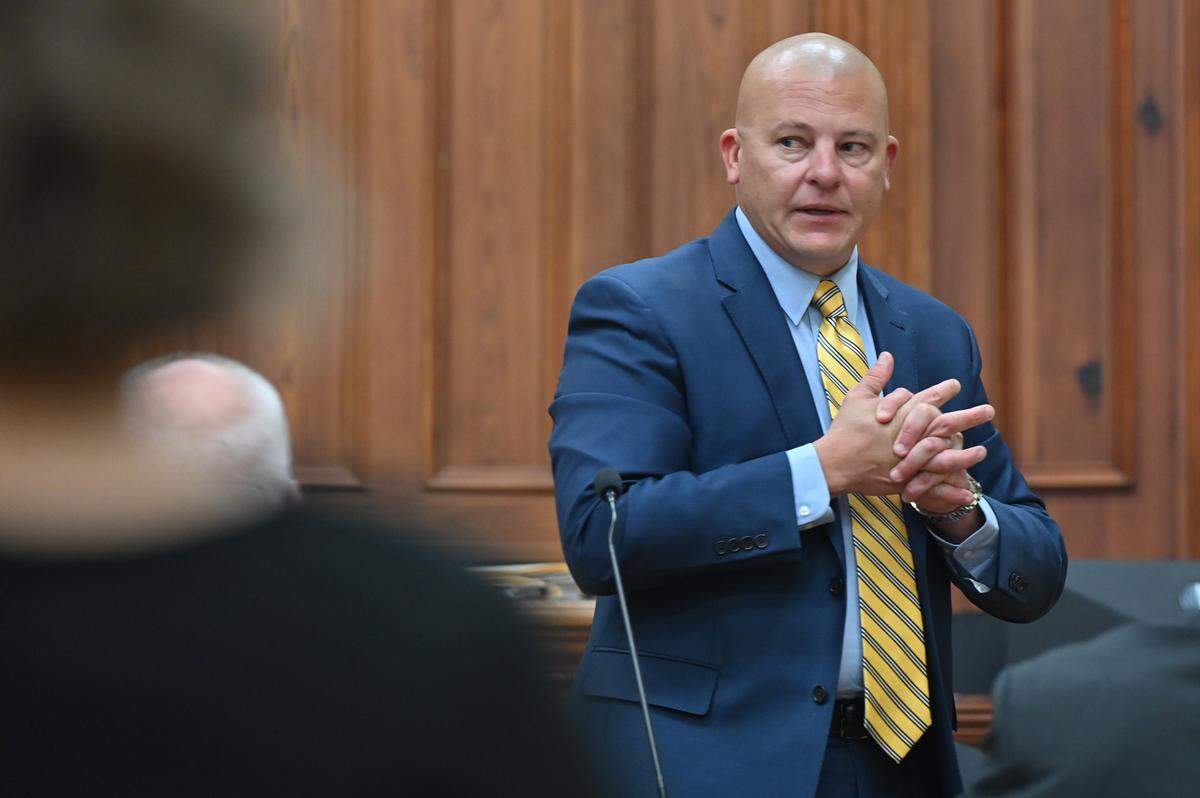
Jury to deliberate in tasing murder trial of 3 former Washington County deputies
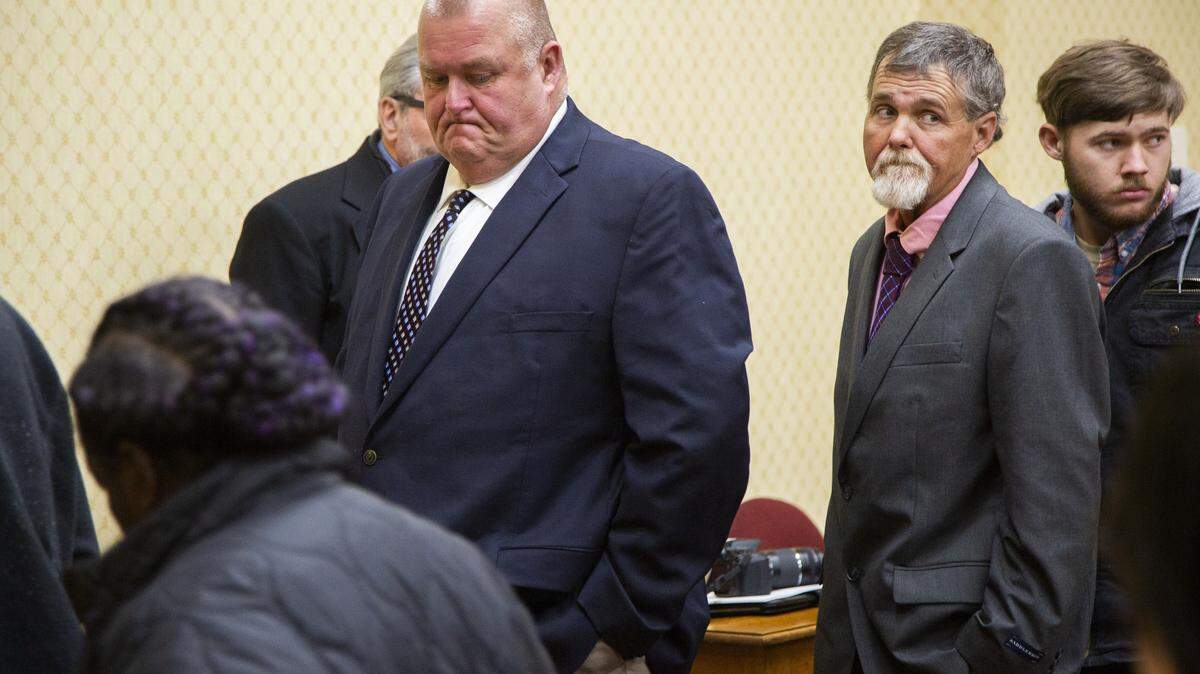
Jury deliberations began on Wednesday morning in the trial of three Washington County deputies who tased a mentally ill man, which prosecutors say led to his death.
After almost a week of the jury panel receiving evidence and listening to witnesses and experts, prosecutors and the defense attorneys made their closing arguments, attempting to convince jurors whether they should or shouldn’t convict Michael Howell, Henry Lee Copeland and Rhett Scott for the death of Eurie Martin, a 58-year-old man with schizophrenia.
Scott and Howell took the stand, recounting the events in which they, along with Copeland, encountered Martin on Deepstep Road on July 7, 2017. They contended that, to their understanding, Martin had violated the law by walking through the roadway and ignoring their commands. They testified that they used their taser multiple times in an attempt to restrain Martin, but minutes later, he died. The former deputies weren’t aware that Martin had a schizophrenia diagnosis, that it was normal for him to walk that roadway, or that he had heart disease, according to their testimonies.
This is the prosecutor’s second attempt at convicting Scott, Howell, and Copeland. They were initially declared immune until the Georgia Supreme Court reversed the decision in 2020. A year later, a mistrial was declared after jurors couldn’t unanimously agree on a verdict.
Jurors this time around have to base their decisions on whether the taser used against Martin contributed to his death. While the defense attorneys argue that it was Martin’s stress and underlying conditions that led to his death, prosecutors argue that the taser was a deadly weapon used in his death.
Howell, Copeland, and Scott could face life in prison if convicted.

The use of tasers and the death of Eurie Martin
Assistant District Attorney George Lipscomb contended in his closing statement that the tasers used by the deputies had a label that warned of possible death if used for an extended period of time and if the receiver had underlying conditions — even though most of the expert witnesses brought by the defendant’s attorneys described a taser as a non-lethal weapon that couldn’t directly cause death.
The coroner didn’t include the use of a taser in the autopsy report, only that Martin suffered a heart attack while restrained, according to one of the defendant’s attorneys, Mark Shaefer in his closing argument.
“What caused that fatal heart attack?” Lipscomb said. “It’s the pain. It’s the pain caused by that taser.”
Shawn Merzlak, another one of the defendant’s attorneys, said, “This is a sad case,” but that the former deputies were justified in tasing Martin, according to his closing argument. Instead of reacting in a way that the deputies would expect, Martin ignored the questions and commands brought by the former deputies, even though he had violated the law. Martin may have been suffering from a schizophrenic episode, Merzlak said, but he alleged that the deputies didn’t know that until after the fact.
Closing arguments in the case
The former deputies were previously trained in the use of a taser and force, as well as how to approach individuals with mental health issues. According to their attorneys in their closing argument, they were following their training.
“This case is not about Mr. Martin being tased and attacked by officers because he was walking all the way,” Merzlak said. “It’s the totality of the circumstances we have to look at. And we have to look at that through the eyes on the wall.”
Lipscomb’s final argument before jurors were sent to deliberate was about how Howell previously indicated that, if Martin had obeyed his orders, the situation would have turned out differently.
“What we’re talking about here is selective enforcement,” Lipscomb said. “We’re talking about targeting a specific vulnerable group and making them victims of laws that don’t apply to everybody else.”