Former Washington County officer takes the stand in his own murder trial
CORRECTION: The date of the incident was July 7, 2017. This information was wrong in previous reporting.
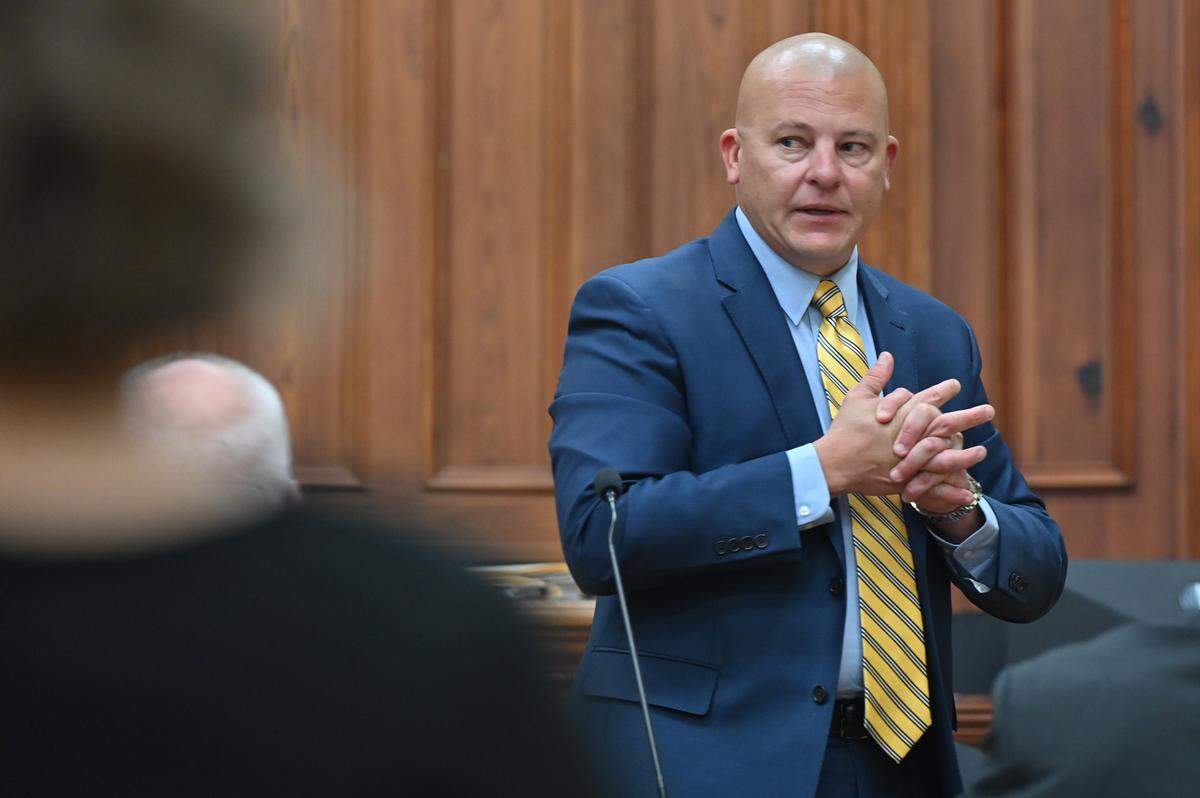
One of the former Washington County deputies accused of murder after he used a taser on a man who died in the incident took the stand in court Monday, eight years after the incident.
Michael Howell — one of the men charged with felony murder, voluntary manslaughter, aggravated assault, and reckless conduct — retold the events of July 7, 2017, when he was dispatched to Deepstep Road after a resident rang 911 dispatchers and reported a suspicious man, who turned out to be Eurie Martin. Martin, who was diagnosed with heart issues and schizophrenia, died in his encounter with Howell and the other officers.
Howell, as well as Henry Copeland and Rhett Scott, tased Martin in an effort to get him to comply with their orders, but it led to his death, according to court testimony.
Howell, like his attorneys have argued throughout the trial, which started last week, contended that Martin was breaking the law by walking on the road and refusing to comply with officers’ demands. This led officers to attempt an arrest, he said in his testimony.
“I know (Martin) was saying stuff,” Howell said. “But I could not (understand) what he was saying.”
Deputies tried to get Martin to stop when they encountered him, but he ignored them, according to court testimony. He kept walking for most of the interaction, and lunged toward one of the deputies, according to court testimony. The officers’ attorneys have argued believed that tasing Martin was a non-deadly way for them to subdue him and put handcuffs on him, according to Howell’s testimony.
Howell also said he believed Martin’s behavior indicated he would attack or resist, another reason why he and the others used their tasers. Martin was also “one of the strongest men I have ever encountered,” he said during his testimony.
Martin said during the encounter that he was dying, but Howell said he didn’t know if he was actually dying, according to his testimony.
The deputies did not initially know what happened before a local resident called 911, and found out what transpired once Howell spoke with the man who called 911 on him, minutes after Martin died.
A report from the incident filled out by Howell only mentioned meeting Martin, but not how he used a taser, and he died. He explained that he was directed to do so after an extensive conversation with an agent from the Georgia Bureau of Investigation, according to his testimony.
Howell’s attorneys have argued that the taser wasn’t the weapon directly responsible for Martin’s death. Instead, they blame the stress of the situation, as well as his heart disease and schizophrenia diagnosis, defense attorney Shawn Merzlak says.
Merzlak asked Howell on the stand whether he intended to harm or kill Martin during the incident, to which Howell responded, “no, I did not.”
The former deputies were completely unaware that Martin typically drove or walked from his home in Milledgeville to his family in Sandersville, that he had heart disease, and that he was schizophrenic, even though they believed he was acting strange, according to Howell’s testimony.
Deputy says he hasn’t read policy on how to handle these incidents
During cross-examination, Assistant District Attorney George Lipscomb asked Howell about the Washington County Sheriff’s Office policy that specifies how to address a situation similar to the incident. Howell said he hadn’t read that policy. It stayed locked in the supervisor’s office, he testified.
Howell also said that, before working part-time at the sheriff’s office, he had trained in the use of force and de-escalation techniques, according to his testimony.
This trial has lasted four days and is the second attempt for prosecutors to take this case to trial. Howell, Copeland and Scott were initially given immunity before the state Supreme Court reversed the decision in 2020. Then, in their first trial, the judge declared a mistrial when jurors couldn’t agree on a verdict.
If convicted, they could face life in prison.
This story was originally published November 18, 2025 at 10:53 AM.