‘They’re killing me.’ Murder trial starts for former Washington County deputies
The trial kicked off Thursday for the three former Washington County deputies facing murder charges for allegedly tasing and physically assaulting a man exhibiting medical issues, ending in his death.
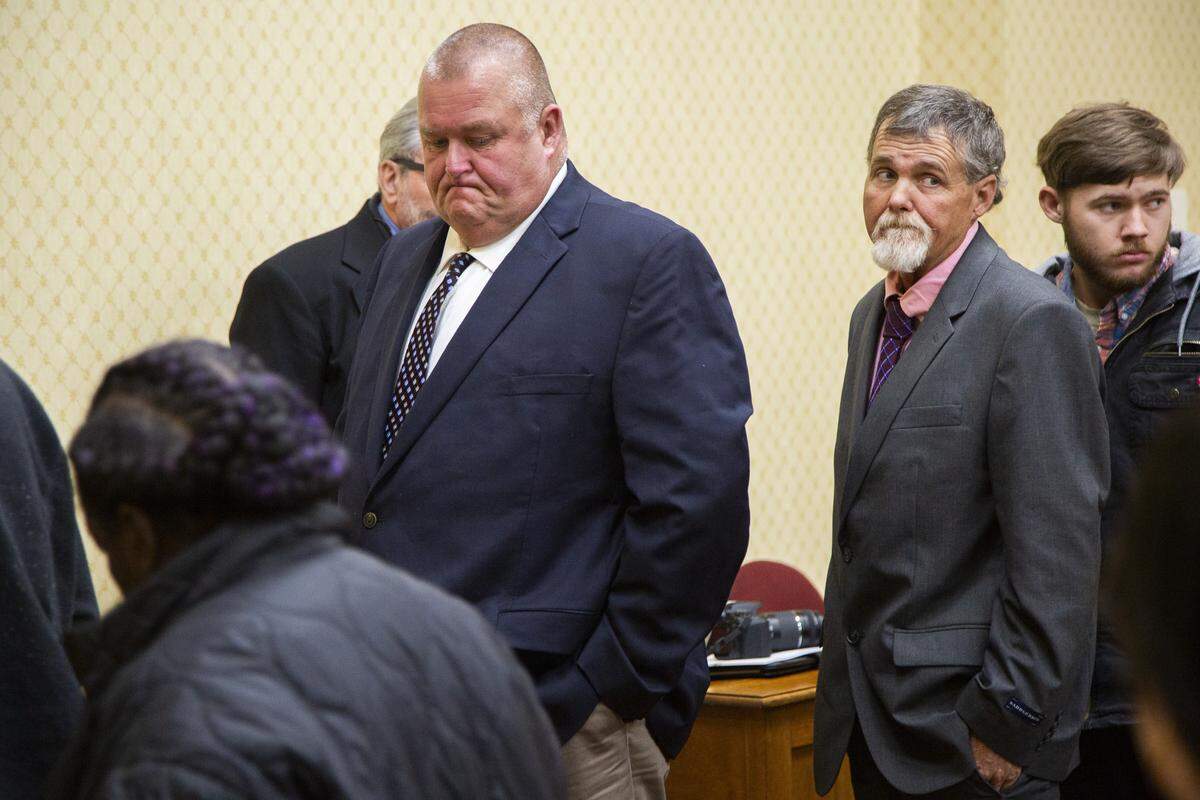
Henry Copeland, Michael Howell and Rhett Scott appeared in a Sandersville courtroom on Thursday, fighting allegations from prosecutors who claim their actions on July 7, 2017, were unlawful and led to the death of Eurie Martin, a 58-year-old man who suffered mental health issues.
Their trial was slated to proceed on Wednesday. However, Assistant District Attorney George Lipscomb of Muscogee County suffered a medical emergency and appeared to faint in the courtroom. Senior Judge H. Gibbs Flanders Jr. delayed the trial to Thursday, which was one of the many court delays in the case’s years-long history.
The former deputies were declared immune by a judge in 2019, which would have exempted them from criminal prosecution, until Georgia Supreme Court justices expressed doubt on the decision and reversed it.
They went to trial previously, but jurors could not reach a verdict and a mistrial was declared.
The three are charged with one count of felony murder, one count of voluntary manslaughter, one count of aggravated assault, and one count of reckless conduct. If they are convicted, they could face:
- A life sentence under the felony murder charge
- Not less than one but not more than 20 years in prison under the voluntary manslaughter charge
- Not less than one but not more than 20 years in prison under the aggravated assault charge
- Up to 12 months in jail and/or a fine under the reckless conduct charge
Witness called 911, Martin exhibited ‘unusual behavior’
Martin, who lived in Milledgeville at a home that accommodated his schizophrenia, often drove or walked to Sandersville to see his family, Lipscomb said in opening statements Thursday. Before his death, Martin decided to take a 30-mile walk to Sandersville. When he got to Deepstep, he approached a man cutting grass in front of his home, to ask him for some water.
The man wouldn’t give him water, leading Martin to walk away. After their conversation, the resident called 911 dispatchers, reporting to them that a suspicious man had approached him moments ago, exhibiting an “unusual behavior,” according to Lipscomb in his opening statement.
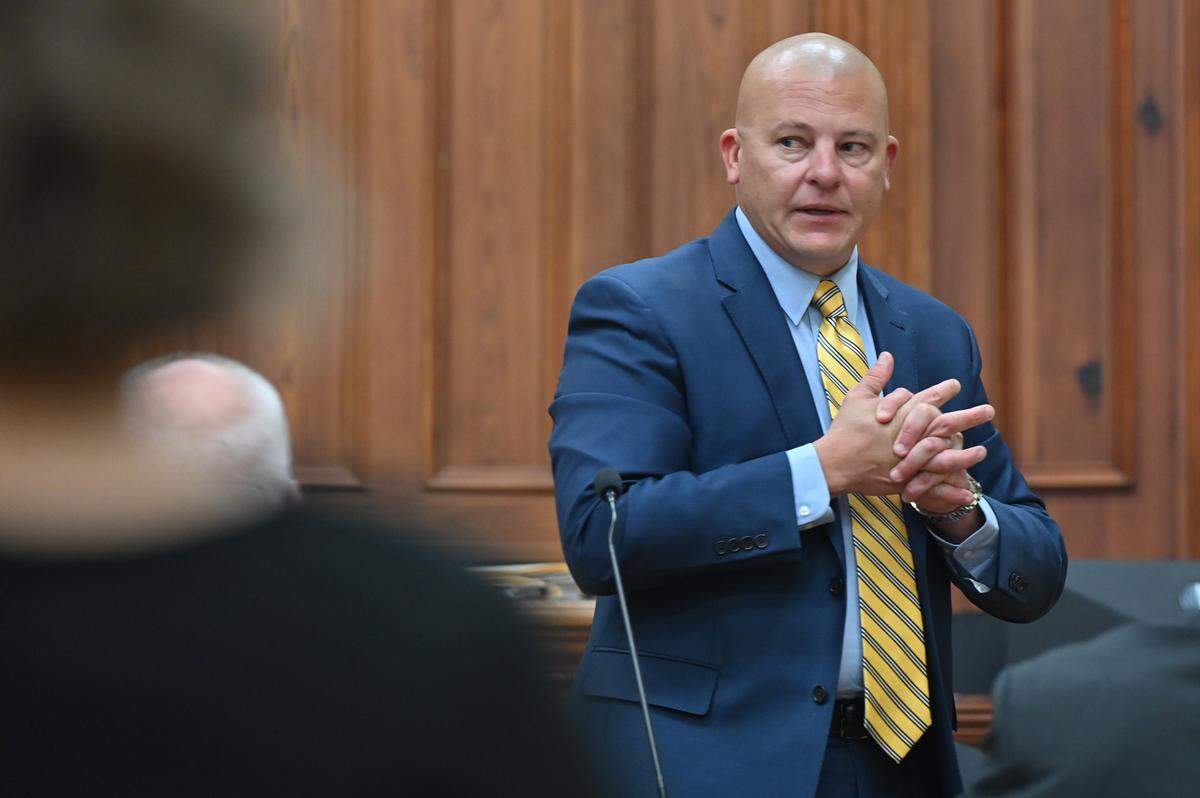
“So the police made a dispatch and they got in touch with … Howell,” Lipscomb said. “And this is how this begins.”
Howell approached Martin after being dispatched and asked about him. However, the former deputy wasn’t prepared for his response, as Martin asked, “Who are you?” before walking off, according to the prosecutor.
As a result, Howell requested backup and followed behind Martin until Copeland arrived and blocked access to the road. Both of the deputies attempted to speak with Martin, but he ignored them and continued walking, according to Lipscomb.
To the former deputies, Martin had illegally walked through the roadway, ignored their orders, and, when he got frustrated, he threw a can on the ground. These violations gave them reason to use a taser on him, Shawn Merzlak, one of the three attorneys representing the deputies, said in his opening statement.
“And then again, you’ll see that Mr. Martin acts like no one would expect,” Merzlak said. “He rips the taser tongs out of himself … It’s expected that their body would lock up temporarily to give (a deputy) the ability to try and place handcuffs on Mr. Martin … once (Howell) saw what was happening, he backed away. He knew that something was going on with this individual.”
Merzlak told jurors that a taser is a useful device to get someone to comply without serious injury, and the three deputies were following their policy. However, Lipscomb noted in their training manual during opening statements that, when approaching someone who is passively aggressive, tasing is not recommended.
‘They’re killing me’
Scott arrived at the scene and, upon getting information on the situation, he tased Martin, according to Lipscomb. The onslaught of electricity against Martin continued until the deputies were able to restrain him.
During the onslaught, Lipscomb told jurors that Martin was screaming, “They’re killing me, they’re killing me!”
Martin died as a result, with coroners classifying his death as a cardiac arrhythmia during police restraint, according to Lipscomb.
“We’re saying that the use of that taser was unwarranted,” Lipscomb said. “That struggle was unnecessary … it was too much for his already weakened heart, and that’s the case in a nutshell.”
Merzlak’s argument is that the deputies were unaware that Martin suffered from mental health issues or the details of what occurred with Harris, but that Martin broke the law and was resisting, according to his opening statement.
This story was originally published November 13, 2025 at 2:29 PM.