Second former Washington County deputy testifies in murder trial, defense rests
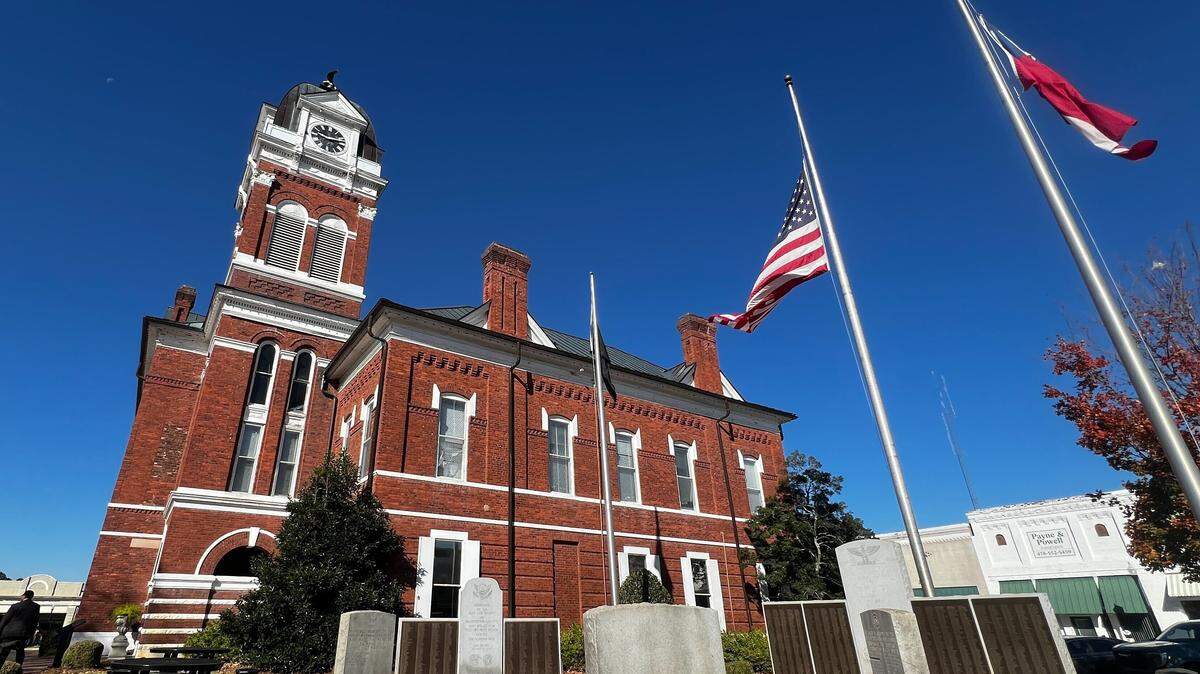
The defense for three former Washington County deputies rested their case Tuesday afternoon in the case of a man who died after being stunned with a taser eight years ago.
Michael Howell, Rhett Scott, and Henry Copeland have been on trial since Nov. 13 and prosecutors have argued they directly caused the death of Eurie Martin, a man suffering from mental health issues, when they used a taser on him on July 7, 2017. Howell took the stand on Monday, testifying about how the events that day had unfolded. Scott also testified before the former deputies’ attorneys rested their case Tuesday afternoon.
Both parties will deliver their closing arguments on Wednesday morning, with the jury panel deliberating in the afternoon.
The three deputies were charged with murder, aggravated assault, voluntary manslaughter, and reckless conduct. If convicted, they could face life in prison.
Deputies requested assistance
Howell explained Monday that he believed he and the other deputies were justified in using a taser since Martin had been illegally walking the road and refusing to comply with their orders.
Scott, who was the last person to arrive at the scene, said that Copeland and Howell were requesting his assistance in arresting Martin.
“I didn’t know what exactly was going on when he said fighting,” Scott said. “I thought they were in some type of physical altercation… When he said ‘we tased him, but he’s still fighting,’ I didn’t know what that meant.”
Because Howell was still struggling to arrest Martin, he ordered Scott to “step it up,” according to his testimony. When Scott got there, he saw them standing in the yard. He pulled up in the yard so his dash cameras could catch the incident. The deputies weren’t issued body cameras at the time.
Howell told Scott that Martin had been “tased” and advised that they’d probably have to use the taser on him again. Assistant District Attorney George Lipscomb said that 40 seconds had passed from Scott’s arrival at the scene to deploying the taser on Martin.
However, Scott got too close to Martin when he discharged his taser, with the prongs hitting around his right kidney. Martin removed the prongs, “and then he came at me with an overhand fist with his right hand,” Scott said.
Scott also said that Martin had tripped and fallen on his back, with his hands underneath him and one of his legs raised.
Deputies didn’t suffer injuries
Even on the ground, Martin still resisted, according to Scott’s testimony. Like Howell, Scott commented on how Martin was strong. By the time he was arrested, Martin was alive.
Scott said he had no specialized medical training, so he requested Emergency Medical Services to check Martin out after the incident. A volunteer firefighter arrived, and he found out that Martin wasn’t breathing. He began chest compressions until EMS arrived.
When Martin was placed in a gurney and inside the ambulance, “I didn’t have any further actions,” Scott said in his testimony.
None of the former deputies knew that Martin typically traveled from his home in Milledgeville to Sandersville to see his family, that he had a heart condition and was diagnosed with schizophrenia.
Lipscomb asked Scott about an official statement he made on July 21, 2017 to the Georgia Bureau of Investigation, which stated that Martin was agitated and aggressive. Scott explained that his statement was based on the knowledge he had at the time, without reviewing the dash cam video. The statement was also approved by Pierce Blitch IV, his attorney throughout the case.
However, neither Scott’s nor Howell’s statements included Martin’s death.
The prosecutor also expressed doubt that Martin had attempted to punch Scott, but the former deputy was confident that Martin was agitated, aggressive, and was preparing to attack.
But Scott, nor the other deputies, had injuries as a result of the incident.
This trial is the second attempt made by prosecutors to get a verdict in the case.. Howell, Copeland, and Scott were initially declared immune before the Georgia Supreme Court reversed the ruling in 2020. A year later, their case went to trial for the first time, but jurors couldn’t render a verdict, and a mistrial was declared.