
How Mercer, Bibb County police respond to wave of fake reported threats in Macon
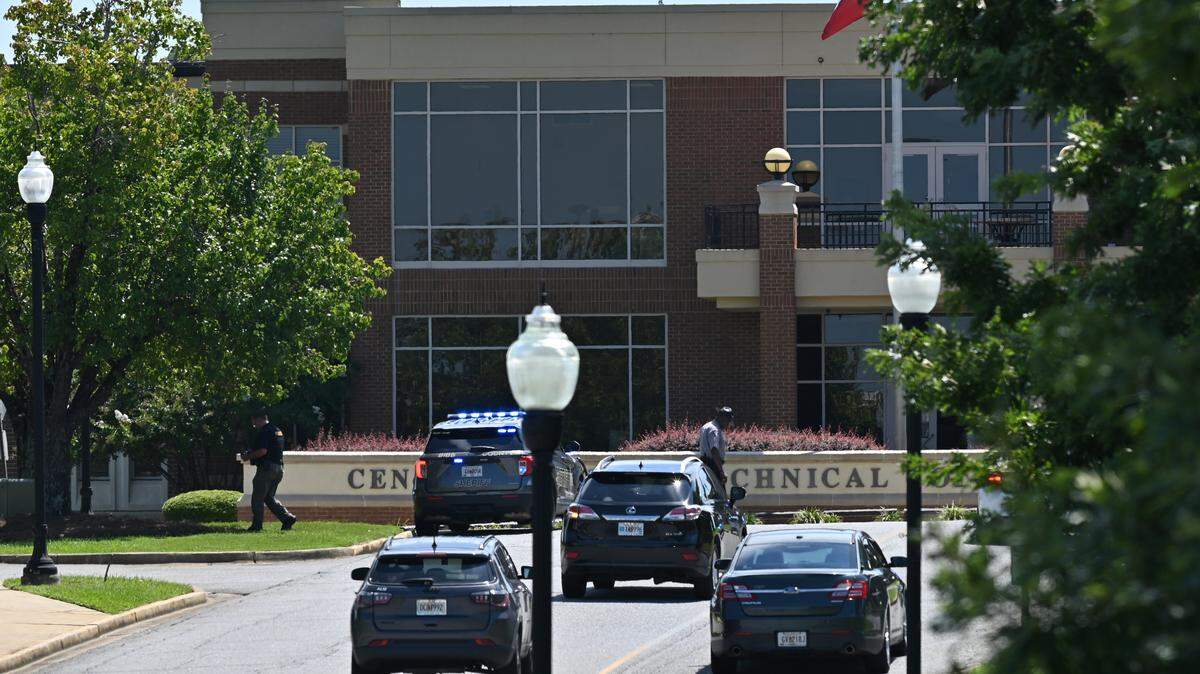
The Mercer University and Bibb County Campus police departments say a recent wave of swatting calls put a strain on personnel from local, state and federal agencies, in addition to school staff, students and the community.
When a caller reports an active threat, officers respond to it as if it were real. But these calls turned out to be false at least a dozen times across the U.S. in August, and at least fives times locally in the past month: Mercer University, Central Georgia Technical College, Rutland High School, Perry High School and Ballard-Hudson Middle School.
Even when a school shooting threat is unfounded, a thorough investigative process requires officers to locate a threat or deem it false, and reach a point where it’s safe to issue an all-clear. Once that is done, then investigators have to try to locate a caller, possibly apprehend them and investigate if the incident was tied to similar calls, according to Mercer Police Chief Haley Beckham.
“It definitely pulls officers, dispatchers and emergency personnel away from their legitimate emergencies and strains your already-limited resources,” Beckham said. “Everyone shows up.”
These incidents can pull staff from the FBI, Georgia Bureau of Investigation, Georgia State Patrol, Georgia Emergency Management Agency, local sheriff’s offices, other school police departments and emergency medical services, Beckham said.
Bibb County Campus Police Chief Curtis Adams said he worries others may become complacent because there’s a high frequency of hoax calls, and that could cause changes to how agencies respond.
“I would assume that if they continue, the amount of people that respond, they would start coming up with some different strategies and policies,” Adams said.
Phone lines get flooded
One typically-unseen issue with swatting calls is that reported threats clog the main lines of communication between dispatchers, officers and the schools, Beckham said.
“There’s going to be numerous calls from concerned citizens wanting to know what’s going on…,” Beckham said. “Your community partners, stakeholders, parents, faculty and staff, they all want to know those answers.”
When a threat is reported at a school, the institution’s police department usually leads a campus sweep and directs other agencies at the scene over phone and radio.
“It’s usually that one main line, which is us,” Beckham said of incidents that happen at Mercer. “We want that line to remain open so we can get any investigative leads. ... It’s all happening simultaneously.”
How to know it’s a hoax?
Officers can usually determine if a reported threat doesn’t actually exist within hours or quicker after the call is made, according to Adams.
Schools were cleared and considered safe shortly after all the active threat reports in Middle Georgia recently.
Officers also can gauge how likely a real threat is based on how many people report it, Adams said.
“Just imagine if someone’s shooting a gun in the background, and saying, ‘they’re shooting students in the hallway …,’ and we haven’t heard another call come up in three to four minutes,” Adams said. “To us, that’s a sign that it’s more than likely going to be a prank call.”
Most students and staff have personal phones, so in a real threat, “there’s going to be hundreds of people calling their parents, the media, 911,” Adams said.
But still, officers must respond as if it were real.
“At no point are we going to stop responding to them, because we don’t have that option,” Adams said.
What’s the point?
Investigators haven’t yet determined motives behind the recent wave of hoax calls, but the trend has an echo effect, Adams explained.
Some recent calls came from different phone numbers, he confirmed. But investigators did not yet determine if any came from the same person or people.
“A lot of times there’s a copycat,” he said. “Someone does something and they get attention for it, and they’ll copy that same thing.”
Consequences
One person has been arrested and charged with one of the recent incidents. A Macon 16-year-old was arrested for allegedly reporting a false threat on Aug. 29, at Ballard-Hudson Middle School, according to the Bibb County School District.
It is illegal to report false threats, and perpetrators can face prosecution, according to the U.S. Department of Justice.
A judge can decide if a child should get charged for swatting, and their age is sometimes considered, according to Adams.
“Some judges are more lenient toward juveniles than other judges,” he said.
There’s usually no excuse for reporting a threat that they know is false, according to Adams.
“The kids will say, ‘I was teasing, I didn’t really mean that …,’” Adams said. “But it’s so serious because you’re putting other people’s lives in jeopardy.”
He recommended that schools teach students about these crimes.
He also hoped the 16-year-old’s arrest will encourage others to not commit similar crimes, but it’s hard to convince people not to, he said.
“People who do those types of things have little care about the resources that’s being pulled or the severity of the crime,” Adams said.