
Disputes boil over, lead to most of Macon’s murders this year. What leaders are doing
Reality Check is a Telegraph series digging deeper into key issues and focusing on accountability. Have a suggestion for a future story? Email breaking@macon.com.
The majority of Macon’s 28 homicides this year grew from a personal disagreement to a shooting, according to incident reports reviewed by The Telegraph and Bibb County Coroner Leon Jones.
Yelling, arguing, pushing and tussling were common among the disputes before someone pulled out a gun.
“It’s anger and conflict,” Jones said.
Most suspects were not strangers to the victims, Jones added.
Only three of the total incidents were found to be justifiable homicide, three involved theft, and two were gang-related, according to incident reports.
Jones, a Macon native, has worked in the coroner’s office since 1990. He was elected coroner in 2004, and previously worked in emergency medical services. Since his start, he has become concerned about violence disproportionately affecting Macon’s Black residents, particularly residents in low-income areas.
Who is most affected by violence in Macon?
Macon’s underserved areas are most affected by gun violence, according to a review of the locations of shootings in 2024.
Most homicides occurred in zip codes 31204 and 31206 this year, incident reports showed. These primarily cover areas of west Macon.
Poverty rates in these areas were greater than the county average in 2022, according to U.S. Census Reporter, an independent analysis by Northwestern University. About 32.5% of 31204 zip code residents were below the poverty line at the time of the study, and about 39.3% of people in the 31206 zip code were below the poverty line.
Violence in these areas disproportionately affects Macon’s Black residents, who account for about 54% of Macon’s population. But about 85% of the city’s homicides this year involved Black victims, according to the coroner’s office.
More of Macon’s Black residents are in the areas most affected by fatal shootings — about 63% of people living in the 31204 zip code were Black at the time of the Northwestern study, and about 79% of people living in the 31206 zip code were Black.
While local officials have raised concern about who’s being disproportionately affected by homicides in Macon, these fatal incidents are lower this year compared to other recent years. At this time in 2023, there were 32 homicides. In 2022 there were 51 and in 2021 there were 38.
Experts say there are longstanding issues that leave Macon’s Black residents who live in disadvantaged communities more likely to be affected by gun violence — the strains and limitations of living in or near poverty exacerbate issues and make it harder to access services that can prevent violence.
Maryann Erigha Lawer, an African American studies and sociology professor at the University of Georgia, studies the intersections of race and media. She explained it’s important to address the issue of homicides, while also discussing why they’re happening.
Certain discourse about violent crime could worsen stereotypes about those impacted, like “painting Black men as violent,” Lawer said.
“The worst aspect of racial stereotypes is that they can make people believe that these behaviors or circumstances are normal, and that they’re an everyday reflection of a group of people or of a society,” Lawer told The Telegraph.
Lawer said race is not to blame for the homicides because it is an intersectional issue.
“Thinking about it as a problem of just masculinity in the 21st century is another way to think about some of these issues, and how we channel that emotion in a way that’s very productive,” Lawer said.
Mental health plays a factor, help can be hard to get
Learning to channel emotions productively can be difficult for those in low-income areas, which is where many of Macon’s homicides have occurred.
About half of the homicides this year occurred in zip codes with the highest levels of trauma in Macon, according to incident reports and an adverse childhood experiences study by the county government and counseling group Macon Mental Health Matters.
Andrea Cooke, development director of Macon Mental Health Matters, said Black residents are more heavily affected by violent crime in part because they’re also more affected by poverty and limited resources, making it harder to access mental health support and education.
“It is difficult for a child to behave in class if they don’t have support. It’s difficult for them to do their homework if there’s no food at home, if there’s chaos,” Cooke said.
Thirty-four percent of Macon’s Black residents were in poverty between 2015 and 2020, compared to 12% of white residents, according to a community assessment by Piedmont Healthcare. Twenty-two percent of households in the county were below the federal poverty line in 2022, according to the United Way ALICE report.
Jeremy Grissom, Macon Violence Prevention coordinator, said he has noticed cycles of trauma and lack of discourse on mental health, particularly among men in the county.
The problems that contribute to this are longstanding. Inter-generational trauma among Black men has been linked to historical events such as “colonization, slavery and displacement,” according to the National Library of Medicine.
“The men are supposed to be strong, parent or spouse, figuratively, but there’s never a question about what happens underneath and what it takes to build that,” Grissom said.
There’s a need for community members to seek counseling, he said. Black Americans are 20% more likely to have “serious psychological distress” than white people, according to the National Institute on Minority Health and Health Disparities. Depression among Black American residents also is “more disabling, persistent, and resistant to treatment” than among white people, the institute said.
Poverty and limited resources also contribute to a lack of conflict resolution skills, which have led to many of the homicides in Macon this year, Grissom explained.
“You can’t think wisely about conflict when you’re starving. Your mind is not thinking when you’re hungry,” he said.
What’s being done to help in the community?
Jones has called on community leaders including pastors, teachers, parents, and mental health professionals to address these shootings on local levels.
Macon Violence Prevention and Macon Mental Health Matters collaborate on Men’s Mental Health Meet-Ups as a free safe space to address the disparity and reduce violent crime. The organizations also recently collaborated with The Active Dad and held an event called Ice Cream with Dads.
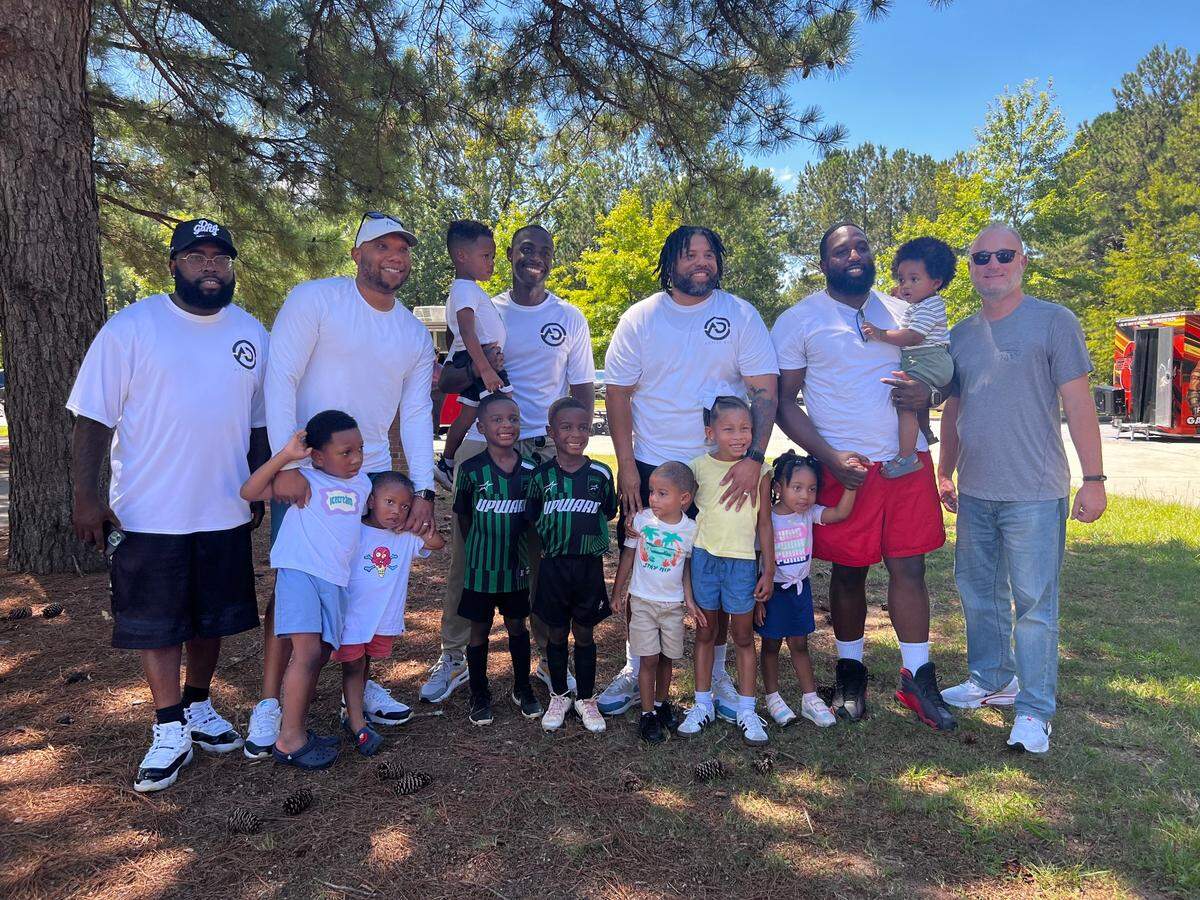
Fathers, male guardians and their kids spent quality time together at Amerson River Park “to connect, engage, share experiences, fostering a supportive community for men,” an event flier said.
The groups also teach men how to manage their emotions, provide free access to therapy and assist low income families dealing with mental health issues.
A Macon pastor seeks to provide family
Prince Moon, a retired counselor and pastor at Church of God on Houston and Villa Crest avenues, noticed people often turn to violence when they lack social support.
“They’re not all cutthroats, they just need family,” Moon told The Telegraph at a recent Sunday service.
National data shows that social support is an important factor in violence reduction. Adults with social support were 30% less likely to experience violence, according to a 2020 study by the National Institutes of Health.
Moon has counseled people in recovery, gang members and low-income youth for 40 years, and hosts Church on the Street services for these communities.
“They’ll say, ‘Look Moon, I don’t have a father, my mom’s in jail, so that is my family. They feed me, they protect me,’” the pastor said, referring to some of his parishioners and clients in gangs. “So that’s their family. They’re of course rough, and will shoot you, rob you, but the essence is family.”
Many of Moon’s parishioners and clients have experienced trauma. He often preaches about how men can feel confident without using violence to prove it.
“The family structure is just depleted,” Moon said. “So the church offers counseling support and I try to be a dad.”
Therapy is just one piece of the puzzle, he explained. He said other preventative measures should be enacted, such as stricter legislation on gun control.
Georgia does not require a license to purchase or carry a firearm if a person is at least 21 years old, or 18 years old and in the military, among other restrictions.
This story was originally published September 10, 2024 at 12:57 PM.