
50 years ago, a Macon girl vanished without a trace. Her sister still searches for answers
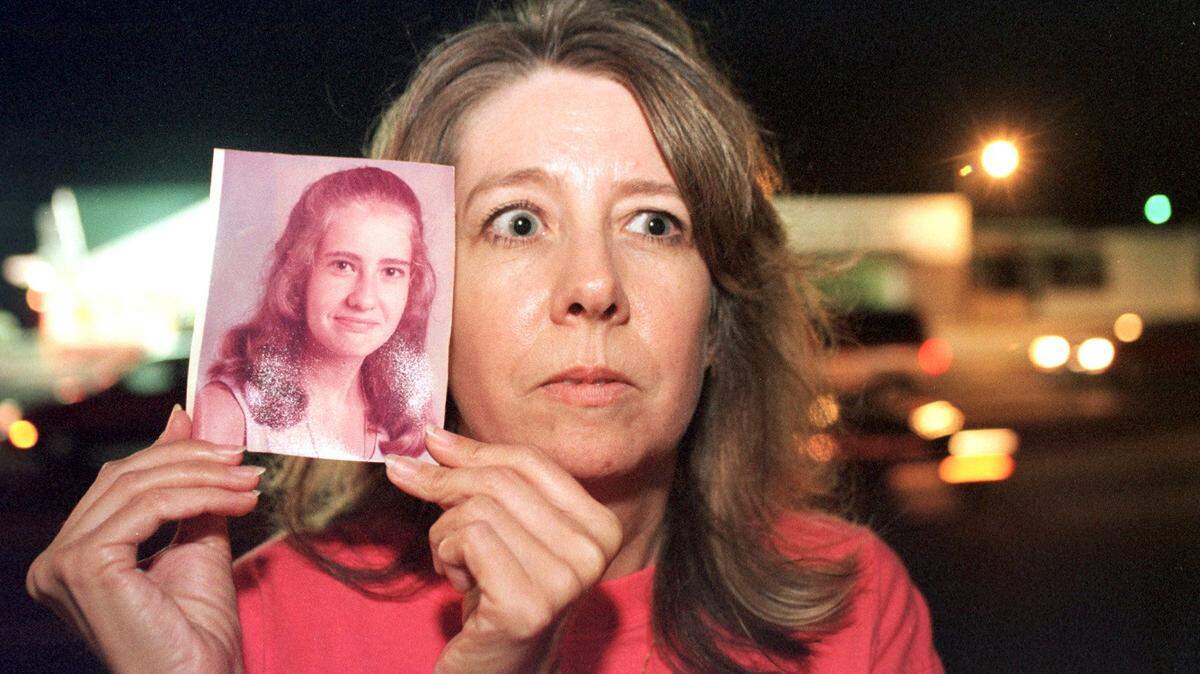
There is perhaps only one thing more mystifying about how a 16-year-old girl vanished without a trace after stopping by a Macon shopping mall on her way to pick up her younger sister one summer day 50 years ago this week: how the police barely investigated.
The disappearance of Carlene Tengelsen was a missing-persons case that slipped through the cracks.
It was 1972, a time when young people sometimes ventured away or ran away or went off hitchhiking in search of themselves. The cops saw little reason to track them.
Carlene, though, who had just gotten her driver’s license, was no runaway, no hippie wanderer. She was a Southwest High School student. She lived with her mother and father on, of all places, a middle-class neighborhood thoroughfare named Easy Street in west Macon, just down from then-Mayor Ronnie Thompson.
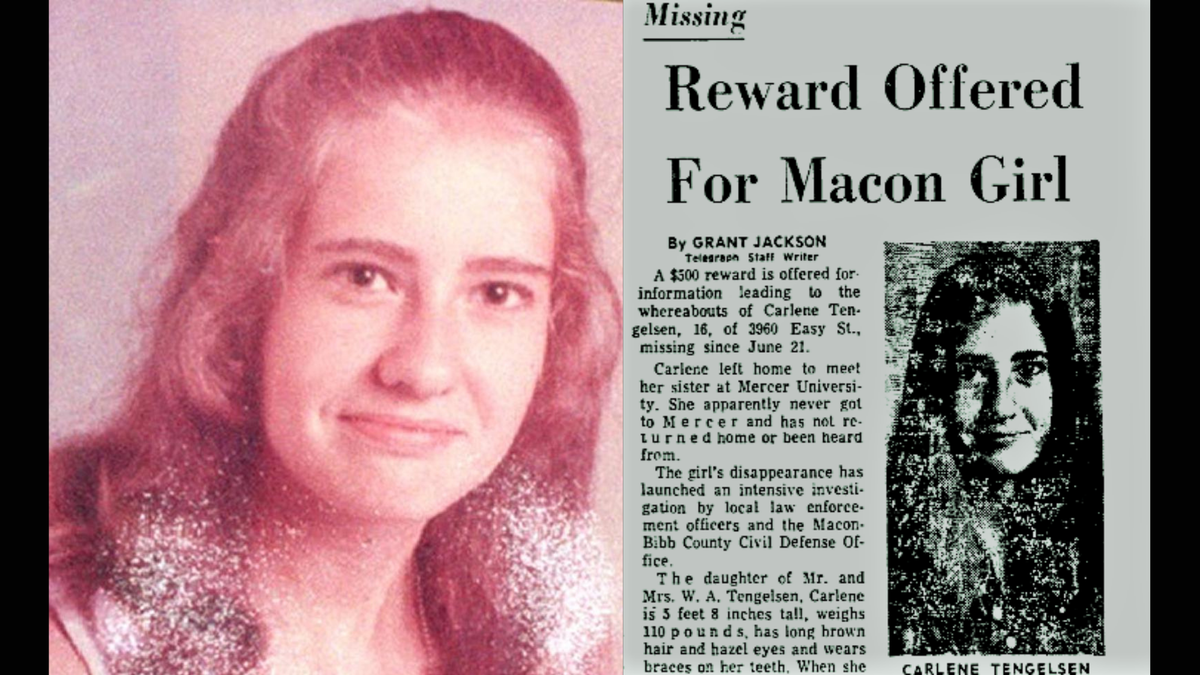
There were some organized searches for Carlene, but news coverage was scant. A $500 reward was offered. Teenagers, parents and family friends scoured parts of town around the Westgate Shopping Center at the intersection of Pio Nono Avenue and Eisenhower Parkway where Carlene was last seen. Some boys playing pinball recalled seeing her but reported nothing unusual.
No signs of her were ever found. No suspects emerged. The family station wagon she had driven to the mall was discovered in the parking lot there in the hours after Carlene vanished on June 21, 1972.
The investigators assigned to her case have long since died. A measure of just how little they had looked for her came when one of the detectives who, years after the vanishing, mailed Carlene’s family a notice. The detective asked that if Carlene had returned home they should notify the cops so that the police could clear their file on her. Had they been actively pursuing leads or following up, they would have known she was among the lost.
Carlene’s family never heard from the police again, not until years later, after a two-day series on her disappearance was published in The Telegraph, did detectives begin trying to piece together a new file. DNA samples were taken from Carlene’s relatives and entered into a database so that if skeletal or other remains of her ever surfaced there would be something to match them with.
Her mother, Joan, and her big sister, Arnelle, died in recent years. Her dad, Arnold, who was known as “Ting,” died in 2004.
One of Carlene’s two remaining siblings, her younger sister, Joanette Barnes, has done her best to keep Carlene’s disappearance in the public eye.
‘I just can’t let it go’
Barnes, 64, had been 14 when Carlene vanished.
It had been young Joanette who Carlene was headed to pick up that day from a summer camp at Mercer University when she stopped by the mall in the family wagon.
Recently, as the 50th anniversary of that day drew near, Barnes reflected on what half a century of living a mystery has been like.
“I hate to say it,” she said, “but I always kind of dread June. As it gets closer, I can tell my anxiety or my nerves are shot a little bit more. I keep thinking, ‘I’m not gonna give up hope.’”
Barnes, a former schoolteacher, realizes chances are beyond slim that Carlene is still alive.
“People say, ‘After 50 years, you know she’s dead,’ and I know that’s probably true,” Barnes said. “I just don’t want to say I agree and that’s it. I just can’t let it go. I’ve asked my Sunday school class to pray for me. I get real emotional thinking about it.”
She said that spreading word that Carlene is one of Macon’s long-missing children eases her mind. Doing things now that the police didn’t do all those decades ago seems constructive.
“They were so sure that she was a runaway,” Barnes said, “and they wouldn’t listen to mom and dad.”
She recently handed out “missing” flyers to jog anyone’s memory or, hopefully, make someone come forward with a crucial tip.
“It would be nice to know for sure,” she said, “to have some justice to it.”
Finding some answers now, Barnes said, might bring some relief.
She still dreams of her lost sister.
“I find her,” Barnes said of the dreams. “I’m taking her back to mom and dad, and on the way I lose her. I just can’t ever get her back.”
‘I hate that person’
Barnes wonders what she might say to her sister’s abductor today, what she might share about what Carlene’s disappearance did to her family, how it was and is, as she put it, “traumatic.”
Fifty years of no answers are a hell few fathom.
If the person responsible is still alive, Barnes said, “The first thing that I would want to know is why. Why did you do it, why her? And then I’d want to tell them, ‘Do you realize what you’ve done?’”
She hopes she could forgive the killer.
“I hate that person, and I’ve had to ask God to forgive me for hating them, because I don’t even know who they are,” Barnes said. “But I hate them, and I know that’s not right. Mom and dad taught me not to hate.”
If ever she had to face them, she said, “I may not be so nice.”
Barnes recalls the weeks and months of torment that her parents endured in the wake of Carlene’s disappearance. She can still see her mother sobbing in her bedroom, breaking down, and her father holding her mother tight.
“Their faith got stronger,” Barnes said. “They got closer.”
Barnes figured this anniversary of the vanishing is “the last big push” for resolution.
“Trying to get somebody,” she said, pausing. “Somebody knows something.”
The smallest of clues could help; a fleeting memory, or, say, a pivotal phone call to the cops, who might now listen.
“I know it’s one-in-a-million that we could find out anything this late,” Barnes said. “I guess until I die it’s just going to be really hard.”