
He said he killed a Byron man in self-defense. The GBI said no way. Now a jury has spoken
It has been nearly five years since the slaying of 35-year-old Lloyd Goldie.
His June 2017 shooting death in Peach County had, according to his killer David Lee Billings, been an act of self-defense in a life-and-death tussle during an evening of hanging out, drinking and listening to music.
Billings told investigators that Goldie was choking Billings’ girlfriend, a woman named Audrey B. Thompson, and that Billlings shot Goldie as they all tumbled to the ground.
For a year and a half, Billings was not charged with any crime. But the GBI kept digging.
In the months that followed, agents learned that the unarmed Goldie, a handyman and father of two who loved fishing, may not have been shot at close range after all. And most likely not slain during what Billings had claimed was a mortal struggle in the garage-turned-man-cave at Billings’ house.
Forensic details along with the results of Goldie’s autopsy and other evidence did not add up.
Goldie’s body was several feet from where Billings said he had shot Goldie, whose body was, in the words of a prosecutor, “riddled with gunshot wounds, at least six — three to the back.”
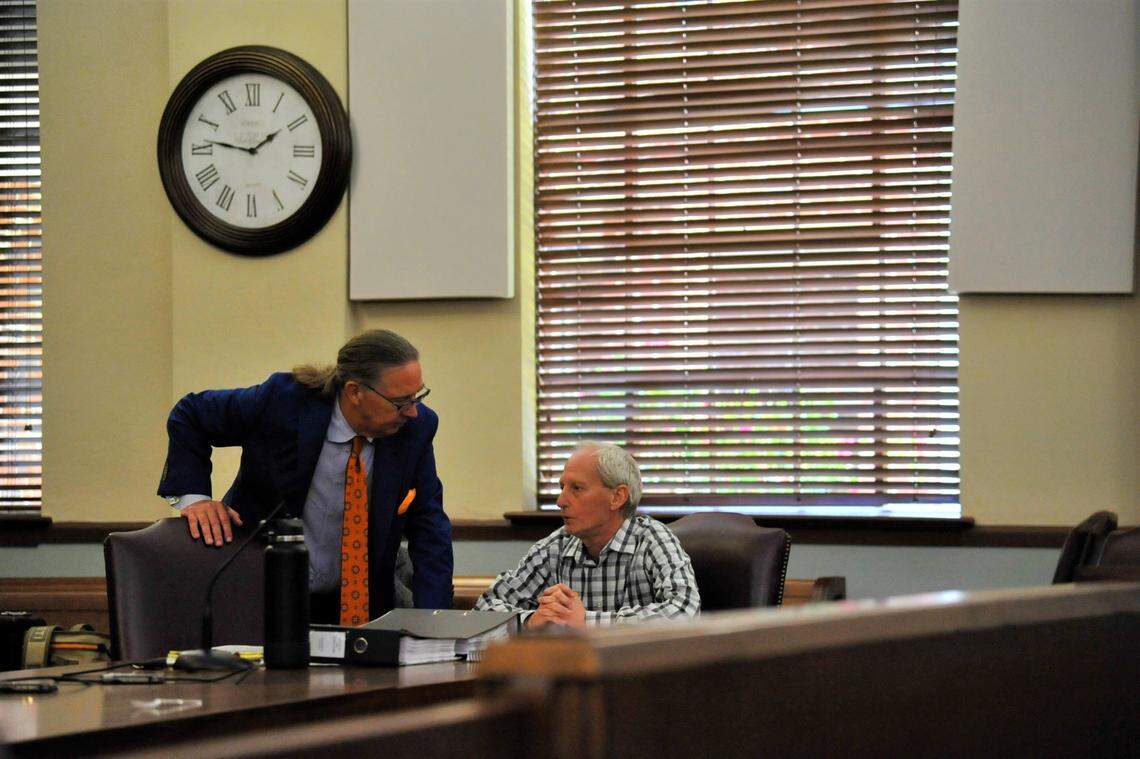
A week or so before Christmas in 2018, a GBI agent versed in reports and diagrams from the shooting scene and now aware of a medical examiner’s findings questioned Billings at length in an interrogation room at a sheriff’s department in North Carolina where Billings was living.
Billings could not explain, at least not enough to satisfy the agent, inconsistencies in his version of events and what investigators said actually appeared to have taken place.
Billings was charged with murder and extradited to Georgia.
Billings, then in his late 50s, had since moved to the North Carolina mountains. He had sold the house where he shot Goldie, a place Billings built with his own hands, at one point for a month or so with Goldie’s help.
The house sat less than 3 miles due west of Interstate 75. It overlooked a small lake on Juniper Creek. It wasn’t far from Camp Benjamin Hawkins on the northwest side of Byron.
In North Carolina, Billings was living in a camper trailer, still with Thompson, his girlfriend, who had lived with him in Peach County.
Thompson had herself witnessed Goldie’s shooting. Her account of Goldie’s death varied somewhat from what Billings told investigators, prosecutors would later say.
This week in a Fort Valley courtroom, a jury heard arguments from prosecutors and, on Billings’ behalf, from his defense attorney, about what happened the night Goldie was killed.
Billings, now 62, would not take the stand.
Assistant Macon Judicial Circuit District Attorney Neil A. Halvorson said the accounts Billings gave to investigators about Goldie’s death “just didn’t happen,” that Goldie had been further away and “could not have been a threat” when Billings opened fire on Goldie with a .45-caliber pistol.
Halvorson said Goldie “not only was across the garage,” that Goldie “was moving toward an exit door” when Billings shot him.
Investigators would never know for sure what prompted the shooting.
Prosecutors would suggest that perhaps Goldie had, after spending a few hours with Billings and Thompson that June evening, gone to leave and then, as he walked up their driveway to head home, heard the couple arguing behind him.
One theory was that Goldie returned to intervene and was shot dead by an angered Billings.
It was also suggested that Goldie had forgotten something and returned and, for whatever reason, been gunned down.
‘Goldie, it’s time to go’
The gray-haired Billings, 5-foot-6 and 130 pounds, had worked as a maintenance man for much of his career.
He and had past ties to California, Maryland and Virginia. He had known the much younger Goldie for a few years.
Goldie at one point lived in a tent in Billings’ backyard while Goldie did some work for hire around Billings’ property in the Twin Lakes at Juniper Creek subdivision. The place sits about 2 miles from the heart of Byron.
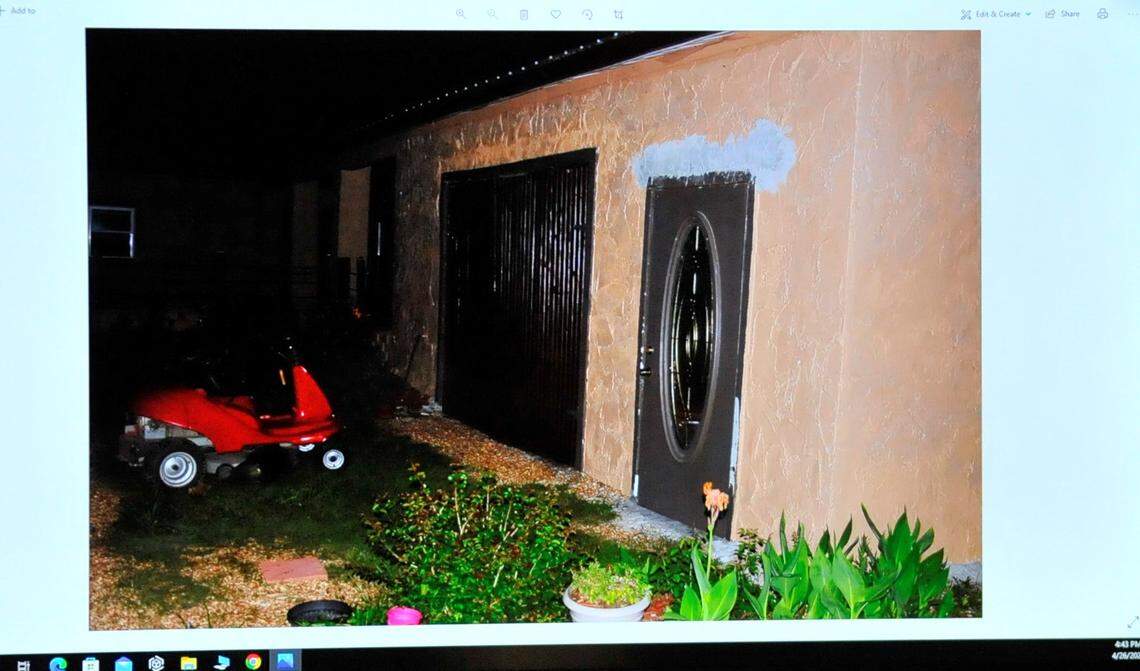
Halvorson, the prosecutor, in his opening statement to the jury on Tuesday, described Goldie as “kind of a free spirit” who had also worked at nearby Shaw Farms.
The prosecutor said there were no reports of any past violent encounters between Goldie and Billings.
Halvorson said that, at least according to Billings and Thompson, every now and then Goldie would drink and become too obnoxious and that Billings and Thompson would say, “Hey, Goldie, it’s time to go,” and that Goldie would leave “without incident.”
The night of the shooting, after drinking alcohol, smoking marijuana and listening to music — including the Hootie & the Blowfish hit “Only Wanna Be with You,” which can be heard in snippet of a home video that Thompson recorded on her phone — Billings and Goldie apparently clashed.
The reason, again, remains unclear.
Billings, in statements to investigators, said he told Goldie to leave but that after appearing to walk off Goldie returned and at one point grabbed Thompson and put her in a headlock and was choking her.
That account did not jibe with what Thompson said happened, at least initially, prosecutors said.
“Mr. Billings statement,” Halvorson said in his opening statement, “is just not true.”
The prosecutor emphasized that three of the six bullets that struck Goldie went into Goldie’s back, the back of “an unarmed person.”
“This is not a case of self defense,” Halvorson said. “This is not a case of defense of others. ... This is a case of murder.”
‘A house of a nightmare’
The house on Twin Lakes Court, completed in 2015, is a stone’s throw from the Crawford County line.
It had been Billings’ “dream home,” his lawyer told the jury.
For his lawyer, Franklin J. Hogue, of Macon, it was the first time he had spoken to a jury since November when he represented one of the southeast Georgia men who would be convicted of murdering of Ahmaud Arbery.
Hogue spoke of how the house where Billings and Thompson lived had, in the wake of what happened June 9, 2017, “turned out to be a house of a nightmare.”
Hogue said, yes, Goldie had helped Billings build the place but that Billings had a rule: “No hard drugs around here, Lloyd.”
The lawyer said, Billings found out Goldie was using IV drugs of some kind and kicked him off the property during construction. But as time went by, Goldie still visited on occasion and even showed up with hamburger meat to cook in the hours before his death.
The night Goldie was shot, after going to a store with Billings and buying beer and Southern Comfort liquor, Hogue said in his opening statement to the jury, Goldie “got a little drunk and he began to get a little loud.”
Goldie, Hogue said, at one point played air guitar with a rake.

Goldie was “loud and obnoxious,” Hogue said, and finally Thompson told Billings that Goldie has “got to go.”
Goldie, after appearing to wander off into the night, returned to the living-room-like garage “mumbling incoherently” and, Hogue said, threatening Billings with a racial slur, adding, “I’m gonna kill your ass!”
Billings tried to pull a door shut to keep Goldie outside, Hogue said, but that the 6-foot-1, 175-pound Goldie out-tugged Billings and opened the door.
Hogue said Billings retreated to an interior part of the house and shut the door, leaving Goldie and Thompson in the garage and then grabbed a loaded semiautomatic pistol from a cabinet.
Then Billings, armed, returned to the garage to find Goldie’s hands around Thompson’s throat, Hogue said. “So much so her eyes are bulging.”
“And then,” Hogue added, “the melee starts.”
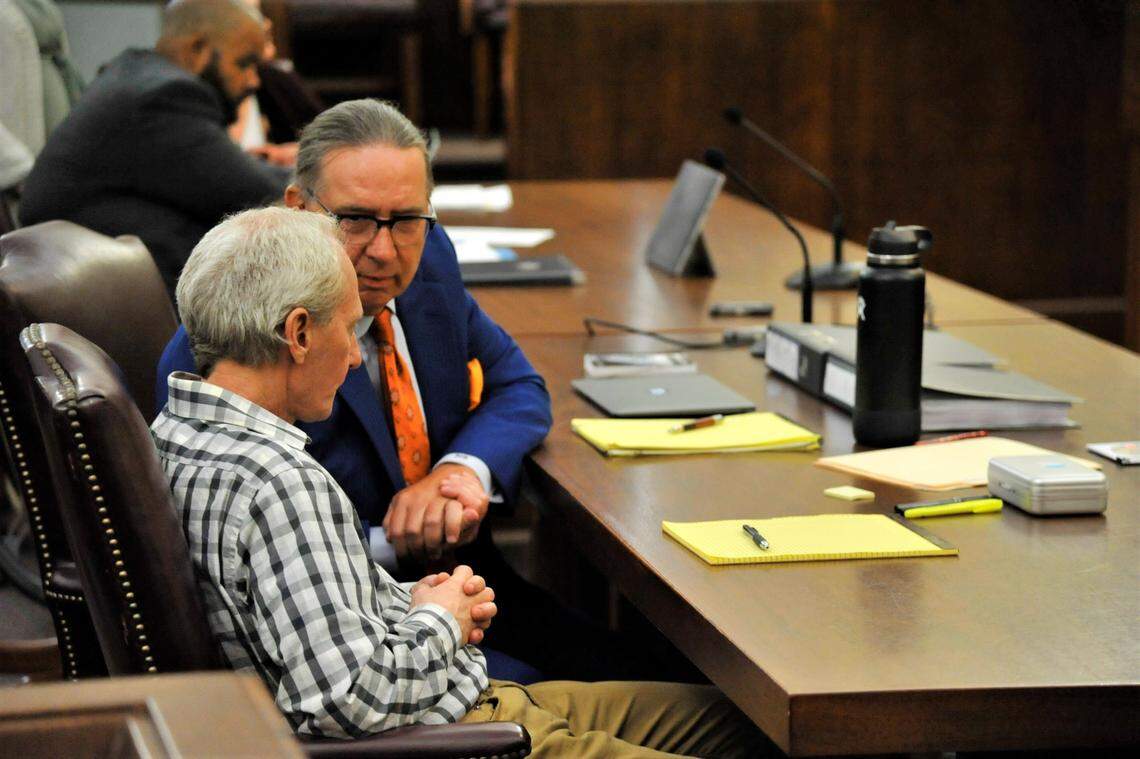
Hogue said the prosecution was correct in noting that the description Billings gave to investigators about what he saw “does not match up with the forensic evidence.”
“That’s a fact,” Hogue said. “There will be no dispute about that.”
He said there was no doubt also that bullets flew “everywhere,” hitting the bottom of a couch, tore through a wall and a blanket and a piece of wood. And that six shots struck Goldie, some of them in his back.
“All Dave Billings knows is, ‘I have a gun, this guy’s attacking my girlfriend and he’s in my home, having forcefully entered ... after being told to leave,’” Hogue said.
The lawyer went on to describe a “crazy, chaotic melee inside that garage” and that it was only after 16 months had passed that Billings, questioned again about details of that commotion, was arrested.
“This,” Hogue said, “is a self-defense case. ... Dave Billings did not commit murder.”
‘Dave, Dave, chill ...’
The 911 call went out at about 8:50 p.m. on June 9, 2017.
Billings, in a recording of the call, can be heard telling an emergency dispatcher there was “someone deceased” in his house, that he himself had been attacked and a person was shot.
Billings was questioned by investigators that night and a couple of days later. He told them his version of events, that Goldie had threatened him and inexplicably come at him. Billings was not arrested.
But as the GBI, in the months that followed, began piecing its case together, examining images and diagrams of the scene, the scenario Billings had provided didn’t jibe with the evidence.
Furthermore, there was no gunshot residue or other related material on Goldie’s body. In a close-range, deadly encounter like the one Billings had described, such evidence would typically be present. Also, Goldie’s body was at least five yards from where Billings said their fatal confrontation happened, and there were no blood droplets on the floor. Prosecutors said a man with multiple gunshot wounds would surely have bled as he crossed the room.
What’s more, a chance bit of key evidence was gleaned from a roughly 10-second video clip that, for whatever reason, Thompson had recorded on her cellphone about an hour before the 911 call went out.
In the recording, Goldie can be heard, perhaps in fear, telling Billings, “Dave, Dave, chill. ... I’m serious,” as the metallic noise of what prosecutors said was the telltale sound of a pistol cocking snicked in the background.
The implication being that Billings was already armed and that, perhaps, he was threatening Goldie, brandishing a pistol in the minutes before Goldie was shot dead.
Billings’ lawyer would later attribute the sound to a cigarette-filling machine that Billings kept in his home.
When it was demonstrated in court, the “shik” it made sounded a lot the slide of a cocking semiautomatic pistol.
‘Everything was black’
The one person whose testimony might save Billings or sink him — or not shed much light at all — was the only other eyewitness to the shooting: Audrey Thompson.
Called by the prosecution, she took the witness stand Thursday morning.
Thompson, 65, said she and Billings had been together for about nine years, and that they had stayed together in the aftermath of Goldie’s death.
She said Goldie occasionally showed up at their house on Twin Lakes Court and that they would offer him odd jobs and “pay him and feed him.” She said Goldie “would do a good job.”
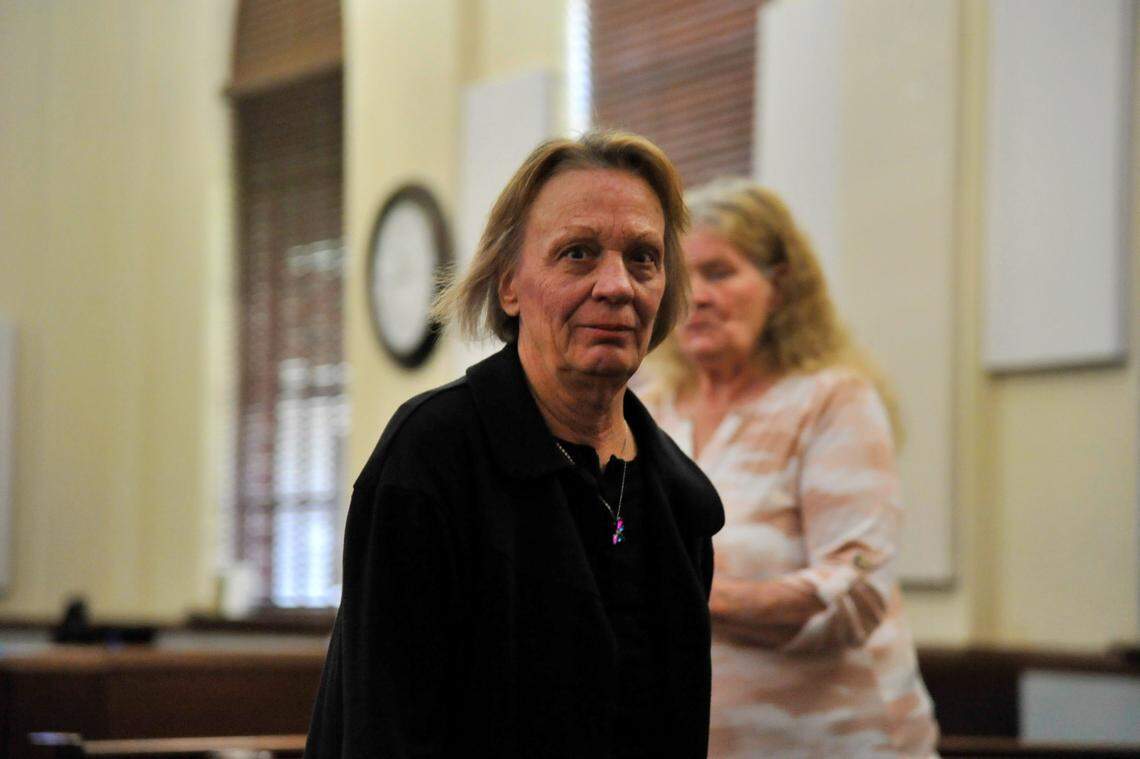
She said he even visited, albeit briefly, on Thanksgiving and Christmas once.
“There were times that he would just show up out of the blue,” Thompson said, but that “if he was OK” then “he was allowed in the house.”
She said that around the time of the shooting that Goldie, when he spoke, was making “crazy ramblings,” but that Billings hadn’t been particularly bothered by the nonsense.
Thompson said that after Goldie was later asked to leave, however, Goldie returned. She said she peeked into the garage and saw Billings trying to keep Goldie outside, that they were struggling over an entry door on the front side of the house.
Billings lost the battle, she said, and dashed past her into the house. She said she figured he was going to call the police. Still in the garage with Goldie, Thompson said she told Goldie to “get out.”
She said she reached for the door and “next thing I remember, I’m on the floor and I’m hearing gunshots. ... I don’t know how I got on the floor.”
Thompson went on to tell the jury, recalling her version of events, “Goldie grabbed my hand and I pushed back and I said, ‘Goldie, get off me!’ I do remember that.”
She wasn’t sure how she was knocked unconscious or for how long.
She later testified, “Everything was black but I could still hear. ... I heard four shots ... even though I was unconscious.”
About 18 minutes after the shooting, Thompson sent a text message to an acquaintance: “Dave just shot goldie dead.”
In another message soon after, she asked the acquaintance, “Should I even talk to GBI?”
In court, Thompson, referring to her query about speaking to investigators, said she meant “without an attorney present.”
The implication from prosecutors was that maybe she had something to hide.
She denied that and later denied that Billings had “coached” her on what to tell the police.
When Billings’ lawyer questioned her on the stand, Thompson said the whole episode had been “traumatizing.”
She said there had been no domestic fray between her and Billings, that Billings never laid a hand on her, “not ever.”
She said Billings never threatened her with violence, that she would have left him if he had.
She said the night Goldie died, Goldie “grabbed my hand and everything went black.”
‘Send a message’
In his closing remarks to jurors, prosecutor Halvorson told the panel, “Send a message to your community. Yes, we all value the right to self-defense. But this is not self-defense.”
Billings’ lawyer, of course, had half an hour or so earlier, insisted that it was a case of self-defense, that Billings had been defending himself, his girlfriend and his home.
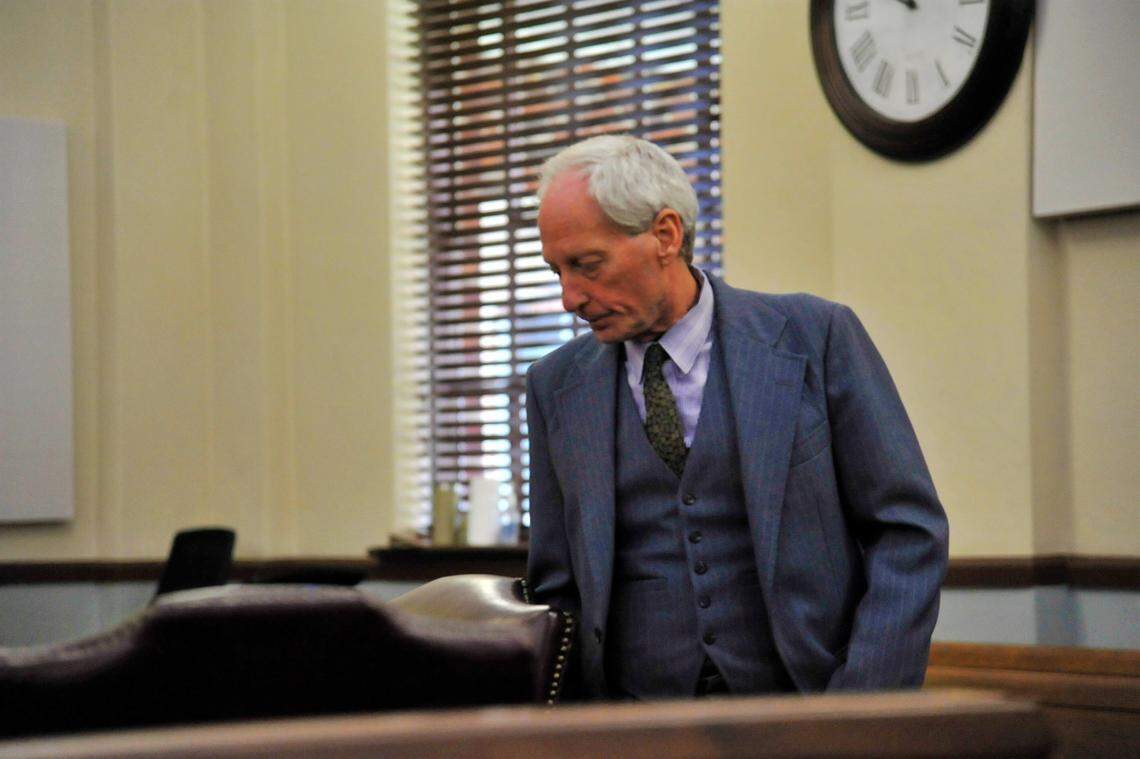
It was about 6:45 p.m. on Thursday when the jury of eight men and four women began deliberating.
The court brought in Chick-fil-A meals so they wouldn’t have to leave for dinner.
A little after 8 p.m., not long after they returned to court and re-listened to Billings’ 911 call, they reached a verdict.
After the jurors filed in, Judge Connie L. Williford had the foreman stand and asked if the verdict was unanimous.
Yes, the foreman said.
Then Williford told Billings to rise.
Court Clerk Sherry Gonzalez read the verdict: “For count one, malice murder, we the jury find David Lee Billings guilty. ... For count two, felony murder, we the jury find David Lee Billings guilty. .... For count three, aggravated assault, we the jury find David Lee Billings guilty.”
Billings, who sat stoic throughout the trial, rocked slightly side to side on his feet. He was otherwise without emotion, his face blank.
He was sentenced to life in prison.
He will be 92 before he might become eligible for parole.
This story was originally published April 29, 2022 at 11:33 AM.