
Man at center of fraud case takes stand, says Dallemand told him, ‘Let’s get it done’
Isaac J. Culver III, the head of a Macon technology-consulting firm hired half a decade ago to implement computing upgrades at Bibb County schools, took the stand here Friday at his federal fraud trial in U.S. District Court.
Two dozen or so relatives and friends looked on from the courtroom gallery as Culver, widely known and involved in local organizations, described a computing quagmire that he and his company tried to navigate.
He said at times, amid constantly clunky technology and pressure from the schools’ hard-line leadership, he felt like “the little Dutch boy with the finger in the dam.”
Culver, 48, is accused of conspiracy to commit wire and mail fraud and conspiracy to launder the proceeds of unlawful activity as part of a $3.7 million computer-and-services sale to the school system in 2012. If convicted of all charges, he faces some 20 years in prison.
Testimony in the case, which revolves around a deal made during the tenure of then-superintendent Romain Dallemand, began Tuesday.
On Friday, Culver testified for just over an hour, taking questions from defense attorney John Garland. His testimony will likely continue well into Monday when the trial resumes and prosecutors begin their cross examination.
Culver’s attorneys also called to the stand a couple of Culver’s former employees at Progressive Consulting Technologies Inc. They explained the firm’s work with the school system in 2012 and 2013.
The former workers said the scope of the project changed at times, and more labor and oversight was required. They also described adverse conditions surrounding the schools’ technology systems: jumbles of wires, jury-rigged server platforms, network hubs in a room where ant-killer and football shoulder pads were stored.
One Macon school’s janitorial closet doubled as a computer-routing room. In another computing area, according to testimony of a school official, it was 130 degrees with the air conditioner on.
“Computers were frying,” the official said.
It was against that backdrop that Culver himself, to the surprise of some observers, took the stand Friday.
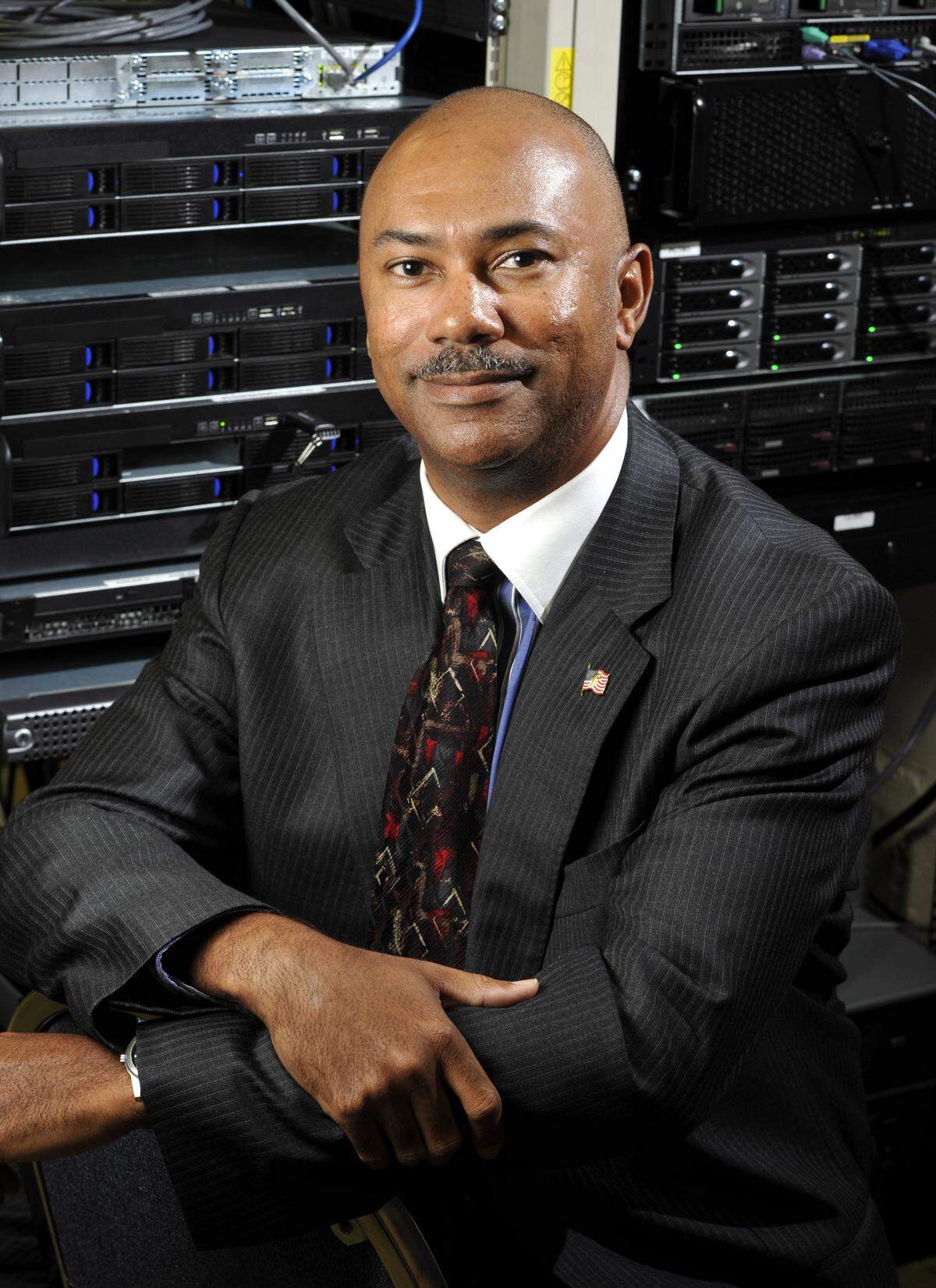
He was asked about an email requesting a letter of recommendation that he sent in 2012 to a business associate who runs a tech firm in Ohio. Culver is accused of illegally enlisting that Ohio firm to serve as a go-between to sell 15,000 computing devices to Bibb schools, when actually his firm, Progressive, bought the devices and provided them to the schools.
Culver and his company, in winning the project to oversee technology upgrades in Bibb County, had used that bogus letter of reference from Culver’s Ohio associate. Elements of the letter citing work Culver had done with that man’s firm were fictitious, according to earlier testimony.
Culver had worded the letter himself and arranged for the Ohio man to put it on the Ohio company’s letterhead, so it could be submitted it to Bibb schools on behalf of Culver’s firm.
“It was a very dumb thing to do,” Culver testified, adding that he regrets fabricating the letter.
Culver’s defense regarding the fraud charges seems to be that there was no fraud, that he and his company did what they were told — to get computers into Bibb schools and to do so in a hurry at the request of top education officials.
He said he met with then-superintendent Dallemand once or twice a week to talk about the project. Culver said Dallemand wanted a computer “in front of” every student in the district.
Culver said Dallemand wanted the $3.7 million sale to happen “as quickly as possible” and told Culver, “Let’s get it done.”
“Once he made up his mind that this was gonna be the way to do things,” Culver said, “it was very difficult to look at it any other way.”
Culver said although Progressive paid about $1.7 million for the 15,000 computing devices and — through the Ohio company — billed Bibb schools $3.7 million, that the variance is explainable.
“It certainly wasn’t a $2-million markup,” Culver said. “Services and support and labor” was factored into the $3.7 million total.
Culver acknowledged that serving as a vendor was a conflict of interest with his firm’s role as project manager, but the urgency to get the devices installed under less-than-ideal conditions meant that Progressive, in essence, either had to go forward or go home.
“So why do it?” Garland asked Culver.
“The customer asked me to do it,” Culver replied, “and there was nothing in my services agreement that would prevent me from doing it. And given the state of where we were, the emergencies we had that were going on every day that had to be fixed right then, right there, I wasn’t sure how long we could (be) the little Dutch boy with the finger in the dam.”
Culver later added that he took on the job because “it’s my school system. ... I thought we could make a difference. I thought we could make a change. ... It was one of those things, you go down a rabbit hole, you can’t turn around.”
Earlier Friday, a handful of character witnesses brought in by the defense included former U.S. congressman and Macon Mayor Jim Marshall.
Marshall said he has known Culver since the 1990s and that the two are friends. Marshall said Culver, the former board chairman of the Greater Macon Chamber of Commerce, did some computer work for him.
The former mayor was asked by defense attorney Ed Garland, Culver’s co-counsel, what Marshall knew about Culver’s reputation.
“It’s excellent,” Marshall said.
Marshall was then asked whether he considered Culver to be “law-abiding.”
“Yes. ... He’s perfectly law-abiding,” Marshall said.
Then Marshall added: “Obviously he is being accused now.”