
Like keeping up a ‘66 Mustang, Warner Robins plant helps older aircraft soar
Even when Ki Ho Kang was a young boy back in Seoul, South Korea, he was fascinated by anything that flew — birds, kites, airplanes, spaceships and rockets.
Today, as the founder and CEO of the KIHOMAC aerospace manufacturing company, Kang, 60, considers himself lucky to be working in something that has been his passion ever since he can remember.
“It makes work a little bit easier if you kind of enjoy what you’re doing, right?” Kang said in a sit-down interview with The Telegraph. “So I feel very privileged about that.”
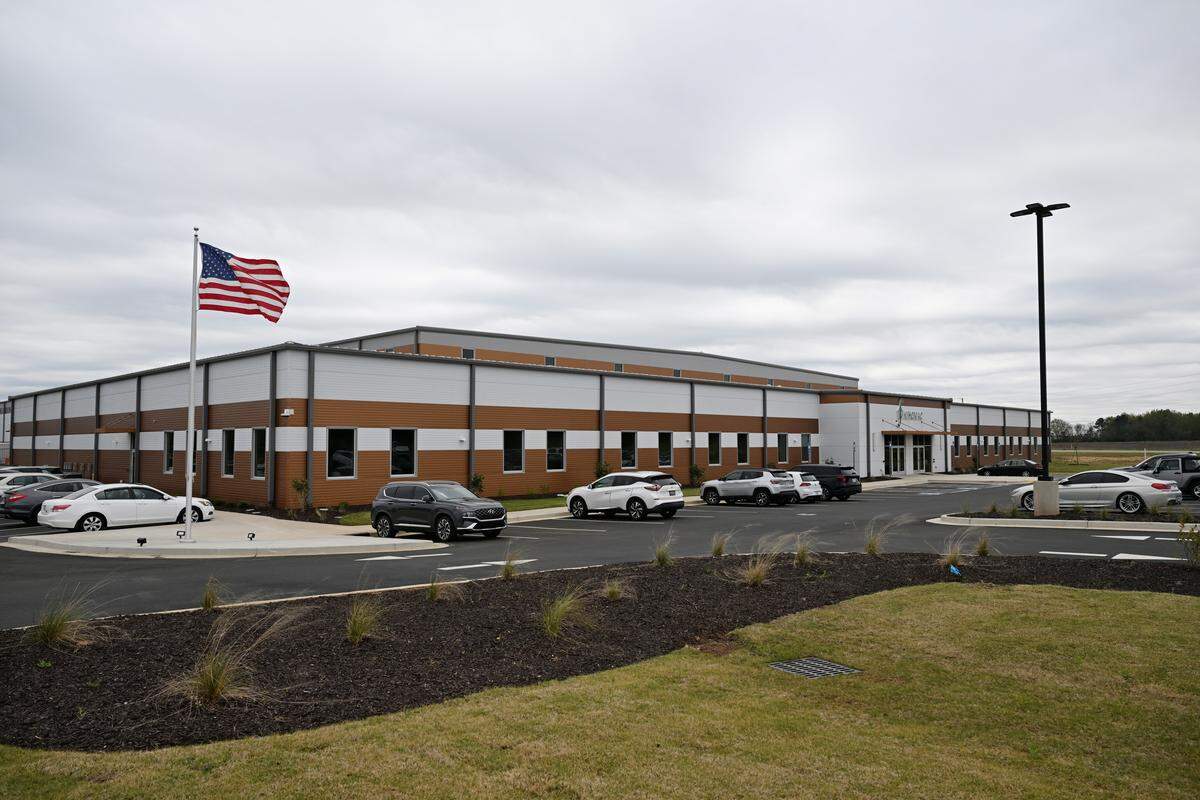
Kang was in Warner Robins recently for the grand opening of the new 130,000-square-foot KIHOMAC manufacturing and engineering plant, the second largest of six company plants across the country.
The new facility represents about a $20 million capital investment by the company. Seventy-five highly-skilled workers are expected to be hired over the next three years for a total of 120-125 employees on site.
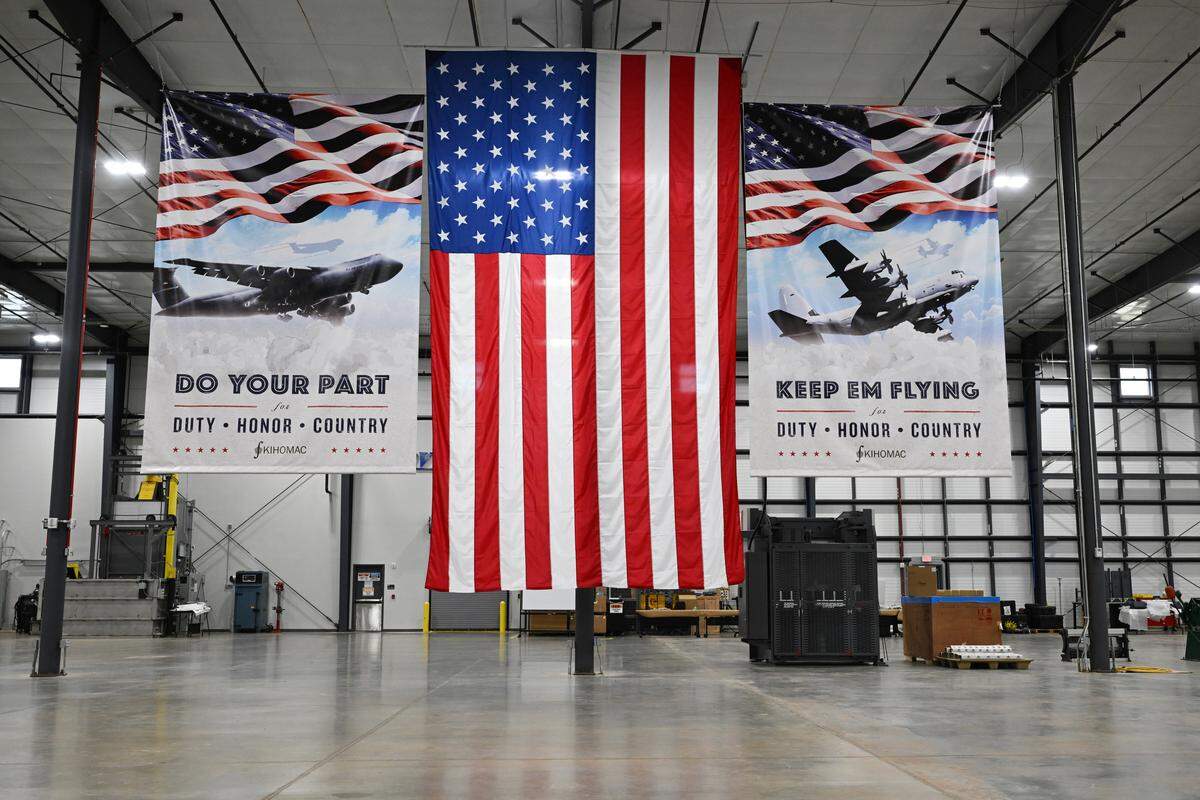
The plant is located at 1978 Lightning Way within the Robins International Industrial Park, a project by the Joint Development Authority of Peach County and the city of Warner Robins.
The industrial park off U.S. 41 is within Warner Robins by annexation, but also part of Peach County, which is why the new facility has a Byron mailing address.
Lightning is a reference to Kang’s favorite WWII aircraft, the P-38 Lightning, and 1978 a nod to the year Kang, at age 12, immigrated to the United States with his family.
Growing up in Baltimore, Md., he served in the Civil Air Patrol in high school and went to college on a ROTC scholarship, earning a bachelor’s degree in electrical engineering. He also holds a master’s degree in electrical engineering.
Kang served 11 years active duty in the U.S. Air Force and 10 years in the Reserve. In addition to being veteran owned, about 40% percent of the company’s workforce are military veterans, he said.
How KIHOMAC helps keep legacy aircraft in the air
KIHOMAC specializes in reverse engineering to keep aging military aircrafts in flight, which Kang likened to the classic car market.
“You have to drive your ‘66 Mustang every day, and all the issues that come with it,” Kang said. “The old Mustang doesn’t have anti-lock brakes, and you may have to put anti-lock brakes in there. It doesn’t have the right radio, doesn’t have a satellite radio, it doesn’t have your Bluetooth. It doesn’t have Apple CarPlay. So, we got to put all those things in there.”
While the company doesn’t put Apple CarPlay into aircraft, its workers do create and install satellite and secured radio communications and new types of precision weapons that are critical for military operations, he said.
“When the airplanes first came out, they’re dropping what we call dumb bombs,” Kang said. “Now ... our doctrine and our policy is we try to hit what we want to hit, and don’t damage anything else around it, to reduce what they call collateral effects.
“So, we are much more interested in the military precision effects. To do that, you have to upgrade the computers, you have to upgrade the weapons that are certified to fly in that airplane, to make the aircraft more effective and more lethal.”
Some of the work at KIHOMAC includes putting wires that did not exist before into aircraft, such as ethernet cable for higher bandwidth and fiber optics for large volumes of data.
“We modify the software to allow the data to flow through those communication media, as well as making parts right?,” Kang said. “Making parts is always easier to show, because you can touch it. You can feel it. But the software work we do and the design work we do is just as critical.”
KIHOMAC focuses on finding problems that need solving in aging aircraft.
“Then we go figure out how to solve that problem,” Kang said. “We solve it, and then we move on to another problem.”
All of the company’s manufacturing plants are near Air Force bases, including the new facility about 10 miles away from Robins Air Force Base that is home to the Warner Robins Air Logistics Complex.
The logistics complex provides depot-level maintenance, repair, overhaul and engineering support for major weapon systems, including F-15, C-5, C-130 and C-17 aircraft.
“We take care of legacy aircraft … We work for the customers whose job is to take care of these legacy aircraft ... So that’s why we’re near Warner Robins,” Kang said. “Our customers are there, and they have responsibility for the fleet. The fleet operates throughout the world.”
KIHOMAC found its niche in servicing older aircraft
KIHOMAC has carved out a niche by servicing older aircraft that larger companies don’t find as profitable without mass production and that smaller companies aren’t equipped to handle.
The A-10 is one such aircraft that is dear to Kang’s heart, he said, having worked as both an avionics systems engineer and a flight test engineer for the aircraft early in his military career.
Perhaps a stroke of serendipity, Kang said, the company’s start was tied to A-10 consulting work. The success of a contract with a former employer while he was in the Air Force Reserve led to the creation of KIHOMAC in a small building the size of a garage in Layton, Utah, near Hill AFB.
KIHOMAC outgrew that building within six months. Today, the company’s largest facility is still outside the gates of Hill AFB, although the new Warner Robins facility is nearly as big.
As for the A-10 that’s still flying, his company delivered 600-gallon fuel tanks to the Air Force that allow the aircraft to fly for longer periods of time, and designed and manufactured 528 rudders for the airplane after the part was no longer available.
The Air Force has plans to retire the A-10, but its recent success over the Arab Gulf may keep her flying, Kang said.
“She’s like a cat,” said Kang, noting that the Air Force previously has made plans to retire the A-10 fleet as early as 1990. “It survived this long.”
The story behind the name. ‘Just KIHOMAC, period.’
KIHOMAC got its name when Kang was creating a domain name for an email address for his new company 23 years ago. He used his first name Ki Ho because it’s easy to pronounce and remember.
He added MAC at first because he needed more letters to create the domain and then decided those letters should stand for Military Acquisition Consulting and changed the domain name to reflect that.
“And in the beginning, that was kind of what we did,” Kang said. “We provided our expertise to add avionic upgrades to the existing aircraft out there.
“But over a period of time as we were doing more manufacturing, consulting just seemed like a wrong name. So we just renamed it again. We just got rid of it (the acronym) all together. It is just KIHOMAC, period.”
A few highlights from a tour of the Warner Robins KIHOMAC
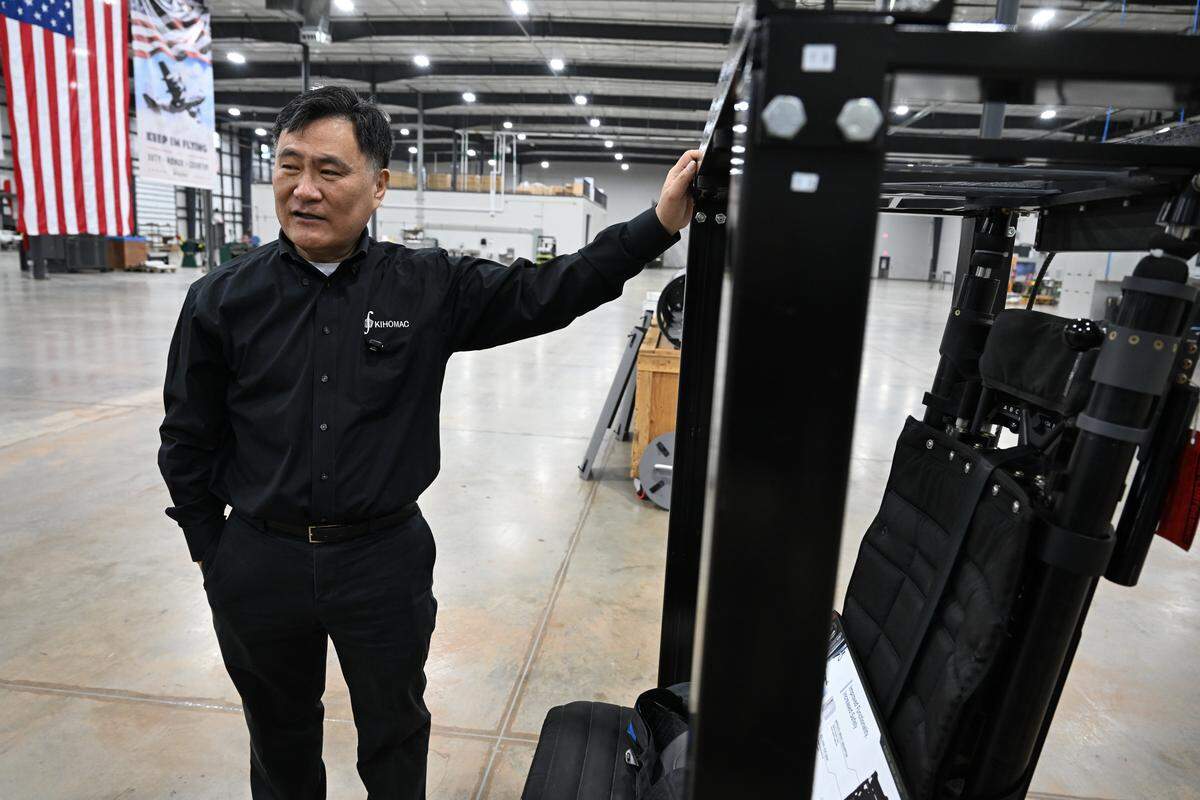
On a recent tour of the facility, Kang showcased a few of the company’s successful projects including production of more than 340 agile combat deployment travel pods for the F-35 that addressed a lack of cargo space in the fighter aircraft.
Also, KIHOMAC developed a new ergonomic gunner seat for the Navy’s MH-60S helicopter that improved safety and functionality.
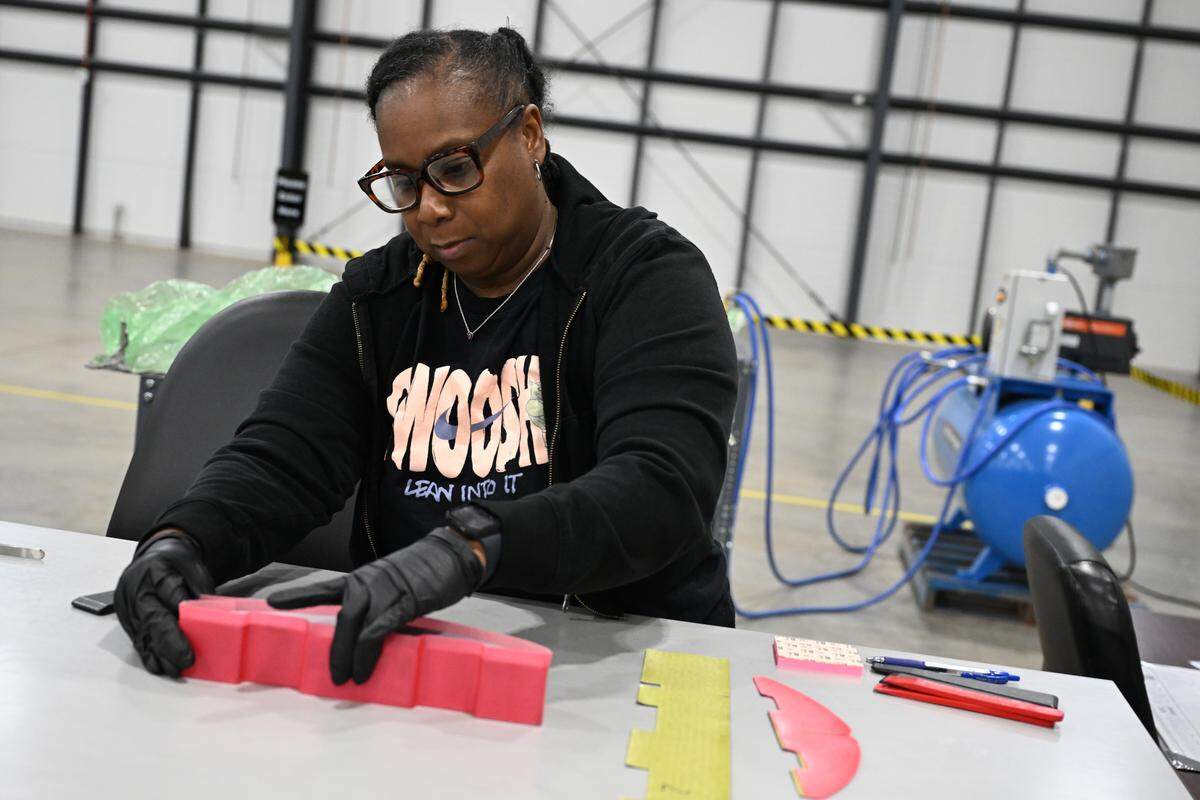
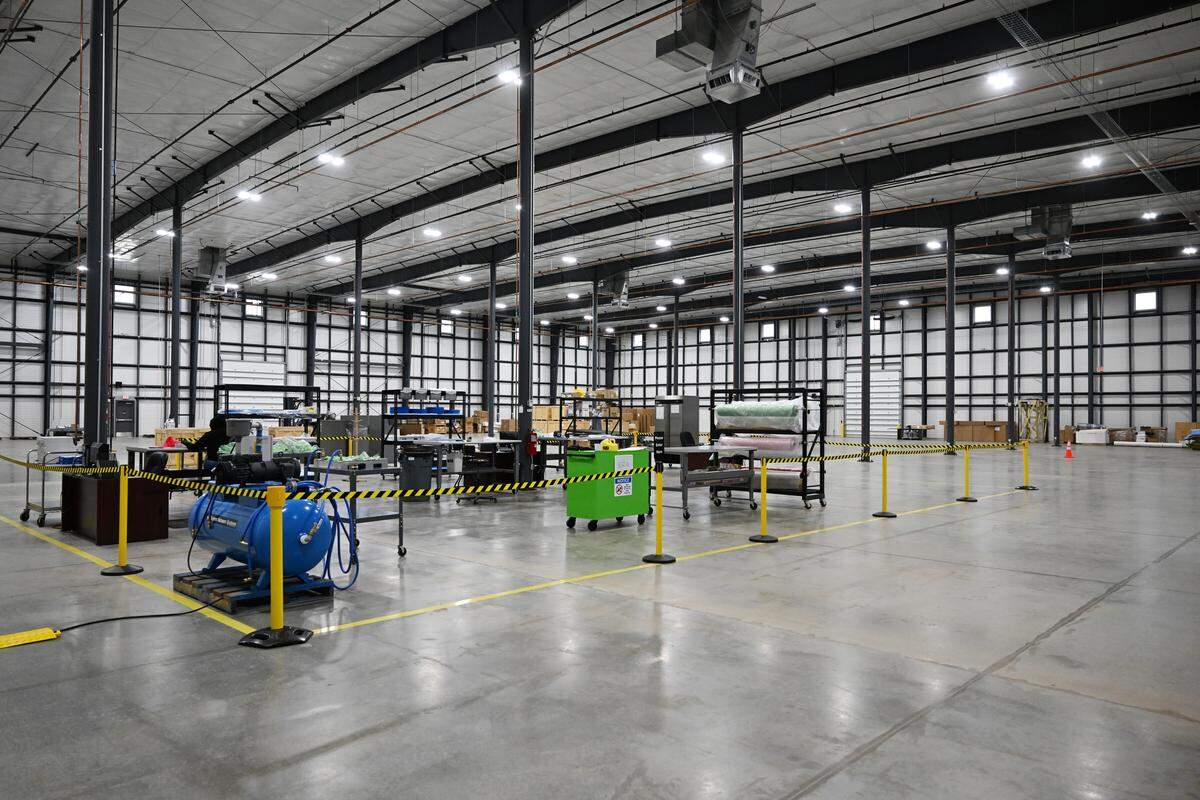
The facility includes all sorts of specialized equipment such as a Computerized Numeric Control cutting table for rough and final trimming of composite parts that’s controlled by a computer for precision.
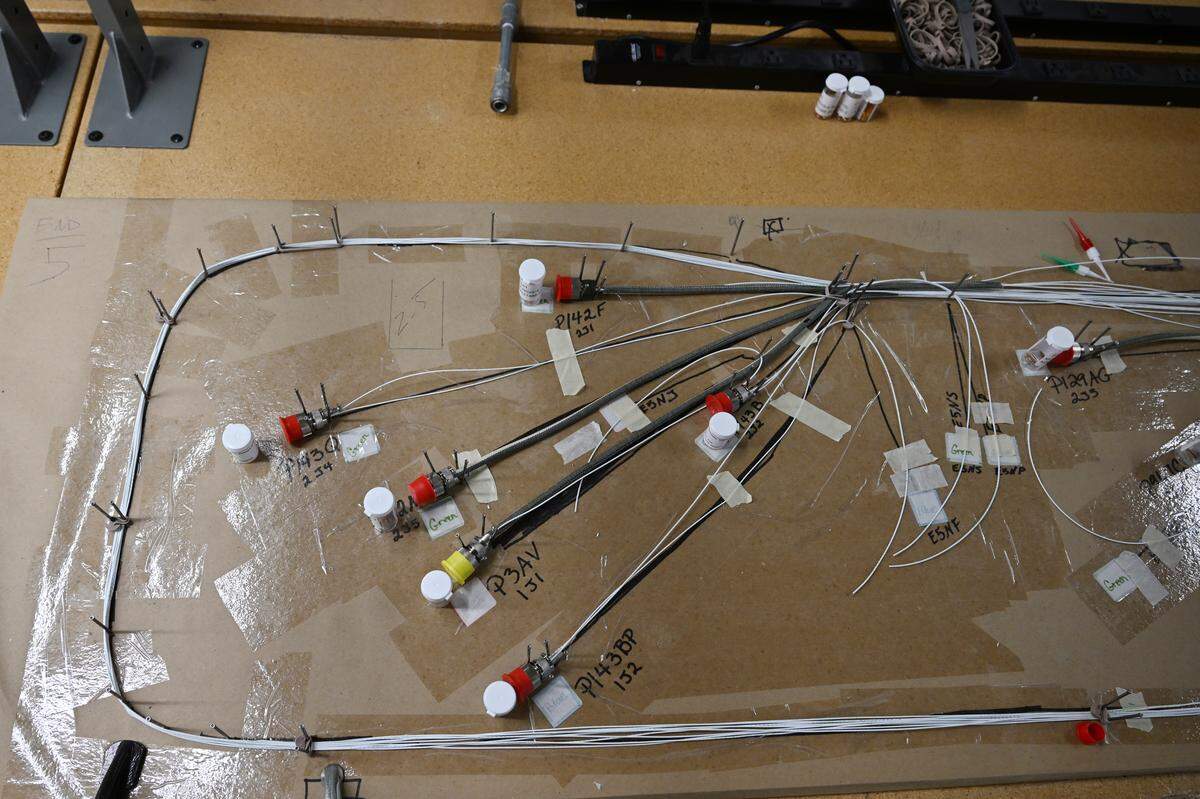
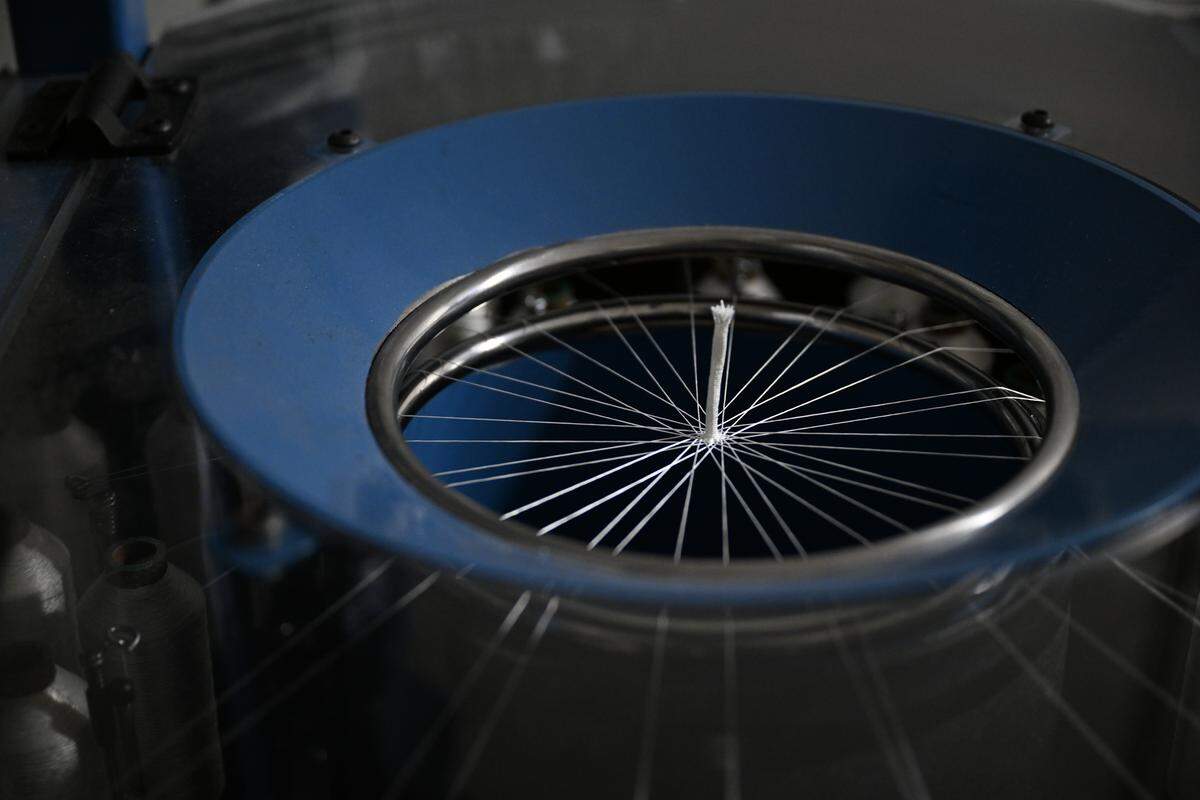
The company also has a waterjet cutter for precision cutting of metal shapes and odd geometries, and a Kevlar sleeving and wire marking laser that creates heat-resistant protection for wiring and laser identification marking for traceability.
“What we do matters for national security and the people who use these aircraft go into harm’s way,” Kang said. “We take things like that very seriously.”
About 100,000-square-feet of the plant is for manufacturing and engineering, with 30,000-square-feet encompassing office and conference space.
KIHOMAC’s new facility enlarges its footprint in Middle Georgia
The aerospace industry is a strong part of the workforce in Warner Robins, said Warner Robins Mayor LaRhonda Patrick.
“We are excited to see that continued growth with KIHOMAC’s recent investment,” Patrick said. “While they are not new to Middle Georgia, we are honored they chose Warner Robins for their new facility.”
In 2007, KIHOMAC opened its first office in a rented building on Osigian Boulevard in Warner Robins. In 2008, the office was moved to The Park on Park Avenue off South Davis Drive.
In 2011, the company moved to Byron, purchasing a small building on Industrial Way to handle the continued growth in work and then buying the building right next door. The company outgrew those buildings and decided to build the new plant.
KIHOMAC’s expansion is a testament to how businesses in Middle Georgia can grow and be successful, said BJ Walker, executive director of the Peach County Development Authority.
“It is not just the great people at KIHOMAC, but it’s the overall talented workforce that allows for this success,” Walker said. “While we are thrilled about all of the success our growing small businesses are showing, it is extra special when we can assist in the prosperity of businesses that support our Air Force.”