
As data centers eye Middle GA, developers influence counties behind closed doors
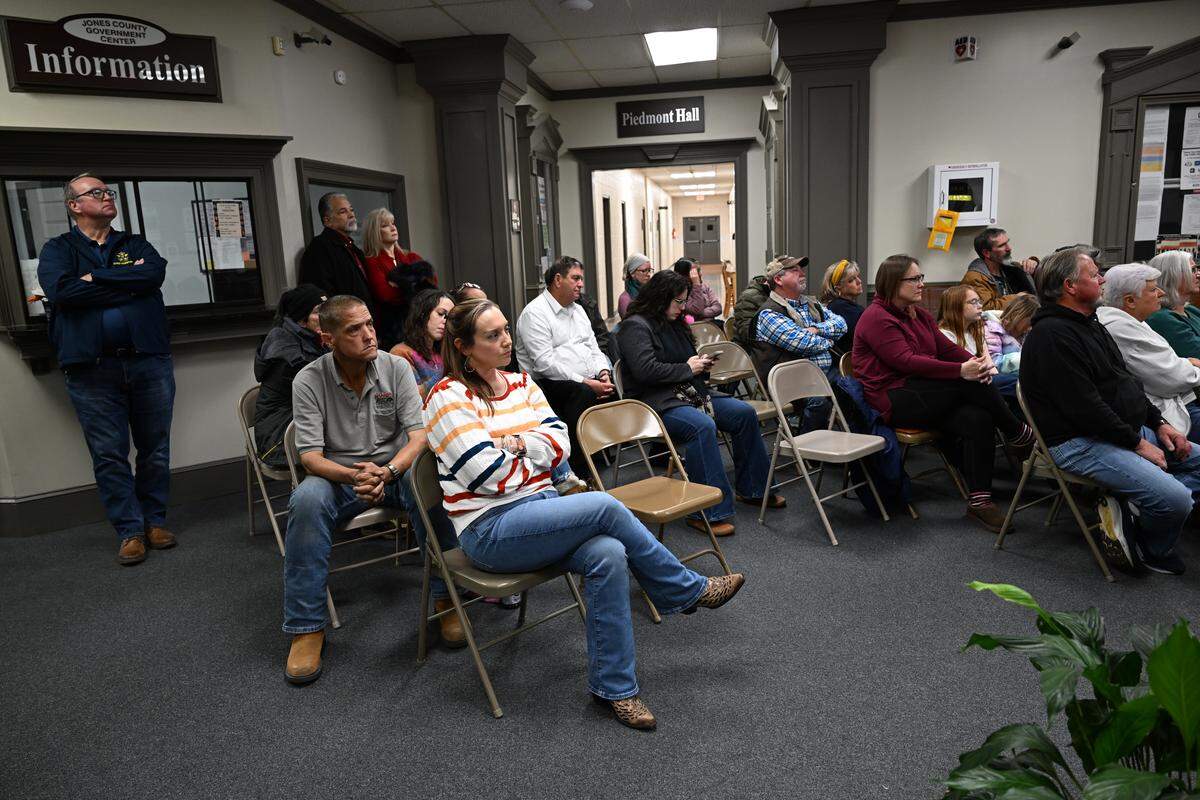
No one could remember the last time the commissioners’ chambers had been so packed.
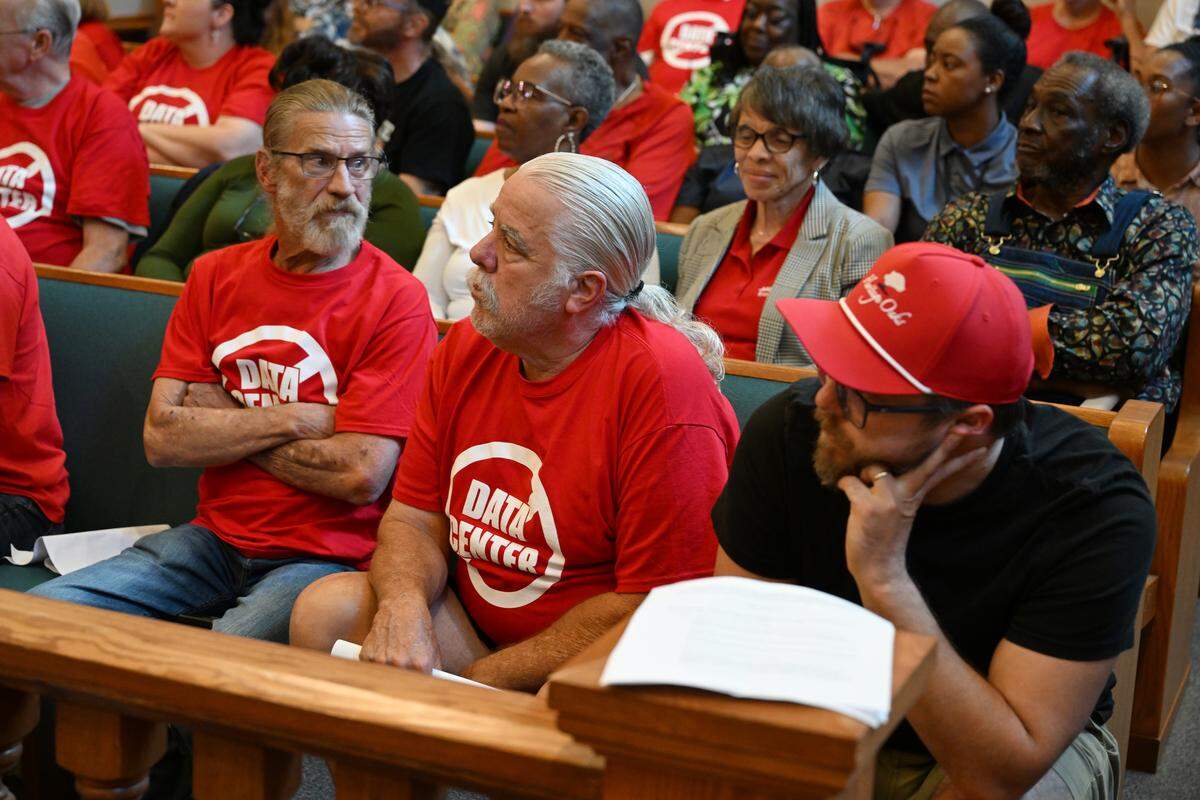
It was an unseasonably cold Friday night, and yet hundreds of Jones County residents braved the frigid January air to watch their commissioners vote on an amendment regulating data centers.
For many, it was the culmination of months of fighting. As commissioners worked to write and pass the legislation, residents raised concerns that the rules weren’t tight enough. Many of those residents attended the January 16 meeting in hopes of voicing their worries before the vote.
However, after documents and news coverage revealed contact between Jones County officials and a data center developer, few felt confident that their voices would be heard.
Alex Lefholz, a county resident who organized a citizens group to fight against the amendment, said the whole process felt like officials were just going through the motions.
“You can talk for one minute and let us know how you feel about it, box checked,” Lefholz said just before the meeting started. “It’s not meaningful because they’re not actually listening with the intent to change because it’s already been predetermined.”
Despite more than an hour and a half of public comment — where all but one speaker were against the legislation — the amendment passed unanimously.
The anger was palpable, but so was residents’ resignation. In their minds, the whole effort had been rigged for developers since the beginning.
As data centers spread across Georgia, state laws have struggled to keep up, leaving major decisions up to local governments that may not be prepared. Residents and experts said this leaves room for developers to take advantage of officials, and influence key decisions to benefit themselves.
In Jones County, records show data center developer Eagle Rock Partners emailed with county officials for months without the public’s knowledge. Emails show the developer editing language for proposed legislation, and planning with officials on when to vote on amendments and rezoning decisions affecting data centers.

‘There’s no losing’
The emails began just as data centers were gaining momentum in Middle Georgia.
It was spring 2025. Just a few months prior, in November 2024, Monroe County had approved rezoning about 950 acres off Rumble Road for a new data center project. Plans for a second data center in Monroe County were already brewing, and questions from residents in neighboring counties about the developments were mounting.
The first email was dated March 19 and sent by Jones County Development Authority Executive Director Haley Watson to representatives of Eagle Rock Partners representatives from Thomas & Hutton, an engineering firm working closely with the developer, and Jones County Planning and Zoning Director Tim Pitrowski.
In the first exchange — bearing the subject line, “Jones County Visit” — Watson thanked the developer and engineering firm for meeting with officials “to connect and discuss the project.”
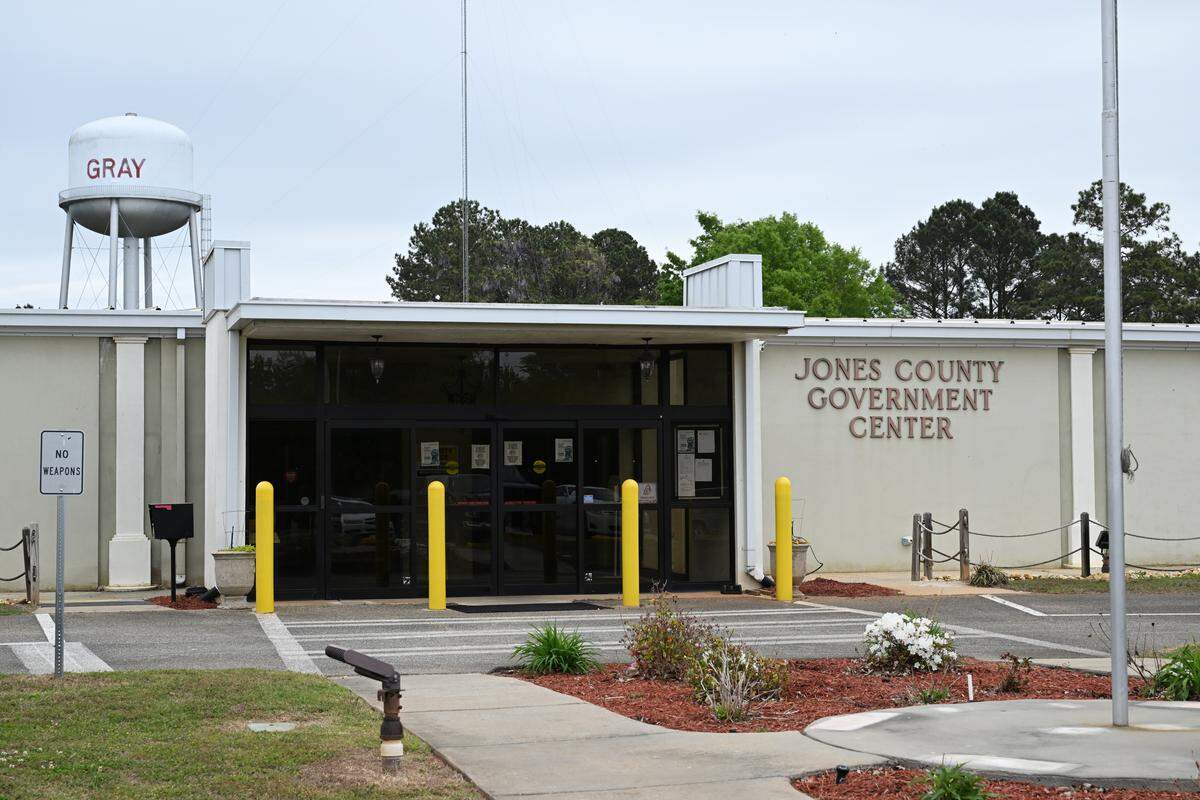
Andy Camp, regional director of economic development with Thomas & Hutton, replied the next day and asked Pitrowski to let him know “when you are ready to discuss potential updates to the ordinance.”
The emails continued for months. Exchanges included Jones County officials sending drafts of a proposed amendment regulating data centers to developers for feedback and edits. Officials also gave the developer insight into when commissioners would vote on the amendment, and when the developer should file their application to rezone land for a data center.
At one point — in an email to Pitrowski dated July 17, 2025 — Kevin Forbes, a project manager with Thomas & Hutton, found out the Georgia Department of Community Affairs put a pause on Development of Regional Impact reports for data centers.
DRI reports are state-mandated and conduct studies on the effects of large-scale development. The DCA said data centers would still be allowed to move forward without the reports during the suspension period if local boards approved them.
Forbes was eager to get the amendment and the project on the commission’s agenda and pass it while the DRIs were suspended.
“We heard the news about (DCA) pausing the requirements for DRI’s for data center projects, so we wanted to go ahead and start figuring out when we can submit our project for rezoning,” Forbes wrote. “Could you advise the next couple submission deadlines and corresponding hearing/vote meeting dates?”
DRI reports are a critical source of information for residents as well as government officials. Neighboring Twiggs County approved a data center backed by Eagle Rock Partners in September 2025 while the reports were suspended. Residents expressed shock and outrage as the project moved through local boards and officials, with much of their dissatisfaction centered on the lack of a DRI report detailing potential impacts on the community.
Pitrwoski declined to comment on this story, and Camp and Forbes did not respond to requests for comment.
Watson, the Jones County Development Authority executive director, said communications between the development authority and parties interested in coming to the county are a regular occurrence.
“As part of its statutory role, the Development Authority routinely communicates with a wide range of companies and project representatives who independently initiate contact regarding potential investment in Jones County,” Watson said. “Those communications are common and occur across many industries and prospective projects.”
Meanwhile, residents and even other officials said they remained in the dark.
Stephen Hoyt, a planning and zoning board member, said he was not aware of the communications until citizens obtained the emails between officials and Eagle Rock Partners in January 2026.
Hoyt and other planning and zoning board members were scheduled to vote on the proposed data center amendment prior to the commissioners’ meeting on Sept. 16.
The weeks leading up to the hearing were fraught, Hoyt said. Planning and zoning board members found out about the proposed amendment when it appeared on the agenda for their Aug. 18 meeting.
“Most of us board members just opened our email that morning and thought it was another routine planning and zoning board meeting,” Hoyt said. “No heads up, no phone call or anything saying, ‘Dive deep, this is huge, do your homework.’”

Hoyt said he looked into the issue and discovered that it was a type of development far bigger than anything he had dealt with before. Spanning tens of thousands of square feet and using up to 5 million gallons of water a day, a data center would dwarf the mom-and-pop businesses and small housing developments Hoyt was used to seeing.
At the Aug. 18 meeting, in an attempt to increase transparency, Hoyt proposed language that would require data centers to “include an Environmental Impact Study prepared by a qualified professional.”
The planning and zoning board voted to recommend language for the amendment that incorporated such requirements. As director of planning and zoning, Pitrowski was charged with recording it and presenting it to the Jones County Board of Commissioners.
The developers were quick to react.
In an email from Forbes to Pitrowski dated August 21, 2025, the project manager requested to edit the requirement to “reports/exhibits” with no requirement that they be put together by a qualified professional.
After a few days passed without Pitrowski committing to the suggested revisions, Ken Loeber, a partner with Eagle Rock Partners, sent another email to Pitrowski putting more pressure on him to adopt the developer’s language.
“We would respectfully ask that we go back to the Thomas & Hutton suggested provisions in addition to your approved Text Amendment additions from the first version you sent after the meeting,” Loeber wrote to the Jones County planning director. “This version currently written will significantly reduce interest and therefore significantly jeopardize the project.”

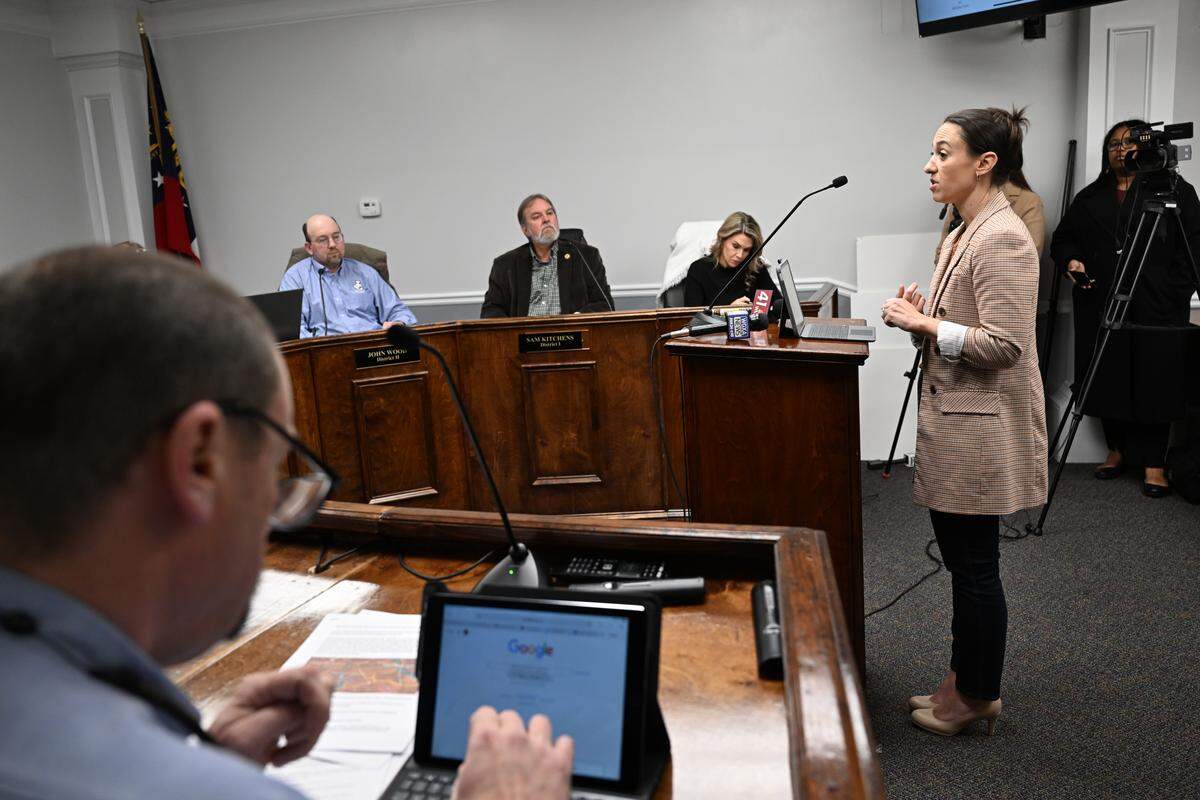
While there was no response from Pitrowski in the email chain, during the Sept. 16 commission meeting where commissioners would vote on whether to pass the amendment into law, Pitrowski presented three versions of the amendment for commissioners to consider.
The first version, which Pitrowski said shouldn’t be considered, was the text written by the planning and zoning board members.
Pitrowski instead recommended the board approve either the version written by his staff — which Hoyt said consisted primarily of Pitrowski and whoever he consults “behind closed doors” — or the version authored by the ambiguously named “regulated community.”
According to minutes from that meeting, District 1 Commissioner Sam Kitchens asked Pitrowski what regulated communities meant, and Pitrowski replied that it referred to data center developers.
Hoyt said presenting multiple versions of the same legislation was unusual. The process was manipulated so that the board would pick one of the two amendments that the developer had consulted on, he said.
“It’s like a shell game with marbles under both shells,” Hoyt said. “There’s no losing, they gotta pick one or the other.”
Residents echoed similar concerns. Lefholz said allowing the developer to give input on the amendment as it was being written compromised the democratic process.
“Even if you’re given 10 minutes to talk to the commissioners ... how is that meaningful when everything has been decided beforehand, and all of these conversations have happened beforehand, and the text amendment has been massaged and bantered back and forth beforehand?” Leholz said.
The Jones County Board of Commissioners approved the amendment authored by Pitrowski’s staff on Sept. 16, and Eagle Rock Partners filed an application asking the county to rezone more than 600 acres of agricultural land for a data center.
The project stirred backlash, and Eagle Rock Partners withdrew its application on Oct. 20, the day commissioners were set to vote on it, for unknown reasons. The email pulling the application, dating the morning of Oct. 20, is the last email in the exchange between Eagle Rock Partners, Thomas & Hutton and county officials.

Even though the amendment passed, the fight wasn’t over
The amendment didn’t last long after Eagle Rock Partners halted the project. Commissioners rescinded the amendment on Nov. 4 after a citizens group led by Lefholz pointed out that it may not be legally binding.
Determined to have something on the books, commissioners re-convened in December 2025 for a series of work sessions to create a new amendment for commissioners to vote on.
The final product was a new amendment that allowed data centers as conditional uses, meaning developers must obtain permission from the county, in M-2 industrial zones. It was passed during the January commission meeting that drew hundreds of attendees.
The only M-2 district in Jones County that has enough space, power and water to accommodate a data center is the Griswoldville Industrial Park, which is managed by the Jones County Development Authority. Watson, who heads the authority, was one of the officials communicating with developers in March 2025.
As officials moved to allow data centers in M-2 districts, the Jones County Development Authority had already been in a months-long negotiation for Eagle Rock Partners to purchase the industrial park.
According to records obtained by The Telegraph, Eagle Rock Partners filed a letter of intent in November 2025 to purchase the industrial park from the county for $25 million.
Officials and representatives from Eagle Rock Partners went back and forth on the negotiations until March 12, when the Jones County Development Authority voted unanimously to put the sale on hold.
Watson said in an email to The Telegraph that the authority does not control zoning or legislative decisions.
“The Development Authority of Jones County is a separate legal entity from Jones County and does not make zoning or legislative decisions,” Watson said. “It is important to note the Development Authority did not recruit the referenced data center project, does not control zoning decisions, and does not coordinate or direct meetings between private parties and elected officials.”
Even before the letter of intent came to light, residents were unsatisfied with the new ordinance, and filed a lawsuit in February alleging that the county engaged in illegal spot zoning and contract zoning, and broke its own rules when writing and passing the legislation.
Ashley Brodie, the county attorney for Jones County, declined to comment on this story due to pending litigation. She told The Telegraph in an email that “the filed pleadings will make it clear that we consider the suit baseless and meritless.”
Experts say laws around data center transparency are scant and leave localities vulnerable
Jones County isn’t the only locality in Middle Georgia to be under fire for contact with data center developers.
The Eagle Rock Partners-backed project in Twiggs County came under fire in October 2025 after emails came to light documenting similar conversations between company representatives, county officials and representatives from Thomas & Hutton.
According to documents, Forbes, the project manager with Thomas & Hutton who also emailed with Jones County officials, first contacted Twiggs County officials in May 2025. The emails last through early September and included officials discussing legal ad timelines with representatives from the two companies, and even organizing calls and meetings with commissioners and other officials.
Residents are suing the county over the data center.
Experts said it’s impossible to know how many developers have made contact with localities, and that oftentimes that contact isn’t unlawful.
April Lipscomb, a senior attorney with the Georgia office of the Southern Environmental Law Center, said localities and data center developers often enter into non-disclosure agreements. These NDAs often prohibit the governments who have signed them from releasing documents or discussing relations with developers by playing on exemptions in open records laws.
This means records requests regarding data centers are often denied in counties where developers’ efforts are successful, and residents can’t figure out how or why a decision was made.
Additionally, developers reaching out to localities about projects like this isn’t necessarily illegal, Lipscomb said.
The Georgia Open Meetings Act dictates that meetings between public officials must be conducted in public, but this requirement only kicks in if there’s a quorum, or a minimum number of members to qualify as a meeting, Lipscomb said. If there are not enough members to form a quorum, the law doesn’t apply.
“It’s certainly not unusual, and it’s also not unlawful for developers or anyone to meet individually on a one-on-one basis with local government officials,” Lipscomb said.
In some circumstances, though, developers meeting with officials may have to register as lobbyists. According to Lipscomb, even if a developer or individual is meeting with officials outside a quorum, Georgia law requires them to register as a lobbyist if they are being paid specifically to lobby for or against the passage of an ordinance or resolution.
The emails did not disclose whether any of the representatives from Eagle Rock Partners or Thomas & Hutton were being paid specifically to push for certain legislation.
A search of state lobbyist rolls found that Eagle Rock Partners was not registered as a lobbyist group. Thomas & Hutton was registered but the firm only listed one lobbyist, who was not involved in any of the email exchanges obtained by The Telegraph and is listed as inactive.
Eagle Rock Partners told The Telegraph in a statement that the company “has never met with any of the public officers privately and with quorum.” The statement said representatives from the company met “appropriately” with the planning staff, engineering staff and economic development agency.
The company did not say if it met with any Twiggs County officials, or if any employees are paid to influence legislation.
Meanwhile, residents are left feeling like their voices don’t matter.
As data centers move into small towns and rural counties across the state, Lefholz said governments at all levels need to prioritize transparency to honor the democratic process and protect citizens.
“It creates an imbalance of power when citizens don’t even know that these conversations are taking place,” Lefholz said.
Hoyt echoed similar concerns, and said that he felt unprepared as a board member on a small, local body to make decisions about such large developments.
The controversy and weight of such a responsibility even took a toll on his health — Hoyt said he nearly resigned from the planning and zoning board after stress around the amendment controversy caused him to have a panic attack.
“We are not qualified to be making these decisions,” Hoyt said. “We as citizen planners aren’t qualified to make these kinds of decisions for that kind of infrastructure, long-lasting impact on our power grid, on our water sources, on the environment.”