
Residents, Muscogee citizens oppose $2 billion Twiggs County data center
A proposal to rezone nearly 300 acres of timberland for a data center in Twiggs County is drawing widespread criticism from residents.
The project, which is being developed by Charlotte, North Carolina-based Eagle Rock Partners, would cost billions of dollars and would consist of up to nine buildings, three substations and two retention ponds, according to county documents.
The Twiggs County Board of Commissioners must approve the rezoning Thursday evening before the data center can be built.
The project is just one of many data center proposals springing up across Georgia as demand grows for AI and online services powered by data centers.
The property owner, the Weyerhaeuser Company, and Eagle Rock Partners say the data center will increase tax revenue and provide an economic windfall for the county. Opponents say county commissioners don’t have enough information to make a decision, and the data center could destroy important archaeological and environmental sites. They also say the project needs a higher level of approval because the data center would impact areas outside of Twiggs County.
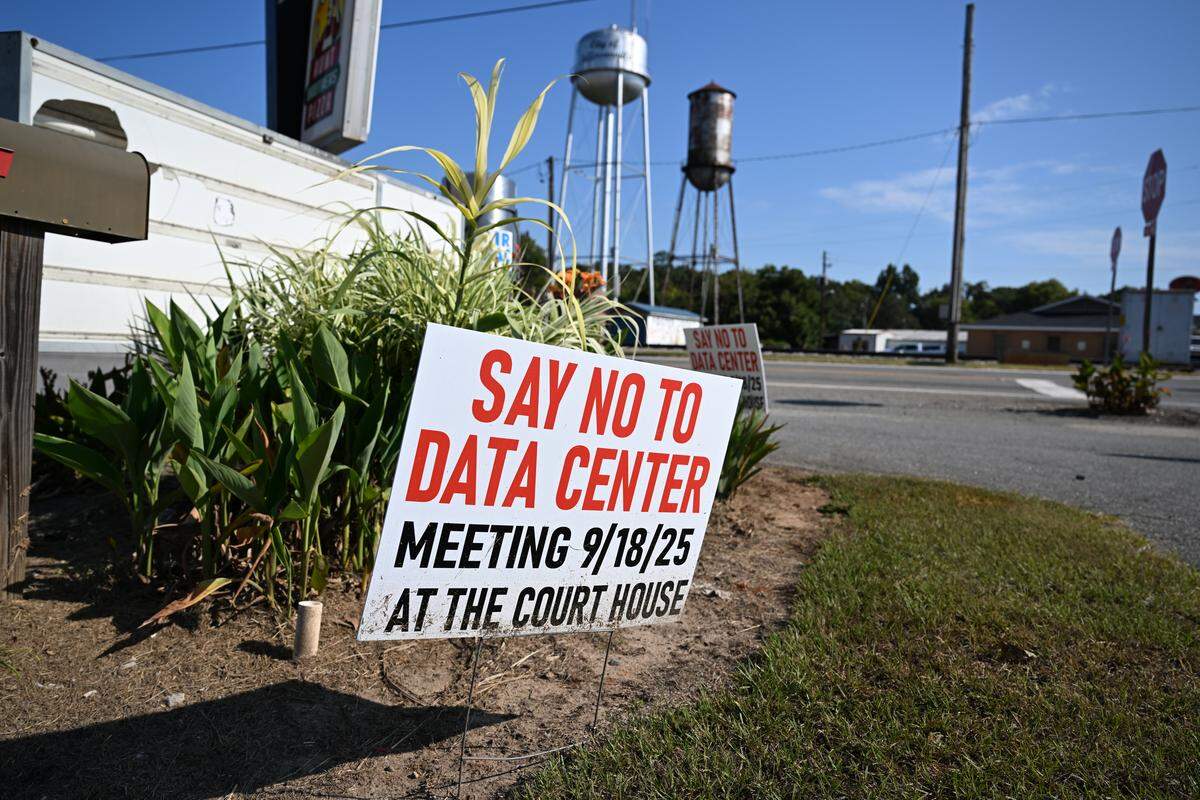
Why citizens of Muscogee Nation oppose the data center
Twiggs County residents opposing the data center found some unexpected allies: The Muscogee Nation of Oklahoma. The Muscogee inhabited what is now Middle Georgia for thousands of years before the U.S. government forcibly removed them to Oklahoma in the 1830s.
A group of Muscogee called into a Tuesday evening meeting organized by Twiggs County residents opposed to the data center and said the data center could pose a threat to preservation of archaeological sites important to their tribal history and culture.
“You all are living where our ancestors lived and are buried, and they are sacred sites,” said Jordan Harmon, a Muscogee citizen.
Muscogee Nation citizen Kenzie Roberts said she decided to get involved despite living hundreds of miles away due to the threat she feels data centers pose to rural people everywhere.
Tech companies looking to build data centers have increasingly turned to rural communities, which often have an abundance of cheap land and struggling economies.
“You guys are not alone in this fight,” Roberts said.
Chris Watson, campaign director with the National Parks Conservation Association, said the corridor along the Ocmulgee River, which includes Twiggs County, contains mounds, villages and other important sites that experts and the Muscogee say are connected to Ocmulgee Mounds National Historical Park. Additionally, the area is home to habitats and wildlife Watson said are important to protect.
Watson said various groups and organizations — including Muscogee Nation and the NPCA — have worked for decades to preserve the mounds and the surrounding areas, and allowing a data center into Twiggs County could endanger those efforts.
“This is an important area, not just for the cultural resources and the cultural history and heritage, but for the wildlife resources and heritage,” Watson said.
The Twiggs County commissioners will vote on whether or not to allow the project to move forward at 6 p.m. at the Twiggs County Courthouse. The meeting is open to the public.

Opponents say the development could be illegal
Opponents of the data center say Twiggs County may be breaking its own rules by trying to rezone the land without going through the Development of Regional Impact process first.
A DRI is a large-scale real estate project that will have effects that ripple beyond the local government jurisdiction where the project is located.
These types of projects are reviewed by the Department of Community Affairs or regional commissions to look at the impacts the project could have on traffic, water, electricity, the environment and other areas that could affect people outside the locality. The resulting report is used by county governments when deciding how to vote on projects.
Twiggs County does not have that report, though, because the Department of Community Affairs paused reviews of data centers after a massive influx of projects across the state forced it to examine how it studies these projects, according to the Atlanta Journal-Constitution. However, the department itself later said data centers were still part of the DRI process.

Either way, the move wasn’t a moratorium. Data centers are still allowed to move forward at the local level.
Fletcher Sams — executive director of the Altamaha Riverkeeper, a nonprofit group dedicated to preserving the Altamaha Watershed, which includes Twiggs County — said the county requires a DRI before voting on large-scale development projects such as this one.
According to the Twiggs County’s own Land Development Ordinance, any big project that exceeds the threshold criteria for a DRI “shall be submitted to the Middle Georgia Regional Commission (MGRC) for review.” The ordinance forbids approving these types of projects without completion of a regional review.
“That’s in the zoning ordinance for a good reason: Anything that’s going to be the size and scale of this data center should have a DRI,” Sams said. “You should have traffic studies, environmental studies, you should have regional water impact studies. None of that is available.”
Ken Loeber, a partner with Eagle Rock, said the project has followed all processes and regulations required by the state.
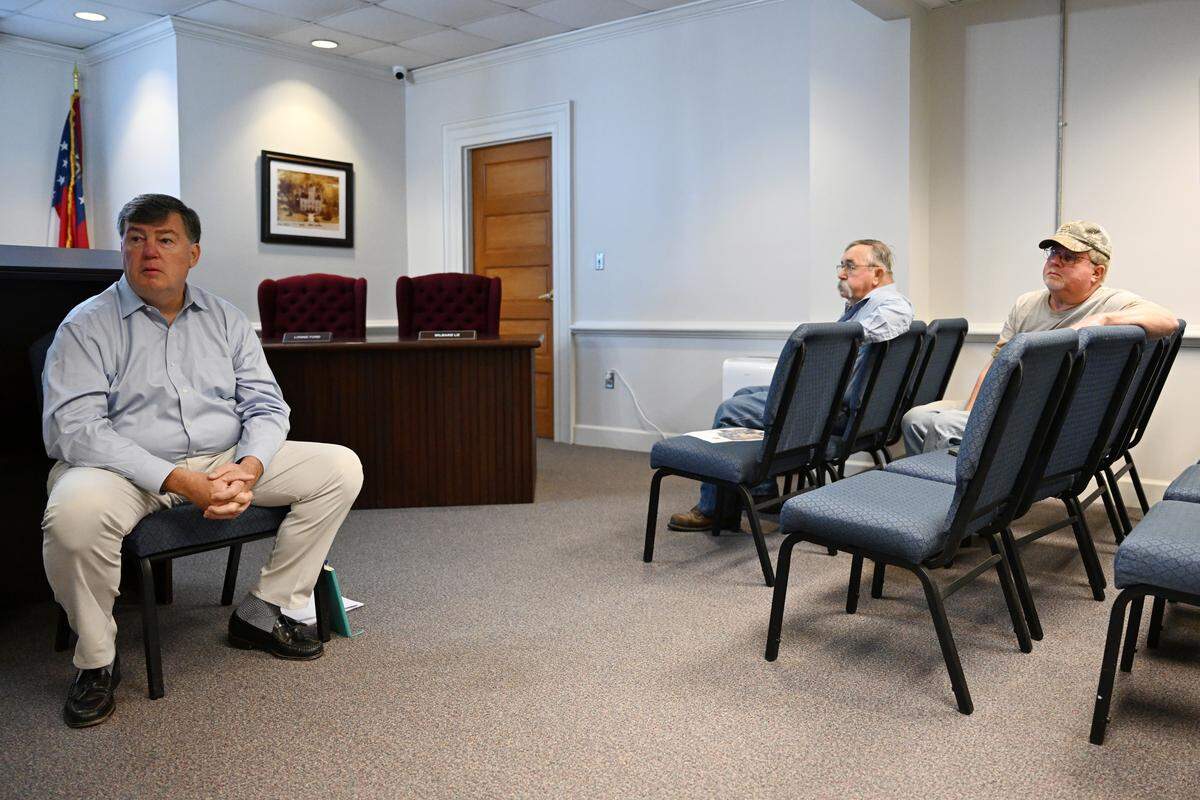
Other opponents said further study of the potential impacts would help the county make a choice that benefits everyone in the community.
“When projects are so big they can impact things for seven generations, there are questions, and I have been disappointed so far by the lack of time to understand the facts, and to be informed, and to have third party review,” said Julia Asherman, a Twiggs County resident who owns Rag & Frass Farm.
Loeber said during a public Q&A with residents and local media on Tuesday that the project can’t wait for that review. Eagle Rock, the developer, must make payments to Oconee EMC to power the data center, soon after Thursday’s vote or risk the company pulling out.
If the project is not approved Thursday, then the developer will look at other sites, Loeber said.
“We cannot come to Twiggs County if we get delayed,” Loeber said. “We also lose … the employment, we lose the tax revenue, we lose the impact on the schools. We lose a host of things that financially and for job creation opportunities are an extra tied to this opportunity.”
Eagle Rock Partners assured Twiggs County residents that they will benefit from the data center due to the jobs and tax revenue the project would generate for the county.
Loeber said Eagle Rock Partners is not asking for tax abatements for the project, and estimates the taxable value of the property to be around $2 billion once developed.
This story was originally published September 18, 2025 at 9:18 AM.