Ready for more daylight in GA? Here’s when you’ll see longer days
.png "When will we see longer days and more sun?")
If you are growing tired of the early sunsets, dark commutes and short days, that will all be coming to an end in about a month’s time.
Here’s what to know:
Why are days so short in GA?
In essence, you can put blame on daylight saving time ending in November, bringing early sunsets with it. As normal, winter days are shorter than summer, but Georgians have seen sunsets as early as 5:28 p.m., according to sunrise and sunset data.
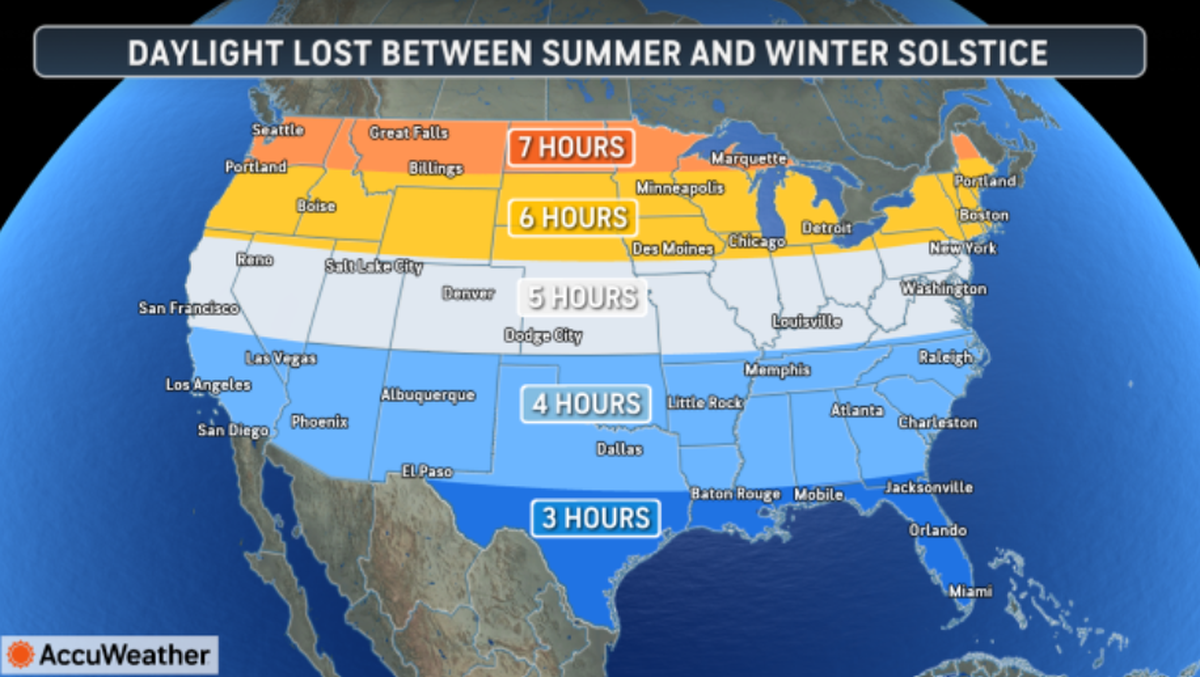
In fact, Georgians have had about 4 hours of lost daylight from June until now, said AccuWeather experts. This, of course, is not as much as northern states, which climbs to seven hours of lost daylight.
“The reason behind these big swings is the Earth’s tilt. The planet is tilted on its axis by about 23.5 degrees. In June, the Northern Hemisphere leans toward the sun, so the sun takes a higher, longer path across the sky. By December, it’s leaning away, and the sun’s arc is lower and shorter,” said Brian Lada with AccuWeather.
But the short days and long nights could change sooner than later.
When will we see longer days in GA?
The winter solstice will be on Dec. 21 this year and it marks when the Northern Hemisphere is furthest away from the sun, which is also the first official day of winter. But because of this, it’s the shortest day of the year. The opposite of this is true in June, when the longest day of the year is here and the sun is closest (summer solstice).
So, after Dec. 21, the days will be sunnier and longer.
See for yourself. Here’s the sunset data for after Dec 21:
- Dec. 22: sunset is at 5:33 p.m.
- Dec. 25: 5:35 p.m.
- Dec. 30: 5:38 p.m.
- Jan. 5: 5:48 p.m.
- Jan. 10: 5:53 p.m.
- Jan. 15: 5:59 p.m.
- Jan. 30: 6:17 p.m.
By the time March 2026 rolls around, Daylight Saving time will be here, once again restoring longer days and much more sun.
What else would you like to know? Let me know in the comments or email me at cmadden@mcclatchy.com