
Macon native’s degree was denied in the ‘70s. Now, her story hits the screen
A Mercer graduate’s story of earning a degree nearly five decades after it was denied will be featured at the 20th annual Macon Film Festival this weekend, with the world premiere of “The Faith of the Dreamer,” a documentary chronicling the decades-long journey of Macon native Gwendolyn Payton.
The film explores how Payton was denied an art degree in 1972 due to what she believes was racial discrimination. More than 50 years later, her story is told through the lens of her son, “The Walking Dead” actor Khary Payton, who directed the film — marking an overdue moment for the graduate who now holds two degrees from the university.
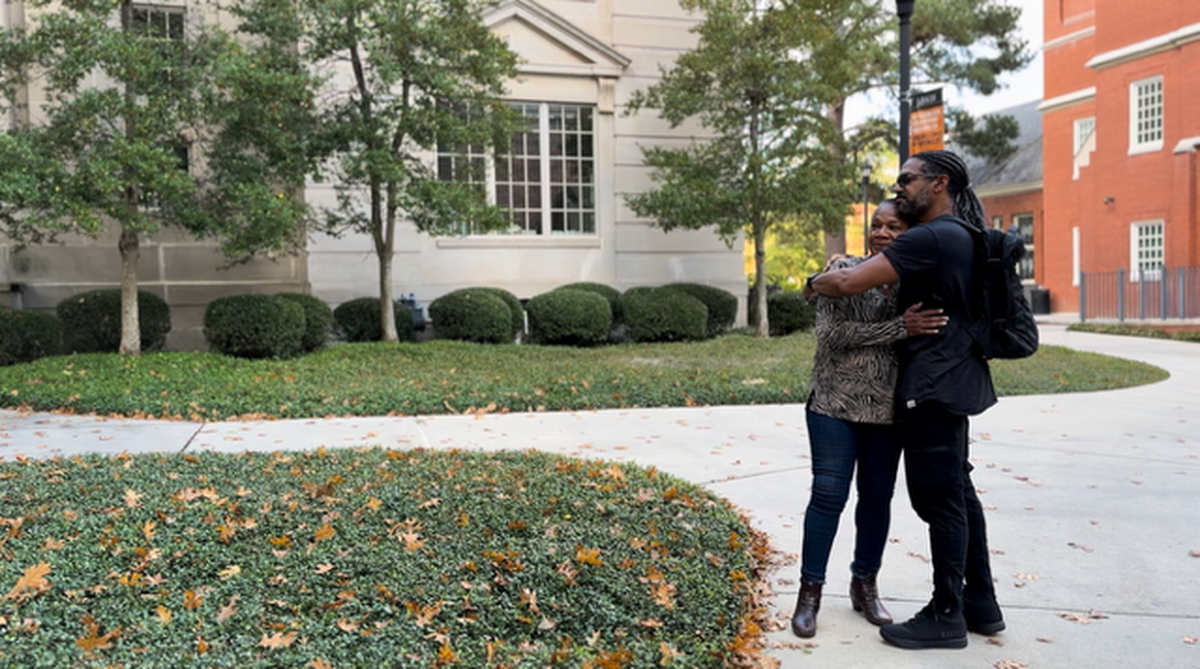
Payton enrolled at Mercer in 1968 at the age of 17, just five years after the university integrated. She entered Mercer with confidence and decided to pursue degrees in both art and biology.
But her optimism was quickly tested.
On her first day as a freshman, Payton said she visited the art department chair at the time, a white man who she said dismissed her ambitions.
Payton alleges in the documentary’s trailer that the department chair called her a racial slur and said she wasn’t “smart enough to get a degree from this department.”
“He made it clear that he didn’t think I could finish the program,” Payton told The Telegraph. “I don’t think that he wanted the school to go into an era of desegregation, and he told me that he did not think that I could graduate from Mercer in his department with a degree.”
Despite completing all coursework requirements, Payton said the professor denied her the opportunity to participate in the senior art exhibit, a mandatory graduation requirement, because her conceptual artwork was “too controversial.”
One piece, titled “Rebirth of Colored Folks,” depicted unity by bringing people of different complexions together, Payton said. Another, “Target Practice,” featured a nude Black family holding a baby in front of a target, referencing how Black people were systematically denied loans, homes and safety, at the time, Payton said.
“There were so many things against them, and I felt like they were just a target,” she said. “There were several conceptual art paintings—meaning that they were about how I thought about things that were going on in society.”
Payton graduated from Mercer in 1972 with only a biology degree.
A long-waited change
The turning point came nearly 50 years later, when Payton coincidentally met and spoke with Sarah Gardner, a distinguished professor of history at Mercer, at the Atlanta airport in 2019.
“My first impression of seeing Gwen was that she looked really happy. I assumed because she had just come back from visiting her family,” Gardner recalled.
But when Payton learned Gardner worked at Mercer, her demeanor shifted. She admitted she didn’t have a positive impression of the university, Gardner said.
Gardner, who was a member of the university’s executive committee, was moved by Payton’s story and took action. This prompted Mercer faculty to host Payton’s senior art gallery in 2020, along with work she’s produced since, to complete the final requirement for her art major.
Payton was awarded her art degree in 2020, and she marched with the Mercer class of 2021., she said.
“It was so obvious to me about what happened (and) what needed to happened. I just thought, ‘What can I do to make it happen?’” Gardner said.
“I get a little weepy, you know,” Gardner added. “It cost me nothing to go to the committee to do that. Nothing was going to happen to me. But for Gwen, she was trying to receive what she had earned. I just can’t imagine why anyone wouldn’t do what I had done if they were in my position.”
A film for healing and change
The emotional toll of the injustice lingered for decades. Payton said she avoided Mercer’s campus for nearly 45 years, returning only rarely.
“I did not realize the extent to which my feelings about what happened at Mercer had prevented me from literally wanting to go back until we discussed going on campus to film,” she said.
Payton said the encounter at Mercer dramatically changed her outlook on who she was as an artist, and she even stopped painting conceptual art.
“That was what had brought that big impact on my art career — having been denied my degree at Mercer, having been denied that my conceptual artwork was real and reality for me, even if it may not have been reality for him,” she said.
But filming the story became a catalyst for healing, as well as finally receiving her art degree while her late mother and husband were alive, Payton said.
“My mother knew Mercer as a big ivory tower that had signs on the street sidewalks that said ‘whites only’ when she was growing up there and when I was growing up there,” Payton said.
“The joy that I saw in my mother’s face and the joy that I had with my husband that I would get my degree...There’s nothing—a trillion dollars couldn’t pay for the feelings I have about that, and the incredible peace that came to me after that,” she said.
She described the documentary as a story of trauma, healing and the enduring power of faith and truth, hoping it will inspire others to share their stories and seek remedy from any festering wounds.
The documentary, she believes, will help others understand the importance of acknowledging trauma and seeking healing — not necessarily from those who caused the harm, but from within.
The film’s title, “The Faith of the Dreamer,” reflects Payton’s belief in perseverance.
“Opposition to the truth may derail the dream, but the faith of the dreamer prevails,” she said, describing how faith and truth guided her through adversity.
Payton said Mercer’s acknowledgment and willingness to address the harm done was one of the most important parts of her story.
Art, activism and legacy
The film also features voices such as Sam Oni, the first Black student to enroll at Mercer in 1963. Oni, who graduated a year before Payton arrived and recalled being ostracized on his very first day in the cafeteria by white peers, said Payton’s story resonates far beyond one campus.
“I think of America as a wounded giant, wounded by this monstrosity called racism, and the American racial wound festers …,” Oni said, highlighting the documentary’s call for honest reckoning with the past and how it relates to what’s going on today.
Oni emphasized the documentary’s value for younger generations, especially students at Mercer.
As a student, Payton was active in Mercer’s budding Black student movement, helping to found the Black Students Alliance and advocating for Black studies courses.
Payton credits her generation of Black alumni with helping shape the Mercer that exists today. She said that the documentary has been well-received by alumni, who see it as a reminder of their experiences at the university and a call to action for healing.
After recalling memories of vacant seats and the fight for equity, Oni said racism persists, and it is part of the reason why he joined the documentary.
“The struggle to overcome racism in America is an ongoing stuggle,” Oni said, noting that Macon served as a center for slave transactions and referencing recent events under the current presidential administration. “I think every Mercer student should know about (the film) and decide whether they want to see the movie or not. I am so proud of Gwendolyn (and) her Christian faith.”
A message for the future
Now 74, Payton hopes her story will inspire others, especially Macon youth and students of color, to persevere in the face of adversity.
“There may be things that happen in every season of life, and when students come into a college situation, they’ve got to be aware that there may be times … that people will rain on your parade, but you take what good and what strength you can and move forward,” she said.
As one of the first in her family to graduate from college, Payton emphasized the importance of education in Macon, where she said many youth may come from families without college graduates.
“I think the youth in Macon have an incredible opportunity to grow and be educated,” Payton said. “Even in the atmosphere we have today that’s somewhat working against history and education—it feels somewhat like it did in 1968—you have to be willing to say what you want to do with your life to your parents...and go after it.”
Both Gardner and Oni said they plan to join Payton and her family for the film’s screening.
“(The documentary) is as much a part of Mercer’s history as anything else is. It’s a story that’s probably far too familiar, but one that had at least a kind of solution,” Gardner said. “It’s not going to right everything that was wrong, but it did some good work, I think.”
“The Faith of the Dreamer” will premiere at 2:30 p.m. on Aug. 24, at Theatre Macon. Visit the Macon Film Festival’s website for more details and ticket purchases.