Remembering former Telegraph photojournalist Nick Oza, ‘The best human I ever met.’
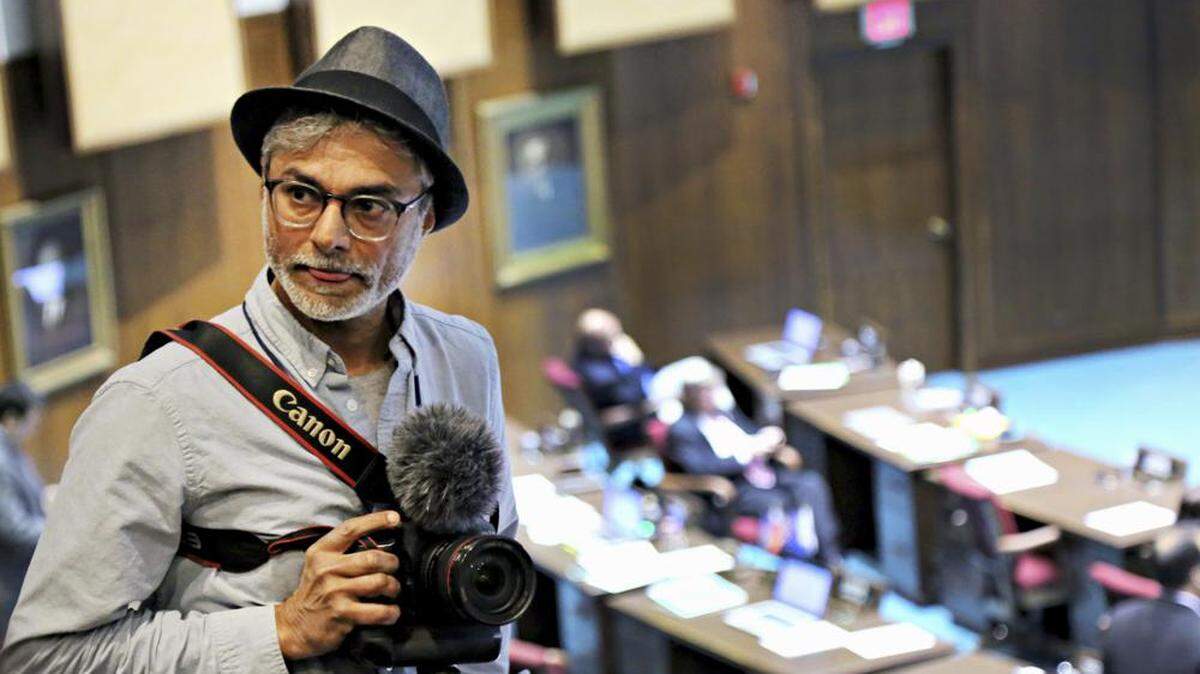
Woody Marshall could tell Nick Oza stories all day.
Marshall, who was the Telegraph’s director of photography for more than two decades, first met the photojournalist in January 1997 when Oza took three days to drive from Chicago to Macon in a dirt-brown Toyota Cressida, slowed by a U-Haul trailer and its accompanying “45 mph max” sign.
The Mumbai, India native was raw, but Marshall could tell from Oza’s portfolio that he was “interesting and special.” Oza would spend almost a decade documenting the lives of Middle Georgians. Macon was “absolutely foundational” to Oza’s career, one colleague said, a community that he loved, and one that embraced the young man with the long black hair and a camera in his hands.
Oza would go on to have an incredible career, part of two Pulitzer-Prize winning newsrooms, covering war and natural disasters, politics and immigration and traveling across the world.
Cataloging Oza’s notable assignments — the Iraq War, Hurricane Katrina, the U.S./Mexico border, gang violence — one could assume the photographer enjoyed being in exciting, dangerous places. But that wasn’t the case, according to Marshall.
“It wasn’t the adventure, it wasn’t the danger,” he said. “It was the people, and telling their story.”
‘It’s unfair’
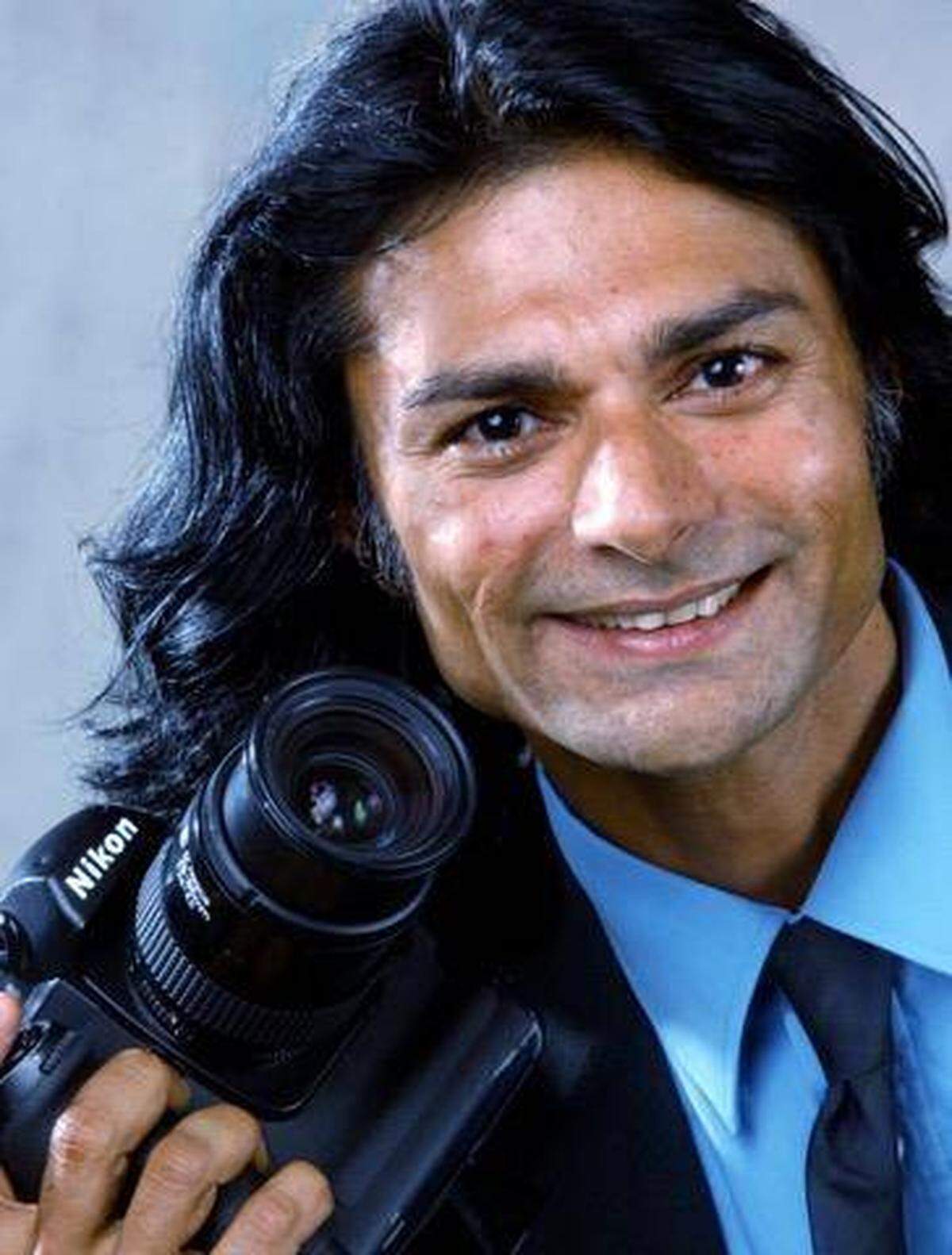
Nick Oza died Sept. 27, several weeks after a single-car wreck in Arizona. He leaves behind his wife Jacquelyn and daughter Shanti, thousands upon thousands of photos and innumerable friends.
Oza’s journalism friends grieve his loss. They talk about him in group texts and 1,700-word obituaries and social media posts. He was unforgettable, he glowed with an unseen aura, he was funny, kind, generous, a great photographer and an even better person.
“It’s unfair,” Marshall said through tears of his friend’s death.
Mark Washburn, a veteran Charlotte Observer reporter, said he was talking about Oza with a mutual friend, who commented the 57-year-old had died too young.
“I told him that on weight, he outlived both of us combined. Nick milked all the life out of every single second,” Washburn said, adding he “has a Nick Oza-sized hole” in his heart.
He first met Oza in Germany as they were traveling to cover the Iraq War in 2005. The veteran reporter told the earnest photographer as they both prepared to enter a war zone: “Just do what I tell you, when I tell you, and we’ll be fine.”
Not even a week later, after watching Oza work and seeing the end results, Washburn decided on a change of tactics.
“If you see a good picture, you take it, I’ll write a story about it,” Washburn told Oza. “He was so good.”
The two teamed up again in Biloxi, covering the desolation of Hurricane Katrina. The results were remarkable. Washburn and Oza would head out each day in an SUV with five gallons of gas, looking for a story. They’d come back with two or three.
Washburn remembers one Oza image, later used as the cover for a book about Katrina: a young mom stands on a beach strewn with debris — mattresses, driftwood, metal siding — and, oblivious to the destruction around her, kisses her infant son.
Sometimes, the two journalists would be met with resistance. But Oza was insistent. “This must be documented,” he would say about the pain and anguish and resilience and triumph of Katrina survivors.
“He had the courage to just go up to people in terrible situations and convince them to let him into the inner circle,” Washburn said. “That’s what made his work so powerful. He got the access.”
Oza worked for the Telegraph until he left for the Arizona Republic in 2006. One of his focuses during his time in Phoenix was covering immigration issues, visiting the border and documenting the lives of undocumented immigrants. He didn’t speak Spanish, but both border walls and language barriers meant little to Oza.
Joe Kovac Jr. has seen it all covering the courts and crime beat for the Telegraph over the past three decades: the best and the worst of people. He remembers a months-long project he and Oza teamed up on, a feature on Mallory Moss, a girl battling intractable epilepsy who had two major brain surgeries in 2000 and 2001.
Watching Oza work was “almost magical,” Kovac said, as the photojournalist blended into the toughest situations, in hospitals, at funerals, “in chaos.” Oza was a great storyteller, and he did what all great storytellers do: he spent time with the subjects of his story so he could really understand who they were.
He was brilliantly kind and gifted as both a person and a photographer, Kovac said.
“I have zero doubt that you could walk around this city today — a decade and a half after he left for Arizona — and show folks a picture of Nick and at least, oh, two or three out of every 10 would recognize him,” he said.
Wherever he went, Oza made friends. He cared about everyone, his colleagues said, but most importantly, about folks other people ignored: the marginalized, the forgotten, those in pain. He had to tell their stories, and not from afar, but from up close, sometimes uncomfortably close.
“He cared about people,” Marshall said. “He loved everybody. If you ever met Nick, you knew that he cared about you. He was an amazing man.”
Oza was never the most technically proficient photographer — although Marshall noted he worked wonders with a wide angle lens — but that wasn’t his primary goal. A camera was just a box to Oza, Marshall said, a tool to record what was going on.
“Make the picture first, then fix it later… never miss the moment trying to set your camera,” Marshall said about Oza’s focus. “He’d bring back a photo with people’s heads cut off or just hands, but it always meant something. It was always on purpose. It always improved the composition of the image.”
‘The fire burned bright in him’
.jpg "Elliot_Oza_20 (1).jpg")
There are many more Nick Oza stories, too many to recount in one sitting. Ed Grisamore, the longtime Telegraph columnist, tells several more in his column in his Sunday column.
There’s the time Oza drove from Macon to Phoenix — “Woody, Woody, Texas never ends” — half of it with his GPS telling him to take every single exit for hundreds of miles because he’d accidentally set it to avoid highways.
There’s the time he decided to spend the night with a single father of two children while working on a series in Macon’s Unionville neighborhood, so he could better tell their stories, or the time he was off of work and eating dinner, and someone was shot across the street, and Oza raced to photograph the incident as a police officer checked the victim’s pulse.
There are stories about Oza’s generosity, giving folks boots off of his feet or photography equipment, anything he felt they needed more than he did.
What drove him in an almost unrelenting pursuit of truth, of telling the stories of people who needed them told the most? Oza was initially going to be a commercial photographer, but an interaction with famed John H. White set him on a different path.
“Once he got started, he was good at it… he had such compassion for others, particularly the suffering of others,” Washburn said. “He had such a gift for it. The fire burned bright in him for those stories.”
When he was in Macon, he was always eager to return to the newsroom with his film for critique from Marshall, Washburn said, which he just “soaked up like a sponge.” Washburn compared Marshall and Oza’s relationship to that of a high school football coach and a star linebacker, almost father-son.
Marshall called Oza a brother.
“He was the best human I ever met,” he said.
A GoFundMe page has been created to support Oza’s family.
This story was originally published October 10, 2021 at 10:36 AM.