State regulators to investigate if Georgia Power customers pay data center costs
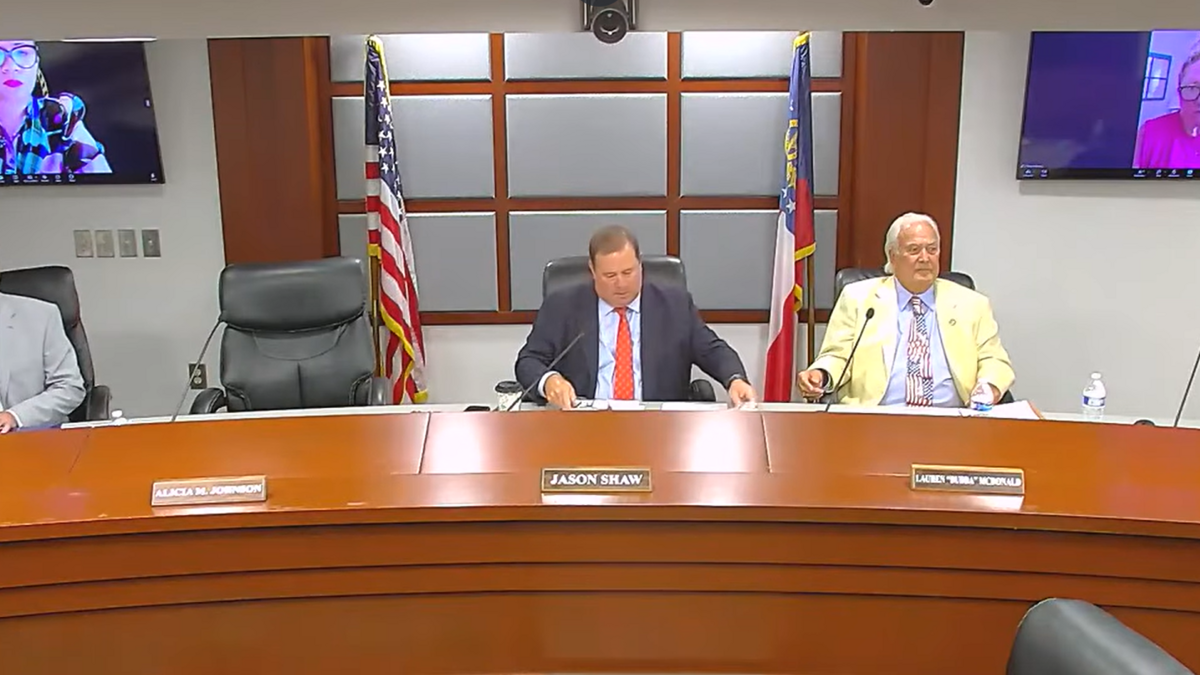
Georgia regulators voted Tuesday to move forward with an investigation into whether Georgia Power’s largest customers, including data centers, are shifting fuel costs onto households and small businesses.
The Georgia Public Service Commission’s investigation will examine how customers on Georgia Power’s Real Time Pricing rate, a structure used almost exclusively by the company’s largest industrial customers, contribute to the company’s fuel costs.
The investigation grew out of Georgia Power’s fuel cost case this spring, in which a company representative acknowledged that certain fuel-related costs are not charged to Real Time Pricing customers, according to a release from Georgia Conservation Voters Education Fund.
“Experts identified nearly $1 billion in costs that data centers pay nothing towards, but families, churches, and small businesses do,” PSC Commissioner Peter Hubbard said in a news release after the vote. “The utility claims that this RTP loophole is offset by certain other categories, but since the Rate Case last year was canceled, they haven’t had to prove that or bring receipts. That’s what needs to happen here.”
Hubbard, one of two Democrats on the five-member commission, is up for reelection in November.
Georgia Power said it supports the review, which the company agreed to in the settlement that resolved the fuel cost case May 11.
When asked about the $1 billion figure, Georgia Power said its witnesses explained during the hearings that revenue from large customers is credited both to fuel costs and to base revenues.
Georgia Power collects revenue in two streams: The fuel charge repays the company for what it actually spends on fuel, with no profit built in. Base rates cover everything else, including the power plants, powerlines and the company’s earnings. The dispute is over whether Real Time Pricing customers’ contributions to the second stream make up for what they don’t pay into the first.
“Identifying costs in one bucket without considering the revenue in the other bucket creates an incomplete and incorrect narrative,” Matthew Kent, Georgia Power spokesperson, said in a statement to The Telegraph. “Large load customers are paying their fair share of costs and in doing so help keep rates lower for homes and small businesses.”
Whether revenue credited outside the fuel account makes up for the fuel costs RTP customers do not pay is the question at the center of the investigation.
What is Real Time Pricing, and how is it impacting bills?
Fuel costs are what Georgia Power spends to buy the coal, natural gas and other fuel that run its power plants. Those costs are passed to customers through a separate charge on monthly bills and account for more than 25% of the average customer’s bill, according to the group’s release.
Real Time Pricing customers pay the real-time market price of energy rather than the standard fuel charge that residential and small business customers pay. The rate structure encourages facilities to use more electricity outside peak hours, which benefits everyone on the grid, according to Hubbard’s release.
But several categories of fees that fall under fuel costs are not paid by RTP customers, according to the release.
Among them are firm gas transportation costs, the fixed payments Georgia Power makes to pipeline companies to guarantee capacity for the fuel to reach its plants even during peak demand.
Hubbard said during Tuesday’s session that those pipeline costs are not part of the Real Time Pricing methodology, a point no one at the session disputed. The costs could reach about $118 million in 2027 if not reallocated, according to estimates his release attributed to commission staff testimony and a post-hearing brief filed by Georgia Interfaith Power & Light and the Southface Institute in the fuel cost case.
Upcoming investigation
Tuesday’s vote came after two failed attempts by Hubbard to amend the order setting the investigation’s schedule and scope.
Hubbard first moved to require the investigation to include an updated analysis of whether Real Time Pricing customers’ payments make up for the costs they don’t pay, a question he called a central factual dispute from the fuel cost case. Georgia Power has argued the rate is designed so that RTP revenue offsets those costs, but the company has not had to demonstrate that, according to Hubbard.
The motion failed along party lines.
Hubbard then moved to add the word “cost” to the order’s description of the allocations under review, saying the change would clarify that the commission is examining cost allocations and not only how RTP revenue is credited.
“The intention is really to not limit ourselves on this scope, to make sure the staff is empowered to investigate this,” Hubbard said.
Commission staff did not object to the change, saying the word was implied in the order’s existing language.
Steve Hewitt, an attorney representing Georgia Power, argued against it. Adding the word “cost,” he said, could let parties argue the docket requires a full cost of service study, a top-to-bottom analysis of what each customer class costs the company to serve. That study typically takes the company a year, Hewitt said, and there is no time for one before the investigation’s deadline of Dec. 31.
“If you need our assurance that firm transportation costs will be looked at in that proceeding, I can give you that on behalf of the company,” Hewitt said.
With the three Republican commissioners voting nay, that motion also failed. The commission then unanimously approved the scheduling order.
Costs to customers
Georgia Power said revenue from large customers enabled the company to freeze base rates through 2028 and, beginning in 2029, will produce at least $102 in annual savings for a typical residential customer.
Commission public interest staff found in the fuel cost case that large power users could drive up fuel costs for other customers by up to 11% per month by 2028, with “the difference increases over time as more large load is added to the system,” according to staff testimony quoted in Hubbard’s release.
The May settlement that produced the investigation cut Georgia Power’s storm cost request by nearly 60% and resulted in an estimated net decrease of about $4 per month for residential customers, according to the Southern Environmental Law Center, which intervened in the case.
New fuel and storm costs are adding roughly $6 a month to bills, but customers have finished paying off a charge of more than $10 a month from 2022 gas price spikes, producing the net decrease. Georgia Power presented no plan during the case to ensure data centers will cover those costs going forward, according to the law center’s release.
“Georgians deserve to understand exactly who is paying for the massive growth in electricity demand from data centers, and who isn’t,” said Ja’Mae Rooks of Georgia Conservation Voters Education Fund.
Findings of the investigation are due Dec. 31.