
‘Is this my forever?’ Macon lawyer, COVID long-hauler wonders if he’ll ever get well
Editor’s note: Last spring, Macon attorney Jordan Josey seemed to be on the mend in the weeks after contracting COVID-19. He had been among the first locals diagnosed. His “harrowing experience,” which he shared with local news outlets, was widely read and circulated on social media. Josey, now 29, an asthma sufferer, had otherwise been healthy and active. For the past year, however, he has struggled with apparent COVID-19-related relapses. In a recent interview with Telegraph reporter Joe Kovac Jr., Josey spoke of life as a “COVID-19 long-hauler.” This story, condensed and edited for clarity, is a first-person account of his journey into a medical unknown.
I have always been someone who’s an optimist, always positive, always cheerful. Now I feel like maybe I’m losing that, like I’m withdrawing. I don’t want to be as social. I’m fearing that this virus, this pandemic, is changing me.
I don’t know if everybody else can see the joy sucking out of my life. But I can feel it.
I can’t not think about being sick with COVID because it’s an ever-present reality for me. I wish could forget about it, but I can’t. I’ll wake up and feel bad and I’ll think, “Is this my forever?”
Early on, there was an outpouring of support from friends and people who read my account of my initial bout with the virus. People had seen the news interviews. My goal was for it to be somewhat of a cautionary tale. Particularly for people who maybe wanted to believe the virus was more like a common cold or flu and not as severe — and also for people who were apprehensive about wearing a mask or social-distancing.
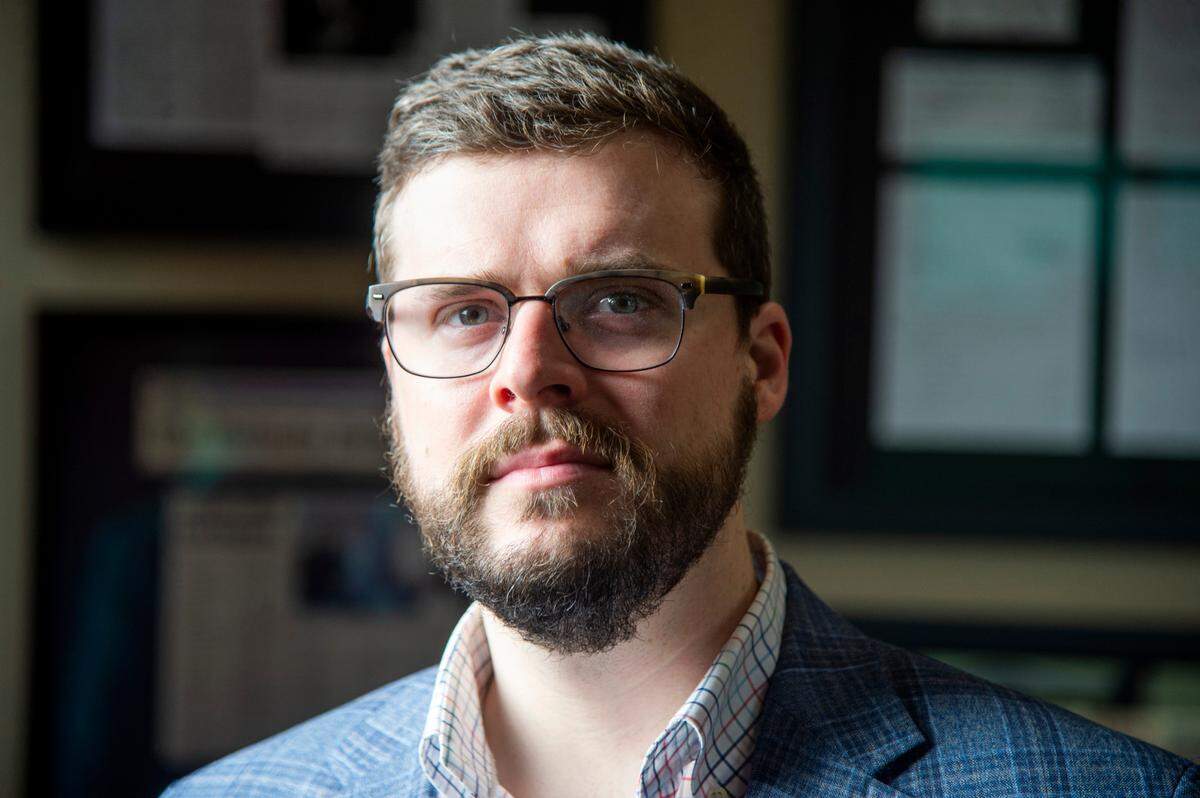
The way I contracted COVID was exactly the way that it’s been reported. I was at a legal conference in mid-March last year, in a close-talking, crowded-room scenario.
After my trips to the emergency room when I was barely able to breathe, I wanted people to see that I’m a young, healthy person who’d been very sick.
It took more than a month for me to even be able to walk up a flight of stairs again, to not have to put my hands on my knees and double over.
In May and June, I felt better. I was positive I had gone through this harrowing experience but was recovering. It was kind of like I had a war medal, that I had been through something terrible but had overcome it.
My wife, Virginia, contracted it around the time I did. She was sick for about five days. I think she would classify it as a mild case, but it was no walk in the park.
As summer began, there was weekend where I finally felt comfortable enough to go see my family in South Carolina. About a week after that, I was driving home for lunch. It was late June and as I’m driving, all of a sudden, I couldn’t breathe.
I was taking breaths of air and it was like my brain wasn’t getting the oxygen. I freaked out.
The fear returned
It was like a really bad asthma attack. I have asthma, but I’ve never had anything like that. I was on Forest Hill Road and had to pull over. I almost called an ambulance.
When I finally caught my breath, I almost drove to the ER. Instead, I made it the mile or so to my house. I used my inhaler and sat in the cold air conditioning. I was trying to figure out what was going on. The breathing attack or whatever it was had grabbed me out of nowhere.
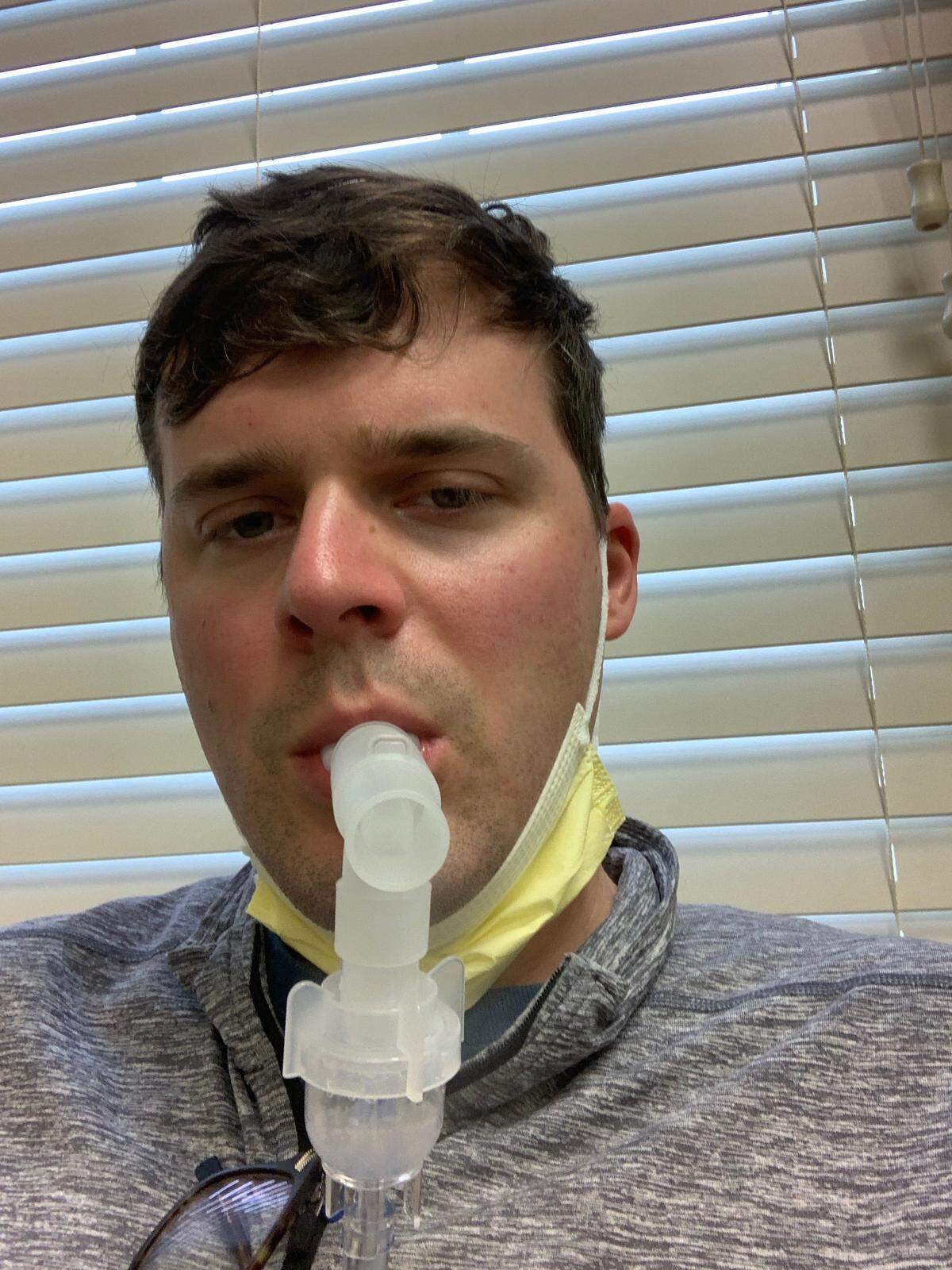
I went to my doctor’s office the next day and they rapid-tested me for COVID. I tested positive again. But rapid tests are so unreliable, I don’t know if that means I had actually contracted it a second time.
I asked the doctor, “What does this mean?” and he said, “We don’t know.”
My fear came back. I was incredibly fatigued. I never ran a fever but I wondered, “Am I about to go through this again?”
On July 4, my lymph nodes swelled in my neck. I could see them in the mirror. I had trouble swallowing. My voice was strained.
Until about the second week of August, I could barely get out of bed. I would sleep for 15, 16 hours and feel like I didn’t get any rest. I’d have night sweats. I was constantly tired and sleepy.
I missed so much work, but I still tried to go in. The law firm where I work was so supportive and has been the whole time.
But that month was hard. I couldn’t figure out what was going on. I had blood drawn and I was sent to a pulmonologist and a rheumatologist. They ran a bunch of tests. One showed that my body had created this immune response where it was attacking itself. The doctor said she didn’t know if I had an autoimmune disease that COVID had “woken up,” or if COVID had manifested itself this way.
By September, some of my energy returned.
I started to get active again and stopped thinking about feeling bad every day.
I began thinking maybe COVID was a thing of the past.
I was wrong.
‘Are you OK?’
Around Thanksgiving, I felt bad again.
A general malaise set in, this time with migraine headaches, insomnia and shortness of breath. My head hurt so bad I had to stay in a dark room. Headache medicine didn’t help.
I couldn’t even watch TV. I put an ice pack on my head and tried to fall asleep. That was the only thing that would make it go away — that or going and vomiting.
I started to think, “This is not something I’m gonna just shrug off.”
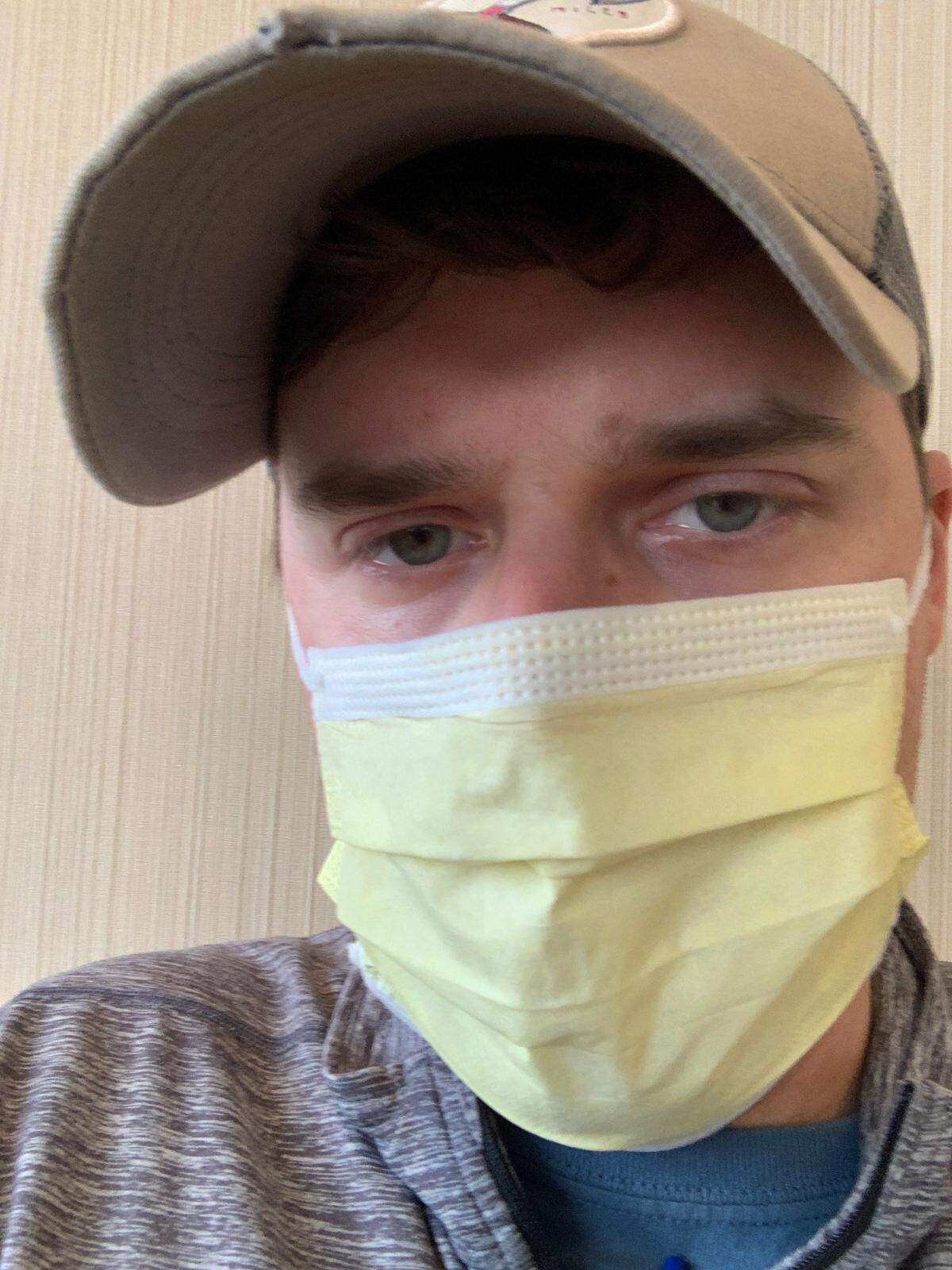
I had joined a group on Facebook called the Survivor Corps. It’s for people with long-term COVID symptoms. They’re all across the country. I can compare experiences with them and on particularly bad days I can find solace and comfort.
In early December, I was still extremely fatigued. Along with insomnia and more headaches, a dry cough kicked in.
They tested me again for the coronavirus and I was negative. Still, I felt so bad, it was almost like I had it again.
Just about ever since, I’ve basically been in a funk.
My body’s aching, my skin is pale, I’ve got bags under my eyes.
I have people look at me and say, “Are you OK?”
I’ll say, “Yeah.”
They’ll say, “Well, you just look unwell.”
And that’s exactly how I feel, unwell.
But it’s more than just that. This year has been incredibly isolating.
In terms of being sick and often confined to home, yes, it’s been physically isolating. There’s also a sense of mental isolation.
I’m suffering with this condition that nobody, unless they know me, can see.
‘I feel terrible’
By about mid-February, I knew I had to do something — to get moving, to snap my body out of it, to do something normal again. Or at least try.
Valentine’s Day weekend, I figured I’d try exercising.
My wife has one of those Peloton bikes.
Knowing that it’s pretty intense, I found a 30-minute, beginner Peloton class, because for almost a year I hadn’t done much cardiovascular work. The class had a five-out-of-10 difficulty rating. I didn’t plan to push myself hard.
I did some stretches and push-ups and finished the workout. Almost immediately, I had what I thought must be a stitch in my chest. For the rest of that evening, my middle back hurt. My wife massaged it but nothing helped.

So I went to bed and at 3 a.m. a pain woke me from a sound sleep. Chest pain was just killing me. My middle-back throbbed. My heart was pounding, 150 beats a minute.
I just figured it was because I hadn’t exercised in so long. I took three extra-strength Tylenols and laid in bed awake the rest of the night.
The next day, a Monday, it hurt every time I moved, every time I breathed. I went to work and was just miserable. I kept thinking, “They say a pulled muscle gets better after a day or so of rest.”
Tuesday morning I was supposed to go to the courthouse for a hearing. I was at my desk and we were having a meeting. My boss looked at me and said, “You do not look good.”
I said, “I feel terrible. My chest is hurting and it hurts to breathe and I’m short of breath.”
One of my co-workers chimed in and said, “My dad had a blood clot. That’s exactly what happened to him.”
“Well,” I said, “let’s go into this hearing real quick and I’ll go to the hospital after.”
My boss was like, “No, your life is more important. You’re gonna go to the hospital right now.”
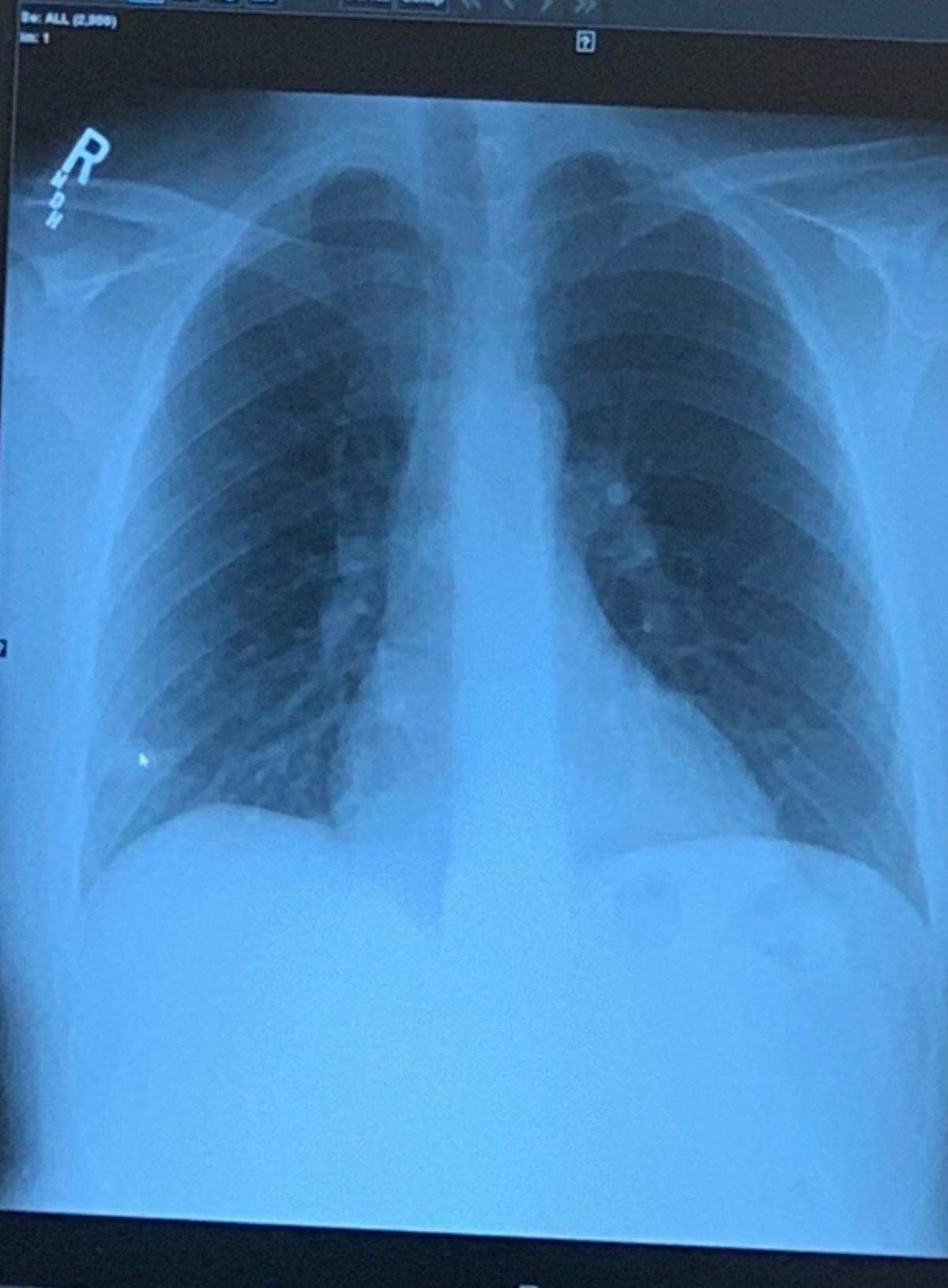
I drove myself to the ER and, fortunately, I didn’t have a pulmonary embolism, but I had some elevated levels with my heart labs so they admitted me for a cardiac consultation.
I was in the hospital two days. They diagnosed me with an inflammation of my lung lining.
It took me a few weeks to recover, just to get where my chest pain wasn’t bad.
So I was back to step-one when it came to climbing stairs. I would get winded walking from my bed to the kitchen. Now I’m seeing a cardiologist.
No one truly understands
I got my first shot of the vaccine March 10.
The next day I was supposed to go to a work conference in Savannah, but I ended up home in bed with a 102-degree fever and chills — side effects from the vaccine. I was better the next day.
I’m supposed to get my second dose of the vaccine in April. My first-round reaction isn’t gonna scare me off. That was nothing compared to my first bout with COVID. It would take a lot more to keep me from getting that second shot.
Something that to me has been frustrating, though, from a national or a statewide perspective, is we’ve got this feeling like everything’s getting better and we’re about to come out of the pandemic.
I think the people getting the vaccine is probably fueling that for sure, because for the first time in a long time there’s hope.
But I still feel . . . it’s hard to describe. I feel isolated, lonely.
Don’t get me wrong, I have a great support network. My wife has been amazing and friends have been great. My co-workers have been great and strangers that I’ve talked to on the internet have been great.
It’s hard to put into words the amount of sadness that I feel for the loss that we’ve experienced as a country, and the loss that friends of mine and coworkers have had due to this pandemic.
At the same time, there is this sheer appreciation I have for my life, my career.
I’m sad but I’m also incredibly grateful.
And it’s not like I don’t have resources. But it’s like I’m on an island and no one truly understands the plight.
It’s a very complicated feeling because I’m also extremely grateful that I survived, and I’m deeply sorry for everyone that lost family or friends.
So it’s a very complex emotion.
I know the pandemic is still being fought on the frontlines.
I also know the back-end of the pandemic is going to be dealing with people like me.
Is there an end?
I don’t know when the end is or if there is gonna be one.
I’m hopeful that what I have is maybe something where, “Hey, you had COVID, you’re gonna be sick for a while but one day you’re gonna feel better.”
I think since about the 1st of March I’ve felt myself maybe climbing back into another period where I’m in a remission. I’ve had two relapses, so I’m really scared to call it a remission. I’ve dealt with plummeting back into feeling bad again, so I’m nervous to classify myself as “well.”
So is there an end in sight for people like me? I hope. We’re here in another springtime and I’m hopeful.
I think it’s been the most challenging year for everyone, watching the virus become politicized and watching people suffer because of that. And because of misinformation and because of people not wanting to think about other people. That was really upsetting to me — and it’s part of the isolation for me — seeing people callously disregarding COVID or having a really bad attitude about following protocols. You just wish you could impress upon them what happened to me: This could happen to you, or to somebody you unwittingly give it to.
Unfortunately, we are almost regressing intellectually. I think there’s something about society that wants to attack the messenger. It’s easier to listen to an alternative theory or an alternative reality instead of confronting the beast that is the truth.
When we talk about this virus, we shouldn’t be talking about politics. It was almost like if you were pro-wearing-masks or pro-social-distancing, people just inherently assumed you must be a liberal. It’s almost like if you’re wearing a mask, some people look at you like, “Why are you wearing a mask, what’s wrong with you?”
There’s a level of depth and nuance and, honestly, extreme empathy that you have to have in order to be fully willing to fight the pandemic. You have to understand how it spreads, that your conduct and choices mean just as much for other people’s health as it does for your own.
As for my situation — my uncertainty over whether I’ll fully recover — that likely won’t end soon. When I have some weird new symptoms, in the back of my mind I’m gonna wonder, “What now?”
Will I be wearing a mask in public for the foreseeable future? Yes.
This story was originally published March 22, 2021 at 5:00 AM.