
Hollywood's secret beauty trick: the special effects facelift
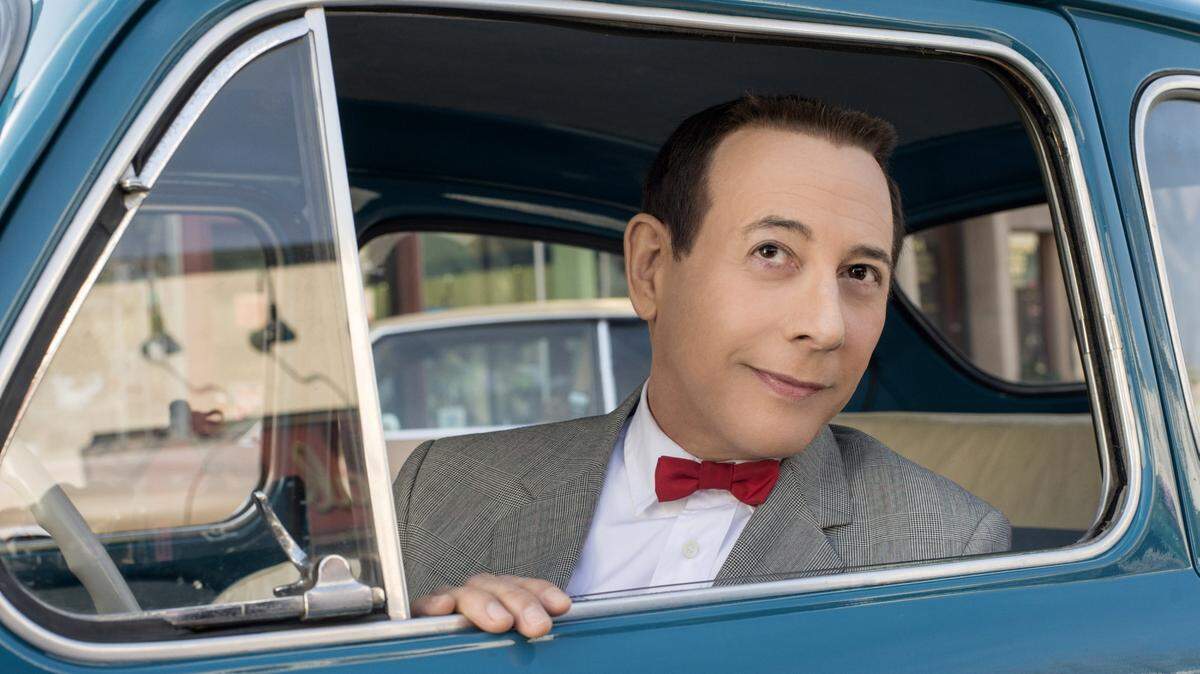
Pee-wee Herman hasn't changed a bit. It's been three decades since his heyday, when he hammed it up in a snug gray suit for TV watchers every Saturday morning. But take a look at his new Netflix movie, "Pee-wee's Big Holiday," and prepare to be stunned. Has actor Paul Reubens -- who first played the bowtied character in 1979 -- found the fountain of youth?
Sort of.
The Peter Pan-ish Pee-wee was never meant to age, so tech wizardry intervened. In postproduction, artists digitally retouched his face to turn back the clock. It's called beauty work, and it's been around for more than a decade. But it remains a hidden craft, practiced by artists who make every frame look sublime by toiling for long hours -- and remaining invisible.
"In a perfect world, you will never see our work," says one expert, Howard Shur, who started Los Angeles-based digital effects company Flawless FX three years ago. "It will just look natural and normal."
In the early days, the effects niche was reserved for music videos, to make pop stars pop. But over the years, business boomed, as commercials, movies and TV got on board. Now, plenty of actors have beauty work written into their contracts. Maybe you can guess which ones, but you won't get confirmation from the people who fix A-list flaws. Non-disclosure agreements are the norm. Unless it's a conspicuous part of the story, like Brad Pitt aging in reverse in "The Curious Case of Benjamin Button" or the flashback in "Ant-Man" that shaved 30 years off Michael Douglas' face.
Or if an actor like Reubens admits it, as he did in a New York Times profile, exposing this little-known -- and pricey -- process. "I could have had a facelift and we would have saved $2 million," he said in the interview.
One of Flawless' specialties is fixing continuity errors -- minor adjustments that result from fast shooting schedules or tight set budgets. Let's say an actor has a cold sore for two days of his 10 on set. Because movies are generally shot out of order, viewers might be distracted if the blister vanished then reappeared.
Of course, it's not always about continuity. According to multiple artists, a popular job is to take care of those pesky eye bags. Artists can also add muscle definition, zap blemishes, fix teeth and tame rogue strands of hair. The request can come from a record label, a director, a producer or a movie star, depending on the situation.
It's not easy, nor is it quick. Each frame is digitally hand-painted. New York-based visual-effects artist Nathaniel Westveer, who works mainly on music videos, estimates that it takes him an hour to work on 24 frames -- one second of footage.
The company that worked on "Pee-wee's Big Holiday" was Vitality Visual Effects, based in Vancouver and L.A., and co-founder Guy Botham estimates it took a team of 10 people five months to finish the project. That's no more time-consuming than most. He credits visual effects artist Loeng Wong-Savun -- who also worked on "Benjamin Button" -- with de-aging Reubens so persuasively.
One of the secrets: Age reduction isn't just about erasing furrow lines and crow's feet, although some artists may try to go that route.
"If you just remove wrinkles, you're going to make people look strange," Botham says. "When people are talking or moving, they have natural wrinkles and, as you know when you see people who have had too much Botox, that can make them look a little expressionless."
So Wong-Savun takes a different approach. For "Benjamin Button," he talked to a plastic surgeon about what exactly makes people look older. As we age, the face thins around the temples, and everything below that essentially slides south to create the dreaded jowls. De-aging is about lifting the lower half of the face back up.
"Really it's like performing a facelift," Botham says
For now, moviegoers don't seem to be all that savvy about postproduction trickery, especially compared with readers of beauty magazines, who know how an actress ended up looking so pristine in a photo spread.
"If you sort of think about it, it should be (common knowledge) in a way," says Shur, of Flawless. "It's not really any different than having a makeup artist or hair person or really good lighting or color correction. It's all part of a machine that all works together."
So why all the secrecy?
"If you had somebody retouch something, you wouldn't want the 'before' published probably," Shur says. Fair point.
Plus, actors don't want to reveal that in real life, they look their age -- that can be bad for business.
Of course, just like Photoshopped makeup ads, beauty work prompts the question: Are moviegoers being peddled an unhealthy and unattainable type of beauty?
Yes and no.
Looking at an actor's normal face on a 40-foot screen isn't exactly natural. Frown lines are a lot more distracting when they're 10 feet long. And these are movies we're talking about.
"If Matt Damon's playing an astronaut, he's not really an astronaut; he's not really on Mars," Westveer says. "If he had (beauty) work done, the images we're seeing aren't really of the true person's character or nature. It's a performance that they're giving and, digitally, we're helping tell that story."