
AFTER HOURS: Blueprint for success
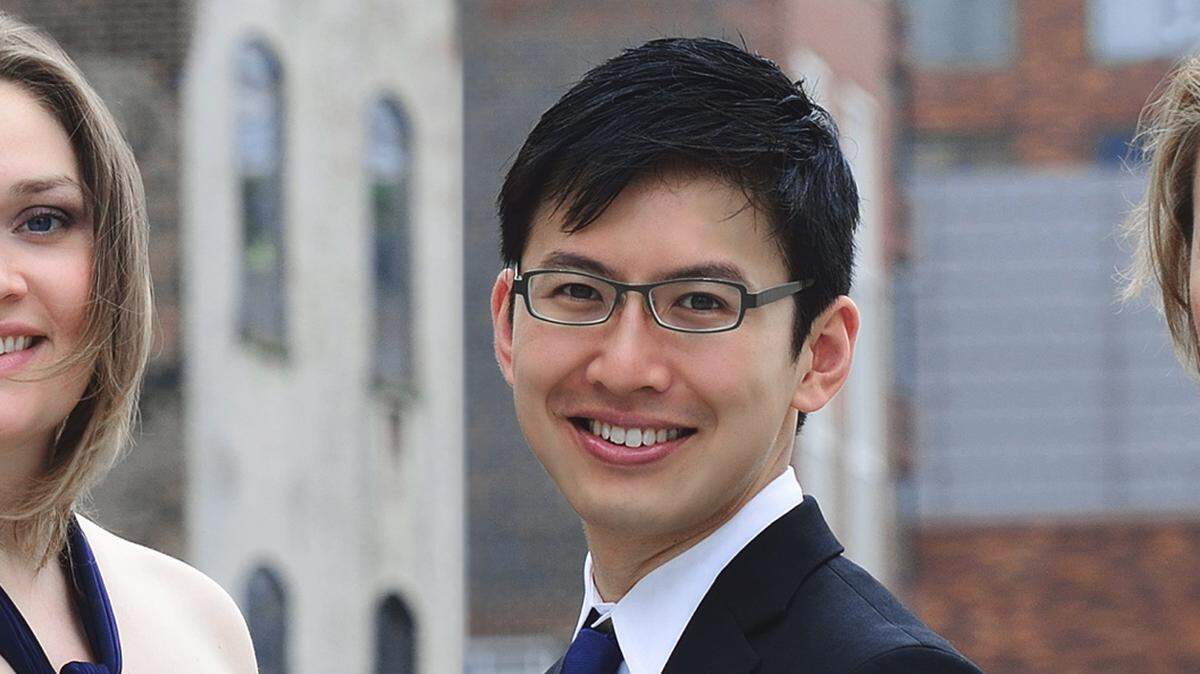
Carrie Cameron Robinson participated in her first Design House, formerly called the Decorators' Showhouse, for Historic Macon Foundation in 2011. Fellow designers, impressed with this North Carolina native's boldly designed, contemporary bedroom in the 19th century house, could barely conceal their curiosity over each piece of furniture, as it was moved into place.
Robinson earned her master's degree in interior design from Savannah College of Art and Design after completing her undergraduate degree in art and photography at Mercer University. Her talent and advanced training did not go unnoticed by Josh Rogers who, at the time, was executive director of Historic Macon, and recruited her as staff designer for the preservation organization.
As Historic Macon became more heavily involved in the purchase and restoration of historic houses and buildings, the need was apparent for an in-house designer who had the rapport with architects, contractors and engineers to guide each project from the drawing board to completion.
During the next two design houses and for numerous reclamations of neglected structures, Robinson was a presence on job sites, the go-to person with the answers and solutions to the dicey issues that can arise when dealing with unpredictable delays in the re-construction of old houses. She gained the respect and friendship of the designers with whom she worked on the show houses because of her organizational skills and diplomacy when egos might be bruised -- she has worn many hats.
Last month, Robinson announced her resignation from Historic Macon to pursue her interior design career, and to join her husband, Will, in their successful downtown endeavor, Robinson Home, on First Street. The eclectic array of cookware, kitchen accessories, outdoor grills and linens has grown to include decorative items for the well-appointed home, the entire store infused with the interior designer's flair.
The Robinsons, committed to the preservation of the tangible history of Macon, restored an old house in the heart of Intown. They remain enthusiastic champions of downtown businesses and they will continue to mentor their friends who might have some trepidation about living and working downtown.
On Jan. 27, members of Historic Macon honored Carrie for being the linchpin of its design/build projects, and for augmenting the footprint of HMF, defining its profile as a full-service preservation organization. Ethiel Garlington, executive director, praised her talents and unflappable approach to the various entities with whom she has worked for the last four years. With the formal launch of Cameron Robinson Interiors, congratulations to a new business, to a new design perspective and to a couple who is proud to call Macon home.
AN ENCORE PERFORMANCE FOR THE MANHATTAN PIANO TRIO
For its latest appearance at Vineville United Methodist Church's Music and the Arts series Jan. 31, the Manhattan Piano Trio's program included two classical composers and one who lived in the 20th century.
When Wayne Lee, violinist for the trio, introduced the first selection on the program, Ludwig van Beethoven's Variations in E-flat major from Opus 44, he remarked on the composition's jaunty attitude, typical of what a smug 20-something might have written to impress his peers.
Each of the 14 variations was brief and spirited, moving through an exercise from the theme, Andante (slow), to the Coda, which was brisk (presto). Beethoven was in his early 20s when he wrote Opus 44, living in Vienna where he was a popular and impressionable young man, playing piano in the salons of some of the city's most prominent residents.
Considering the ominous opening of the second selection, Piano Trio in F-sharp minor by 20th century composer Arno Babadjanian, no documentation of his mood at the time is found. However, the composition's first and second movements convey heart rending tragedy and loss.
Pianist Milana Strezeva, a founding member of the Manhattan Piano Trio, introduced the audience to the composer who was prominent in Russia, but not well known in the United States due to the restrictions of the Soviet Union, which controlled Armenia during his lifetime.
Dennis McCleary, director of music for the church, refers to the first two movements of Babadjanian's composition as "transformational," evoking raw emotion, which was relieved by the last movement. Lee, the violinist, and Saeunn Thorsteindottir, cellist in the trio, dominated the first two movements, joined by Strezeva on piano in the last movement where the mood takes a turn to a more lively interpretation of Armenian folklore.
After a brief intermission, Thorsteindottir, originally from Reykjavik, Iceland, discussed the final selection, Felix Mendelssohn's Piano Trio No. 1 in D Minor from Opus 49. Fortunately, the composer rewrote the part for piano, with the three instruments playing the classically romantic piece with equal billing for a triumphant close to the trio's return visit.
Katherine Walden is a freelance writer and interior designer in Macon. Contact her at 478-742-2224 or kwaldenint@aol.com.
This story was originally published February 6, 2016 at 7:50 PM.