
Psychologist, direct-mail expert, rabbi provide holiday boost
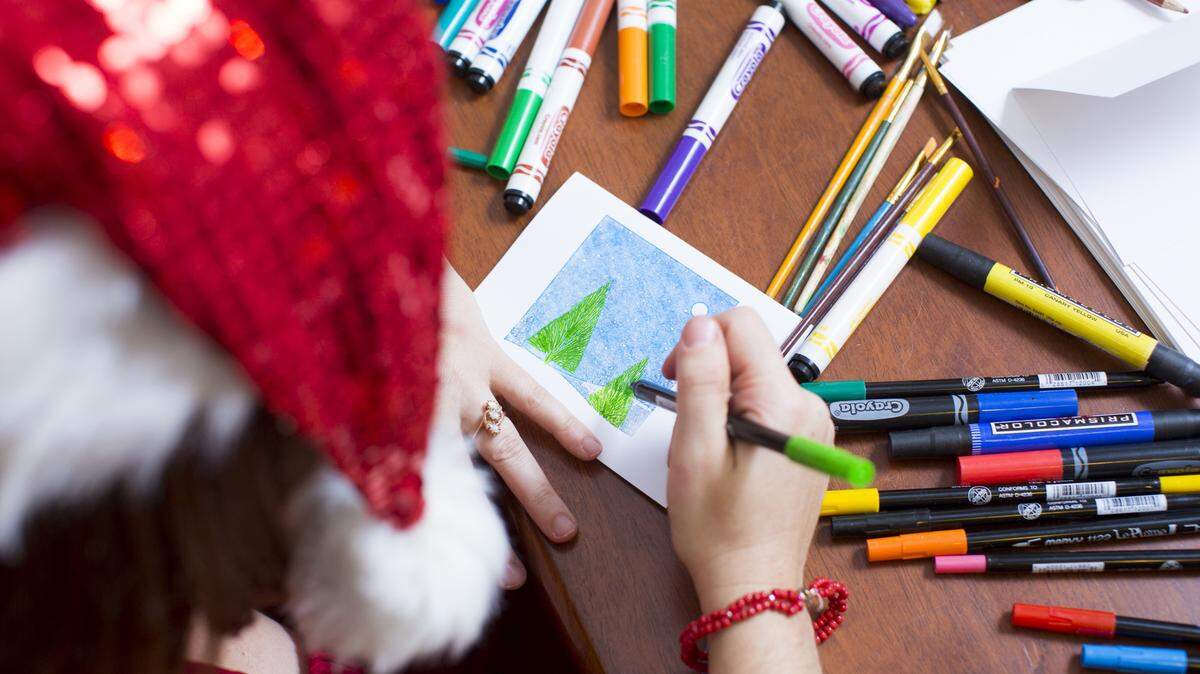
Do you, like me, send out more holiday cards than you get back? As fewer people send holiday cards, the field of holiday card studies isn't what it once was. But here are some chestnuts from past research:
Target people who are 35 to 54 years old. That's the demographic most likely to send out cards, according to 2012 data from the U.S. Postal Service. Those with higher incomes are also more likely to send cards.
Include a handwritten note. The people who receive your cards will find them much more meaningful if you include a personal message that's at least 25 words long, according to a 2004 study published in the Journal of Social and Personal Relationships. Interestingly, preprinted family newsletters weren't considered any more meaningful than generic cards.
Ditch the printed labels. Envelopes addressed by hand are three times as likely to be opened as ones with computer-generated labels, according to a 1986 study in the Journal of Business and Industrial Marketing.
Don't skimp on your cards. In a 1976 study, psychologists at Brigham Young University sent Christmas cards to 578 strangers in the Chicago area. Half got cheap cards, and the other half got nice ones. The high-quality cards received nearly double the response.
I really need to get rid of my piano. For one thing, I don't know how to play it and neither does my boyfriend. But even if we did, this particular instrument wouldn't be of much use. Peel up the keyboard cover and you'll find an ivory smile that's yellowed and chipped, with a wobbly timbre that's straight out of an old-time western saloon. The only reason I've kept it around is because it's the perfect place to display the piles of Christmas cards that clog my mailbox every December.
That's the dream, anyway. In reality, I get only about 14 cards a year -- a sad state of affairs, since I send out close to 150. Every December, I start sifting through my mail, opening envelopes in the hope of seeing cute pictures of my friends and their children. Atticus and Sophia? Harper and Isabella? Regardless, I almost always come away from the mailbox disappointed.
I realized that the situation had become unbearably pathetic when, last year, I started padding out my holiday card display with L.L. Bean catalogues. I had hoped my card-covered piano would be a hearth, warming me through the winter with the beaming faces of loved ones. Instead, it wanly suggested I buy wool socks.
So this year I assembled a team of top-shelf experts to improve my holiday card return rate: leaders in their fields, people who travel the country giving talks and inspiring success. People who, quite frankly, could engineer my vision of holiday joy.
* * *
My first appointment was at the Arlington, Virginia, home of mail consultant Hal Malchow, who has advised every Democratic presidential nominee from Michael Dukakis to John Kerry. Semi-retired, he now works with nonprofit groups and writes fantasy novels with his son.
"I have a strategy for you, but first, let me give you a little background," he said, launching into a story about voter turnout in New Jersey.
Ahead of the 2009 gubernatorial election, Hal sent out personalized letters to 11,000 residents listing which elections they had voted in and which they had missed, a matter of public record. The letters concluded by saying, "We hope to be able to thank you in the future for being the kind of citizen who makes our democracy work."
The mailing increased voter turnout by 2.5 percentage points, an astounding boost, he said. This "social pressure" technique was many times more effective than anything he'd tried before, including sending thank-you packages to people with excellent voting records and praising their commitment to democracy.
"What works is not talking to a voter about their values or patriotic duty, but addressing a voter's vanity," he concluded.
"So how do I apply that to Christmas cards?" I asked.
"Write to all the people on your list and say, 'I enjoy sending you Christmas cards every year, and one thing that has amazed me is how many people don't send any back. So I'd like to do profiles of those people after this Christmas season. Would it be okay if I called you for an interview?' I bet your number of Christmas cards would increase substantially."
"All my friends would hate me if I did that," I said.
"I thought you wanted more Christmas cards."
Hal offered more tips culled from direct-mail research: Hand-addressed letters are opened more than ones with printed labels. White envelopes do better than colored, and many direct-mail experts swear by crooked stamps because they look as if they were applied by hand.
I could also use what's known as a "call to action."
"Write something like, 'I'd love to hear from you,' and include a stamp," Hal said, the way nonprofits often send along little gifts, such as mailing labels, when asking you for a donation.
"But none of those things will work anywhere near as well as a social-pressure mailing," he said.
As I left the mail expert's house, I decided my next chat should be with an expert on ... people. I didn't want to strain relationships just to get a piano full of cards, but I couldn't help but wonder: Do friends still count as friends if you never hear from them?
* * *
Hal's ideas -- and my reluctance to implement them -- made me realize that I needed to pinpoint what I hoped to get out of all this. So I looked up Bethesda, Maryland-based therapist Andrea Bonior. In addition to penning a weekly advice column for the Washington Post Express, she has written "The Friendship Fix: The Complete Guide to Choosing, Losing, and Keeping Up With Your Friends."
" 'Why am I doing this?' is always a good question to ask," Andrea said.
I started talking. Predictably, I ended up on the subject of my childhood, when I was desperately unpopular.
"I'm trying to make up for it now by having lots of friends," I said. "I think I might be using my piano as sort of a friendship trophy case."
The worst part, I said, is that it wasn't even working. "Maybe no one likes me after all," I said, laughing nervously.
People just aren't sending cards much these days, Andrea said. "With everyone keeping up on Facebook, sending cards just seems redundant."
Among my piano-display of shiny cards, there's always one card that sticks out, like a burned-out light on the Christmas tree. It's from Steve's grandmother, and it's a generic store-bought card with a few lines of good wishes from Wisconsin written inside. Mildly annoyed it doesn't go with the others, I usually bury her card beneath someone's photogenic family.
"I'm seeing now that Grandma's generic card is really the best one, because it's about our relationship instead of being all about her," I said.
"It's important for us to remember the real connection comes with actually interacting with the person, not spamming them with this beautiful glossy card showing how good-looking our family is," Andrea said.
But how would I find the time to write personal notes to 150 people?
"Maybe you need to pare down your list," she said.
* * *
At home, I opened up my address spreadsheet and took a critical look at my list. The results weren't surprising: Nearly half of the people I send holiday cards are Jewish, and they represent a disproportionate number of my deadbeats.
I had thought my cards encompassed all winter holidays, but half my list didn't seem to see it that way. Solving my problem would be impossible if I couldn't get my fellow Jews onboard.
So I decided to consult a rabbi.
"I am more than a little conflicted about the idea of helping you convince large masses of Jews to send out cards around Christmastime," Rabbi Scott Perlo said.
Nodding thoughtfully, I brought the conversation back to my practical goal.
"A mail consultant suggested that I try to guilt people into responding to me," I said.
"That guy is an evil Machiavellian genius, but I think you should offer a carrot instead of a stick."
Guilt is a Jewish tradition, but it works only in the short term, he said. To get more cards, I should offer something in return.
"I could make a collage of all the cards I get and send everyone a copy."
"That's a great idea," said Rabbi Scott.
Of all my experts, it was the rabbi's advice I decided to take. If none of my friends respond to my cards this year, I can always just give them a call.
And if they don't pick up, I'll consult a telemarketer.