
For only the second time in history, Georgia's hedges were removed from Sanford Stadium
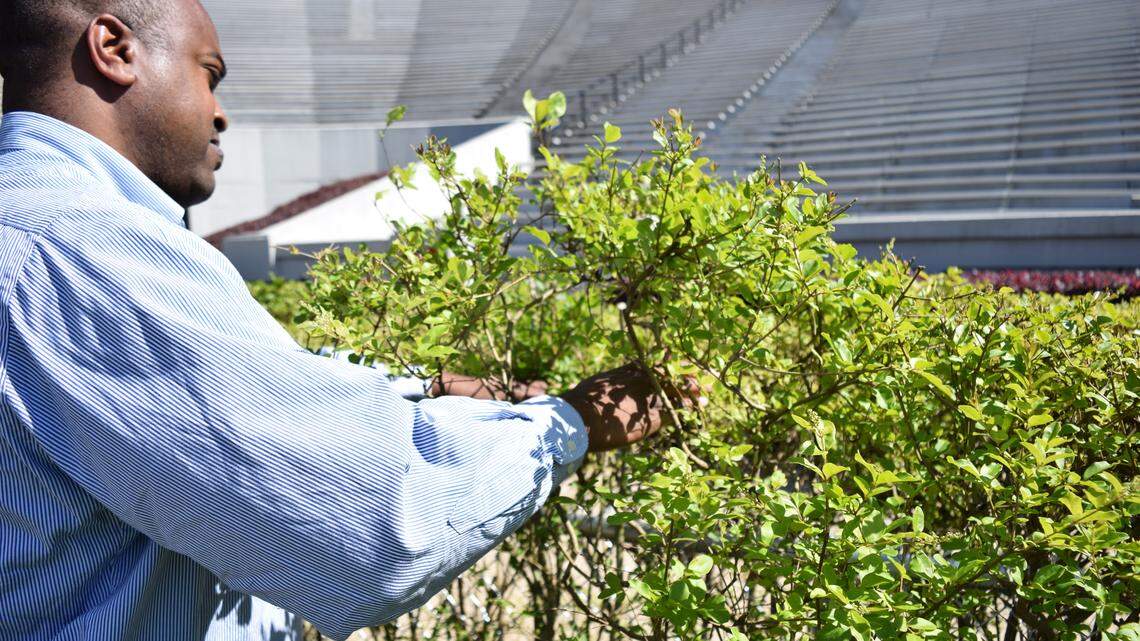
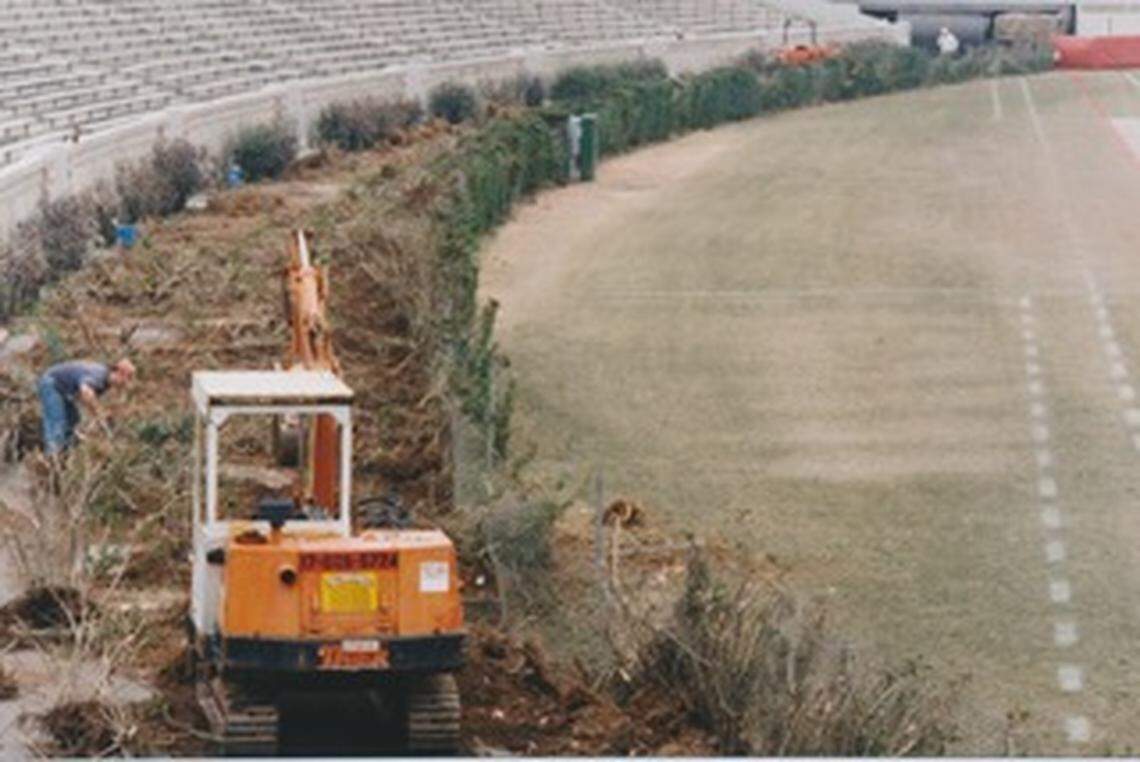
Two days after Georgia finished its home schedule last season, about a dozen workers entered Sanford Stadium and removed hundreds of hedges that surround the field.
Construction on the west end zone required a crane as long as a football field, and the hedges lining the south sideline and west end zone needed to go. Privet hedges have encompassed the field at Sanford Stadium for 88 years. They had been replaced just once.
For a day and a half, employees from Laserturf SE, a landscaping company Georgia has worked with for decades, labeled every hedge, pulled them from the earth and transferred each one to its own 20-gallon barrel.
White box trucks pulled into the stadium when the hedges were ready for transportation. The hedges were divided into three groups, with three destinations in three different states. One by one, workers loaded the hedges into the trucks. Then the trucks rolled onto East Campus Road, and Georgia hid its hedges for the next four months in undisclosed locations.
“The places that kept them and rejuvenated them, that was definitely a secret,” said Melvin Robinson, assistant athletic director for facility and operations.
In October 1929, Georgia planted 2-foot tall privet hedges around the football field a few days before Sanford Stadium hosted its first game. The hedges became part of the fabric of the University as years passed. Frank Sinkwich ran between the hedges. So did Herschel Walker. “Between the hedges” morphed into a Bulldog rallying cry and got printed on T-shirts.
On June 7, 1993, Georgia took thousands of clippings from the hedges to procreate new ones. The 66-year-old plant, growing into the drainage system and infested with parasitic nematodes, was dying. It needed to be replaced in a few years.
Georgia sent 1,050 clippings to Dudley’s Nursery in Thomson, Georgia, to grow new hedges. It sent another 1,050 to a nursery in Florida that’s identity would not be disclosed until new hedges were planted three years later.
At Hackney Nursery in Quincy, Florida, 10 miles from the Georgia state line, George Hackney and Blake Jones tended to Georgia’s hedges in secret. Georgia had asked for their discretion, and they didn’t tell their employees where the hedges came from. Only Jones trimmed the hedges.
“They were afraid of sabotage,” Hackney said.
New hedges grew in Thomson and Quincy while Georgia prepared to host Olympic soccer in Sanford Stadium — another reason to remove the original hedges. After the final game of the 1995 season the hedges were ripped up to make space for a soccer field.
Georgia planted its new hedges in August 1996, after the Olympics ended but before football season started. In a ceremony at the stadium, men in suits posed with shovels labeled “Hedges II.” The new hedges remained in place until, 21 years later, Georgia removed its hedges again.
The white box trucks took the hedges to climate-controlled nurseries in three separate states that border Georgia. The location of the hedges was kept secret, even within Georgia’s athletic department.
“Just a few people knew,” Robinson said.
Can you say who?
“Nope.”
Eight years ago, an Alabama fan poisoned Auburn’s beloved oak trees at Toomer’s Corner. Georgia didn’t want a similar crime to occur with its hallowed hedges.
“There was a chance they could be vandalized,” Robinson said. “It was on a need-to-know basis.”
The first week of April, once the crane left Sanford Stadium, Laserturf replanted each hedge in the same spot it had been placed in more than two decades ago. The process took about four days.
Even now, with the hedges replanted, Robinson won’t name the nurseries where Georgia hid its hedges from possible vandals. There are hedges of different ages at those nurseries, Robinson said, in case the hedges have to be replaced. There are even hedges at secret locations on Georgia’s campus and in Athens — just in case.
The hedges look thin and sick right now, but Josh Brooks, executive associate director of athletics, said they require an aggressive prune every few years. Otherwise, sunlight can’t reach the bottom of the plant.
Georgia expects the hedges will be lush and full by the time the words, “It’s time to tee it up between the hedges” ring from the Sanford Stadium loudspeakers on Sept. 1. Robinson doesn’t think spectators will be able to tell they had ever been removed.
“There’s something special that goes on between the hedges,” Robinson said. “Do you believe that?”
This story was originally published April 20, 2018 at 7:54 AM with the headline "For only the second time in history, Georgia's hedges were removed from Sanford Stadium."