
Michael A. Lough: Baseball plan is the wrong plan
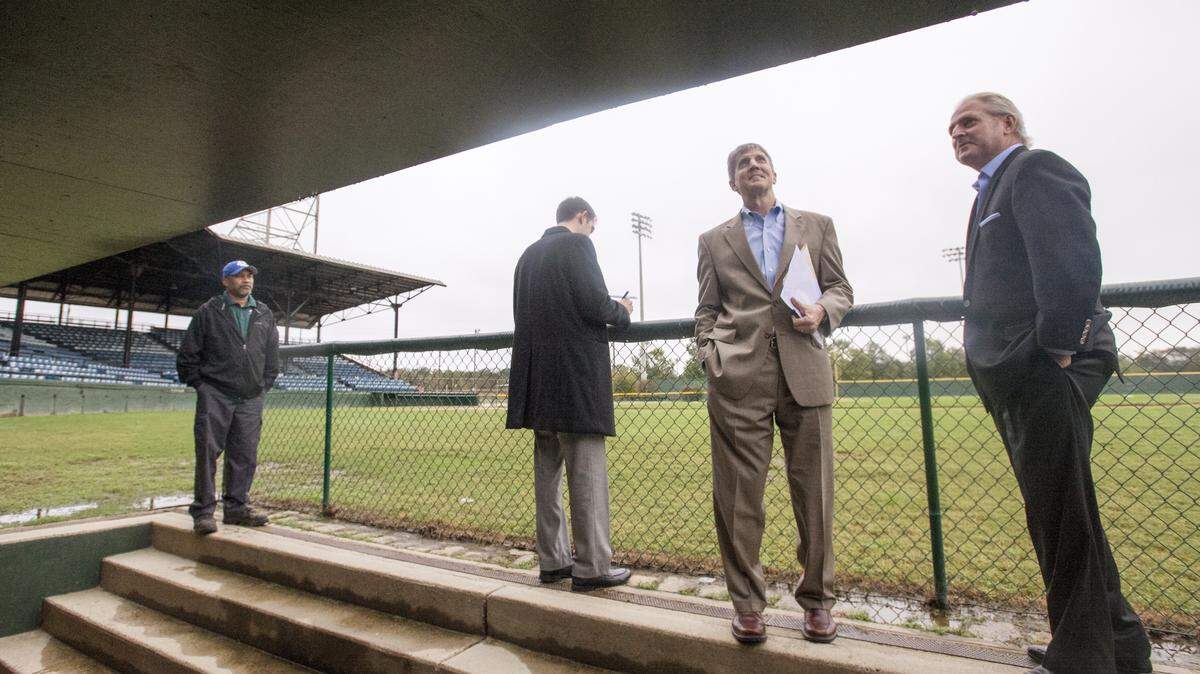
The plan from the start was a head-scratcher, long before "goalgate" emerged a week ago at the Macon Coliseum.
The plan: A new baseball stadium, paid for by us, in Macon.
One that seats about 1,500 more folks than the predecessor, which was rarely more than half full in its final decade of work, and one that is not going to be affiliated with the heartbreakers 80 miles to the north.
Then the came the study.
Of course the study said "bring on baseball." Find 10 studies that don't back whatever the commissioner of said study wants to hear/read. Find a study that doesn't paint a glorious -- and usually fictional -- picture of projected customers and phenomenal economic development.
Alas, to spend nearly $40 million of public money on a part-time facility is almost an abuse of power, when using logic, a peek at history and a peek at the present and future needs.
The study was incomplete in that it ignored potential sites that weren't downtown, which is funny, since Middle Georgia is loaded with paranoid folks terrified of the "d" word: downtown.
Granted, I think the right spot downtown is the right spot. Nevertheless, the talk of a 5,500-seat baseball stadium and the requisite selling of "economic development" and "shops, restaurants and hotels" -- almost legally mandated phrases in any study -- has been maddening since it started.
Let's re-address one of the biggest misconceptions about the city's most recent foray into real minor-league baseball: No, Jack Ellis didn't singlehandedly lose the Macon Braves because he wanted basketball and didn't like baseball.
This is a recording.
In short -- I'll email the long version -- Luther Williams Field was 70 years old when Ellis was inaugurated. It had long been a baseball dump -- no disrespect to its tremendous history, but old is old -- in a situation ignored by Ellis' predecessors, the city council, the county commission and the business community.
Period.
Granted, the city and county weren't anywhere near rolling in money, but dozens of people would've jockeyed for a spot in the picture had a facility been funded and built, and it would have taken dozens of people to get everything done, so the blame must lay at the feet of dozens of people.
And please don't discuss renovating Luther Williams. That's a logic-free discussion, then and now, for the occasional movie set.
Now, to the present and the study and the dream scenarios painted by nearly every such report and promises of "economic development" and "shops, restaurants and hotels".
Look around Turner Field. The Georgia Dome and Congress Center. Economic development? Not much.
Look around the softball complex in Columbus. Great facility. Surrounded by shops, restaurants and hotels? Nope.
Look around the minor-league stadiums in Savannah and Augusta. Surrounded by shops, restaurants and hotels? Nope.
Look around State Mutual Park in Rome, the place where the Macon Braves went after vacating Luther Williams. Not much there.
More studies than not regularly show that public money for private stadiums is a mistake, and projections are a pipe dream. Ditto the belief that major private investment automatically follows.
Greenville, South Carolina, is a general exception. Private money covered a $16-20 million (cost varies by source) baseball stadium in 2005, and attendance was 5,100 last year. Note the private money spent, but also note that the city and county was on the hook for about $10 million in assorted infrastructure improvements.
Those improvements were no doubt needed whether a baseball stadium opened or not. And $10 million is a lot less than $38 million.
This is no anti-baseball rant -- please know that; somebody write a check for 75 percent of the cost, and let's rock and roll and play ball -- but this is a pro-big picture rant, and the big picture means taking care of the Macon Coliseum and City Auditorium, first and foremost and now.
Finally.
Our public servants have been passing that buck for a decade or so.
In Greenville, the reality is that the city's Bon Secours Wellness Arena is and will remain a much bigger developer of economics. It was Clemson basketball's home this year while Littlejohn Coliseum undergoes major renovations.
Similarly, the Macon Coliseum and City Auditorium are substantially more relevant to this city, county and region than a baseball stadium. Yesterday, today and tomorrow.
Spending $35 million or so of public money on a baseball stadium is bad business and bad politics.
Spending the $15 million to fix the Auditorium -- no more duct tape plans, please -- and putting $2-3 million into the Coliseum -- many of us are available for consultation services for free -- is tremendous business and quality politics.
And all that was the case before the goals were a foot off last week at the Coliseum. Here's hoping those in charge stop passing the buck and start properly spending the bucks.
Contact Michael A. Lough at 744-4626 or mlough@macon.com