
Bobby Pope: Movie to highlight Olympic champion's career, life
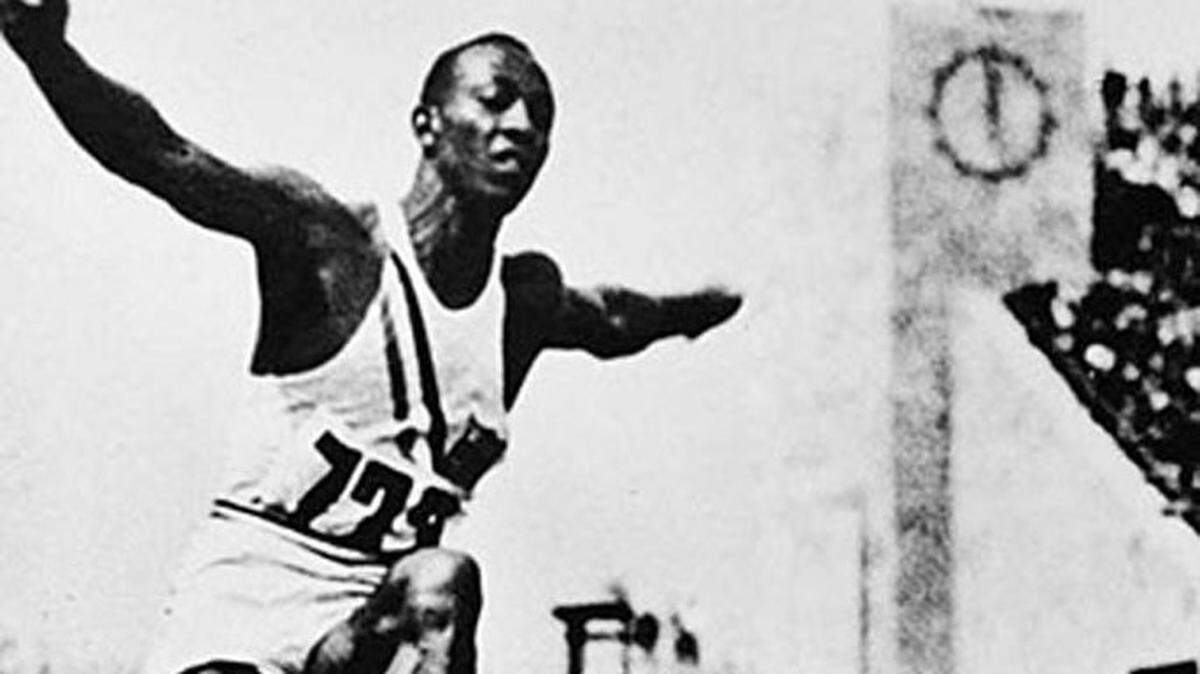
It has been 80 years since Jesse Owens dominated the 1936 Olympic Games in Berlin before the hate-filled eyes of German dictator Adolf Hitler.
Up until now, there has never been a big-screen biopic -- there was a made-for-TV movie in 1984 -- about the son of Alabama sharecroppers who won four gold medals at those games. A movie opens later this month in theaters entitled "Race" that focuses on Owens' life, and I am really looking forward to taking it in.
Stephan James stars as Owens. If you saw the movie "Selma," James played the role of Civil Rights activist and now U.S. Rep. John Lewis.
Owens, who won gold medals in the 100- and 200-meter sprints, set a world record while winning the long jump and was the anchor on the winning 4x100-meter relay team. His long jump record of 26 feet, 8 inches, stood for 25 years before being broken by fellow countryman Ralph Boston in the 1960 Olympic Games in Rome. He was the first American to win four gold medals in a single Olympiad.
Owens was expected to do well at the 1936 games after winning all 42 events he entered while a junior at Ohio State the year prior. In the 1935 Big Ten Championships, he set three world records and tied another in a span of less than an hour. While breaking all those records while at Ohio State, he was never on an athletic scholarship and worked to pay his way through school.
Owens went through the trials and tribulations that African-American athletes faced back in the 1930s, and it will be interesting to see how his odyssey is presented on film. While at Ohio State, the "Buckeye Bullet" was relegated to eat at black-only restaurants and stay in black-only hotels, which was the norm for that period in history.
After returning from Berlin, Owens said, "When I came back home, I couldn't ride in the front of the bus. I couldn't live where I wanted. I wasn't invited to shake hands with Hitler, but I wasn't invited to the White House to shake hands with the President, either."
There are conflicting reports that Hitler actually did meet with Owens and congratulate him on his victories. There are reportedly photos that were taken of the German leader and Owens meeting behind the stadium where he had competed.
Owens, who campaigned for presidential candidate Alf Landon in 1936, told an audience at an African-American rally in Kansas City, "Hitler did not snub me. It was our President who snubbed me. The President (Franklin D. Roosevelt) didn't even send me a telegram."
The superstar athlete's birth certificate read James Cleveland Owens. At the age of 9, his family, which comprised himself and nine siblings along with his mother and father, relocated to Cleveland, Ohio, in search of more opportunities than existed in the segregated South.
When he entered school in Cleveland, a teacher asked him his name and he responded, in his Southern drawl that it was J.C. The teacher misunderstood thinking he had said Jesse, and that is how he got the moniker.
Owens was voted the top track athlete of the first half century in 1950, and in 1976 he received the Presidential Medal of Freedom from President Gerald Ford. He was posthumously awarded the Congressional Gold Medal in 1990 by President George H.W. Bush.
ESPN ranked him as the sixth-greatest American Athlete of the 20th Century and the highest ranked in his sport.
Owens, who was a pack-a-day cigarette smoker for 35 years, died of complications from lung cancer in 1980.
Contact Bobby Pope at bobbypope428@gmail.com.
This story was originally published February 8, 2016 at 9:39 PM with the headline "Bobby Pope: Movie to highlight Olympic champion's career, life ."