
Bobby Pope: Pat Dye's 'After the Arena' filled with good stories
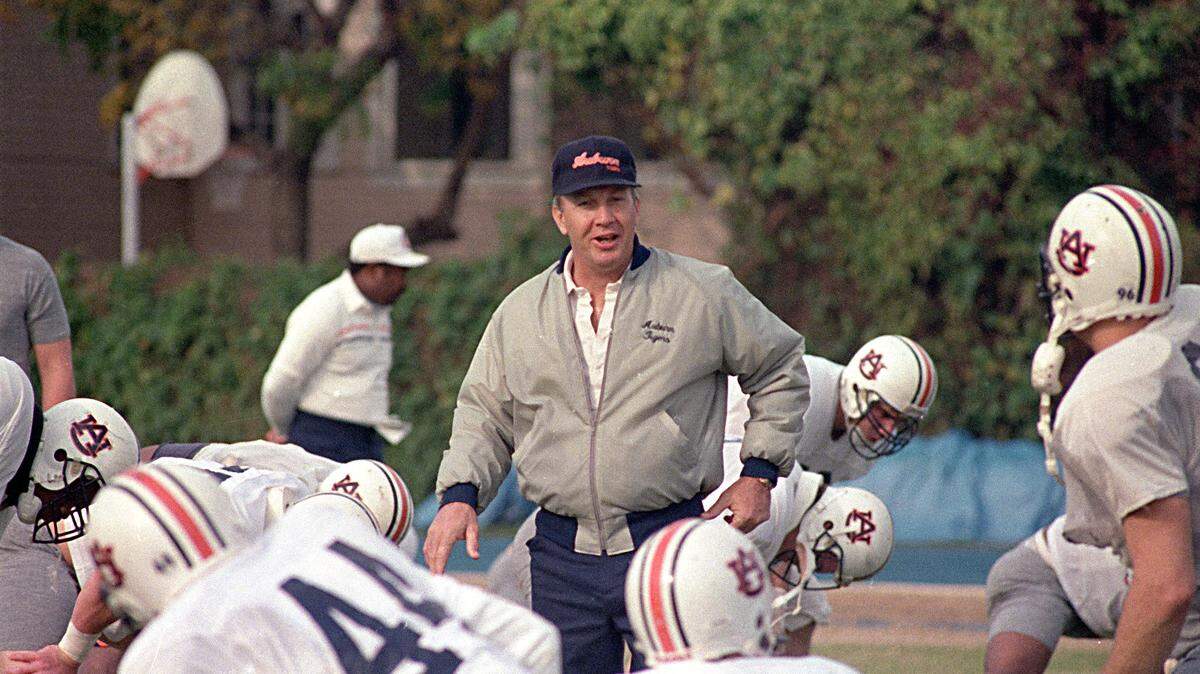
Auburn football Hall of Fame head coach Pat Dye is a pretty good storyteller. I recently was introduced to his book, "After the Arena," which is about a year old now, and if you are a Tigers fan or a football fan in general, it is one you will enjoy. This is a sequel to Dye's 1992 work entitled "In the Arena."
I have been a longtime Dye fan, dating back to his playing days at Georgia, where he was a two-time All-America guard and linebacker in the late 1950s and early 1960s. I recall him blocking an extra point against Georgia Tech in 7-6 Bulldogs victory in 1960 in his final college game as a player and also the final game in Wally Butts' long coaching career.
I got to know Dye personally back in late 1960s and early 1970s when he recruited Middle Georgia as an assistant for Alabama. He signed, among others locally for the Crimson Tide, Central's Neil Callaway, Greg Montgomery from Southwest and Kyle Byrd, Buford Lambert and Sid Smith from Warner Robins. In "After the Arena," he writes about the recruitment of Montgomery.
Dye has stories about numerous players from his days at Alabama, East Carolina and Auburn. One that I found very entertaining was about defensive lineman Aundray Bruce, who later became the No. 1 overall NFL draft pick by the Atlanta Falcons in 1988. As expected, Heisman Trophy winner Bo Jackson, whom Dye calls the greatest player he ever coached, gets prominent mention, as well.
Dye is very candid about the Eric Ramsey situation (Auburn fans are very familiar with Ramsey), which led to his resignation/retirement in 1992. There were a lot of details that I was not familiar with. Dye got his first coaching job at Alabama in 1965 and worked for Paul "Bear" Bryant for nine seasons before becoming the head coach at East Carolina. There is a chapter in the book devoted to his warm relationship with the legendary coach that continued until Bryant's death in 1982. I was unaware that Bryant tried to persuade Dye not to take the job at Auburn.
Auburn people know who Bobby Lowder is and the influence he has had on the athletics program there. You get Dye's insight on his involvement in his hiring and also in his resignation along with other issues.
There are stories about Dye's youth and a trip to Chicago driving a truck and also about his two-and-a-half year stint in the U.S. Army, where he played military football. In fact, he was the military's top player in 1964, which earned him a trip to Washington, where he was honored by that city's touchdown club and the place where he first meet Bryant, not knowing that he would be working for him six months later.
Dye tells why he left East Carolina and Wyoming and writes about fights and near fights he was in while coaching, as well as a 45-yard penalty in an Auburn game with Florida State. You also get to see another side of Dye in a chapter dedicated to Harper Lee, author of "To Kill a Mockingbird," and in his post-coaching activities, which include operating a quail hunting business and a maple tree nursery.
From reading the book, you can tell that Dye's reputation for being as tough as a $2 dollar steak was justified. He was a stickler for technique, the correct fundamentals and the intangibles. He was old-school and believed in the running game, but the bottom line was his teams were going to be tougher than the opposition.
I was surprised to read who Dye thought was the best college football player he coached, coached against or just saw play. My first thought he would say Jackson, but to my shock, his answer was another Heisman winner, Tim Tebow. But that was before Dye saw Cam Newton in action. His rationale was that Jackson touched the football around 30 to 35 plays per game while Newton touched it every play.
Dye played at Georgia and coached at Alabama, but there is no doubt that after his 12 years as the head coach, 10 years as the athletics director and 34 years in the community that he is an Auburn man.
"After the Arena" confirms that.
Contact Bobby Pope at bobbypope428@gmail.com
This story was originally published January 4, 2016 at 7:58 PM.