
Jason Butt: NBA's one-and-done rule hurts college basketball and needs to change
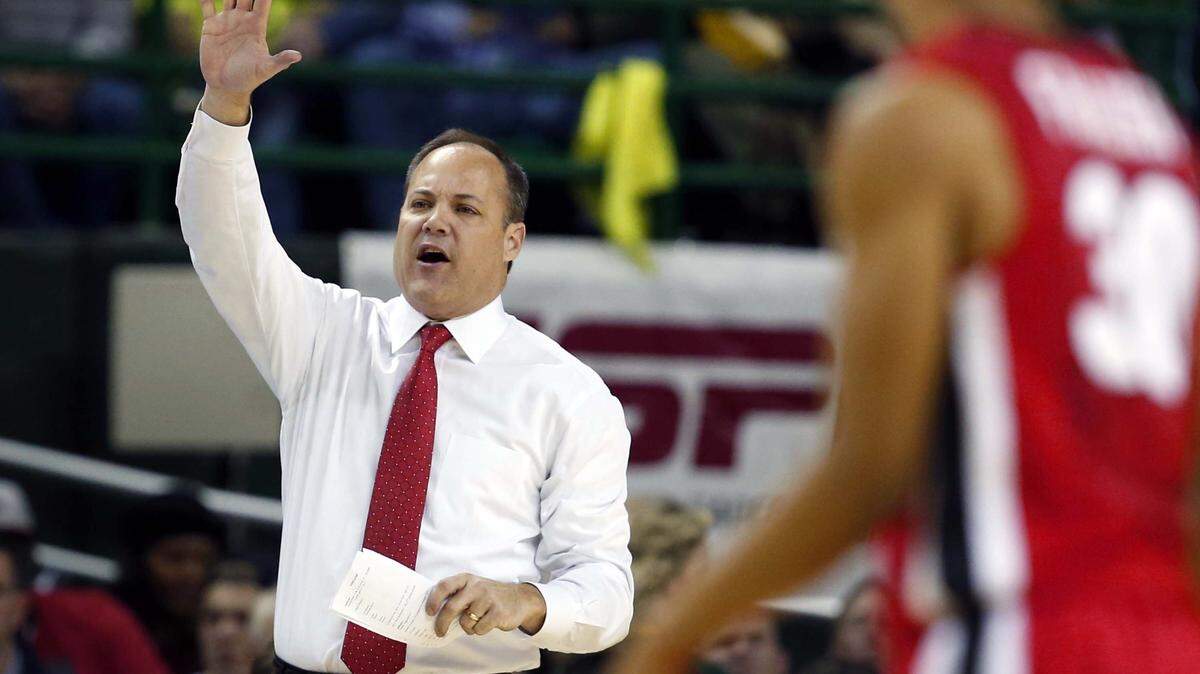
ATHENS -- Mark Fox isn't a fan of the NBA's one-and-done rule. He says many of his colleagues in the SEC and elsewhere in college basketball aren't either. The rule benefits only a select few teams that have been able to use it to their advantage.
And kudos to the teams that have been able to do so.
One of those teams just happens to be Georgia's next opponent. The Bulldogs will travel to Kentucky on Tuesday to take on the Wildcats, who have regularly brought in freshmen who shouldn't be forced to go to college before jumping to the NBA.
Whereas plenty of programs need three- and four-year players for the most part, Kentucky head coach John Calipari has made a living in promising a player that all he needs is one year with him before turning pro.
Fox isn't bitter about Calipari's strategy. It works for him based on the outlined rules. Duke head coach Mike Krzyzewski has been able to benefit under the same guidelines too, evidenced by his three freshmen -- Jahlil Okafor, Justise Winslow and Tyus Jones -- who went in the first round of the NBA draft a year ago after Duke's national championship win.
But when it comes to the one-and-done rule, Fox prefers a new look at it. It's something he believes hurts the game of basketball in the long run.
"I think kids should be allowed to go pro out of high school," Fox said. "Why restrict a kid who's good enough to go? Because there aren't really any who are good enough to go. Then if they go to college, let's do what other sports have done and keep them around for a while."
The closest player Fox has had to a one-and-done was Kentavious Caldwell-Pope, a former five-star who was drafted eighth overall by the Detroit Pistons after his sophomore season. Fox's overall point is that the rule prevents a team that isn't established nationally to recruit five-star talent consistently because of the feeder programs -- Kentucky and Duke in particular -- that hoard all of these players.
If the rule allowed players to go pro out of high school but forced those in college to stay two or three years, then recruiting might even itself out, since a program like Kentucky wouldn't wind up with so many open scholarships each recruiting season.
"You would see the elite players not all go to a couple of places," Fox said. "They'd have to go to other places because people wouldn't have as many scholarships to hand out. It would help the game. But I think it would also help the NBA. There are a lot of guys who get a cup of coffee in the NBA and barely taste it, and then they're out."
The only issue I have is with the thought of forcing a player to stay more than a year. If a player isn't already playing professionally, he should have the ability to jump whenever he wants.
But Fox's point is dead-on when it comes to how the rule forces players to go to college when it's not in their best interest to do so. LSU forward Ben Simmons shouldn't be in college. He should've been drafted last year and already playing in the NBA. The NCAA is supposedly about furthering the development of these young athletes academically as well as athletically. If a player comes to college for a year because the NBA won't let them in without it, what good does it actually do for the athlete?
The NCAA is in a tough spot with the one-and-done rule. Until the NBA decides to change the rule, initiated through the league's collective bargaining agreement of 2005, the NCAA can't do anything about it. NCAA president Mark Emmert would like the rule change, as would many of Fox's colleagues.
"The problem is we don't have any control over that rule," Fox said. "That's really something the (NBA) Players Association would have to change in the collective bargaining agreement. Unless they're willing to do that it will not change."
And it probably won't happen for some time. The NBA doesn't have to be concerned because there isn't any money at stake. It's not like the NBA would, or should, care if the college game suffers due to its inane rule.
Some sort of compromise needs to be made that 1) doesn't affect the NBA's bottom line, 2) improves the college game and, the most important in my opinion, 3) has the best interest of the players out of high school who are either looking to play professionally or in college.
The one-and-done rule fits criteria No. 1 but fails in the other two. Unfortunately, it doesn't appear this is too important of an issue for the powers that be to worry about.
"I think that issue is way down the pecking order to be honest with you," Fox said. "I do appreciate, we've partnered with the NBA to change the draft rules this year. We have a lot of meetings at the Final Four with NBA people in the room. We feel like we made a lot of progress. The ultimate changing of the rule is a long way away."
Contact Jason Butt at jbutt@macon.com
This story was originally published February 7, 2016 at 5:41 PM with the headline "Jason Butt: NBA's one-and-done rule hurts college basketball and needs to change ."