
Before ‘The Last Dance’: An oral history of when UGA took down Jordan’s Tar Heels
Nearly four decades have passed since Georgia basketball made its only Final Four run in 1983, which included winning seven-consecutive postseason games. One of the highlights of the Bulldogs’ run came in the Elite Eight when they defeated North Carolina, the defending champions led by superstar Michael Jordan. As Jordan returned to the spotlight during “The Last Dance” documentary, this marks a chance to reflect on Georgia’s big win in what was the program’s first-ever NCAA tournament berth.
Such a run didn’t initially seem to be in Georgia’s cards. A 9-9 conference record lessened expectations. But a win over Tennessee in Stegeman Coliseum closed the campaign and served as a springboard. Georgia won the SEC tournament title by winning three-consecutive games over Ole Miss, Tennessee and Alabama by double figures and earned an automatic bid.
JAMES BANKS, FORWARD: We were playing well and peaked at the right time. We played unselfish basketball and did well defensively. We played as a team and didn’t care who led us in scoring, but let the ebbs and flows of the game come to us.
GERALD CROSBY, GUARD: Coach threw every form of conventional preparation out of the window. He said “We’re going to play our game and be Georgia.” We didn’t watch a lot of film or worry about what they were going to do. He made a statement in the locker room, because he’s a motivational guy and does a lot of things pre-game. All he said during the run was “Let’s go play.” Everybody got pumped. Less coaching, more playing.
DONALD HARTRY, GUARD: Our practices suddenly became fun, jovial and we built a real team camaraderie. We took away our egos and had a cohesiveness between us.
HUGH DURHAM, HEAD COACH: There were two ways to go. We could play uptight or be relaxed. You’re going to play a lot better when you’re relaxed.
VINCE DOOLEY, ATHLETIC DIRECTOR: It was a little unusual because the great player, Dominique Wilkins, had left the year before. The basketball team was really solid, and Dominique garnered all of the attention. It probably allowed all of the other members of the team to perform at a higher rate. There were no superstars, but they were all good.
DERRICK FLOYD, GUARD: We had a lot to prove. We were still being compared to the team before with Dominique Wilkins. A lot of teams probably came in to look at us minus Dominique. There wasn’t much respect, but we could play.
CROSBY: We shot lights out. It made for a true Cinderella story. It felt like we couldn’t miss.
CLAUDE FELTON, SPORTS INFORMATION DIRECTOR: After winning the SEC, we made a tournament guide. A page in the supplement had the head of “Georgia’s record in previous NCAA tournaments.” The entire page had to be left blank.
Georgia began its NCAA tournament run by beating Virginia Commonwealth in Greensboro, North Carolina on a controversial tip-in. The Bulldogs made the flight to Syracuse after bussing down to Macon, because the plane couldn’t fly out of Athens due to a snowstorm.
Georgia passed its first test by beating top-seeded St. John’s in the East Regional semifinals, a team led by star Chris Mullin and coach Lou Carnesecca. The stage was set for No. 4 seed Georgia to face the defending champion Tar Heels, a team led by future first-round picks Jordan and Sam Perkins.
DURHAM: That was a big win and gave us a lot of confidence. Sports Illustrated came out and called St. John’s the “Beasts of the East.” They were a good team.
FLOYD: It came into our mind that it was the time of our spring break at Georgia. The mere fact that we were missing it, we wanted to make sure we didn’t miss it by losing.
CROSBY: All of the coaches kept saying, “We’re going to be at the Final Four. I don’t know about you guys.” A joke in the locker room motivated us. We were the last (SEC team) left. But no one thought it.
HARTRY: We felt confident we could beat North Carolina after beating St. John’s. We had seen great talent before. We had Dominique Wilkins before, the “Human Highlight Film.” We weren’t scared.
The team began to take notice of a comment made by Perkins. He told reporters, “Georgia? What league are they in?” according to a 1983 story in Sports Illustrated.
BANKS: We had a chip on our shoulder to let Sam Perkins know where the University of Georgia was.
FLOYD: Perkins didn’t have an idea of what he was saying. Coach made it a point at the beginning of the game, to show what conference we’re in.
DURHAM: We brought it up in a pregame meeting, but didn’t have to say much. Our guys already knew about it. That can get you started, but it won’t carry you.
BUZZ PETERSON, NORTH CAROLINA GUARD: To defend Sam a little bit, he’s one of these guys who didn’t keep up with college athletics. He’s in tune to what we did.
There was a lot of respect for Georgia. It’s a one-game deal and anything can happen. That team was hungry and motivated, so you could tell that right away.
MATT DOHERTY, NORTH CAROLINA GUARD: He was probably telling the truth. Sam wasn’t a college basketball fan.
JORDAN, AS TOLD TO THE CHARLOTTE OBSERVER: I’ve got respect for Georgia, always did have. We didn’t figure anything was going to be easy.
Georgia’s next regional championship test drew closer, and nerves began to set in. The Bulldogs, however, had a glimpse of the Tar Heels during the season prior. North Carolina was victorious, 66-57.
DURHAM: They didn’t have James Worthy and had a different point guard. North Carolina was definitely a different team, but we didn’t have Dominique Wilkins either. The opportunity to face them in the season prior gave us an advantage.
CROSBY: We made a run at them. If we had played a bit more solid, we could’ve won that game. That was a really great team, but we were good too. If we had one more shot, I knew we could get them.
DURHAM: It’s not like football where you’ve got a whole week to make adjustments. We played Sunday after playing Friday, so we had to lean on what we did during the year.
FLOYD: We got a good idea of Michael. We could say, “OK, we’re playing this dude.” He is, by far, the best to ever play the game.
BANKS: The night before, I couldn’t sleep a lot. That’s just the way it is ahead of a big game. I told myself to play like I was in the backyard where I grew up. I wanted to beat the school that I didn’t go to, because I was really close (to playing at UNC).
Once arriving inside the Carrier Dome for the second time, Georgia’s role of heavy underdog came to another realization. The basketball-manic North Carolina fan base proved dominant.
FLOYD: Everybody else had a ton of people, and it made it ideal that we were underdogs. But we wanted to come out of that as the bulldog.
DOHERTY: We came out onto the court and all we heard is a chant of “S-E-C.” I think “Oh, gosh.”
DOOLEY: You have hope and optimism that some way and somehow you can beat them. Quite frankly, North Carolina was so good. On paper and based on North Carolina’s history, we were decided underdogs. We later found out that Georgia had a pretty daggone good basketball team.
PHIL SCHAEFER, GEORGIA PLAY-BY-PLAY RADIO ANNOUNCER: It really is a terrible place to watch a basketball game. They’ve got us at the top of the stands and they’ve got us by the North Carolina broadcasting crew. They were all talking about what they were going to do in Albuquerque and took this for granted. They saw Georgia as a formality. North Carolina had an advantage in talent, and nobody took us seriously.
BANKS: We liked our chances coming in. We believed we could beat North Carolina from start to finish.
As the game began, both teams couldn’t find the basket and began a combined 2-of-13 from the floor. North Carolina came to life with Jordan in a lead role, but Banks led Georgia’s efforts of hanging around by answering every call.
DOHERTY: Georgia was one of the quickest teams I’d played against. They were very athletic and made us feel slow. They were in attack mode, and we never operated in fourth gear. We stayed in first and second gear. We never could shake ourselves out of the fog.
BANKS: We were out-sized so we had to utilize our quickness and turn it into an 84-foot game. Jordan was the only one who had quickness to stay with us on the perimeter. We liked our matchups.
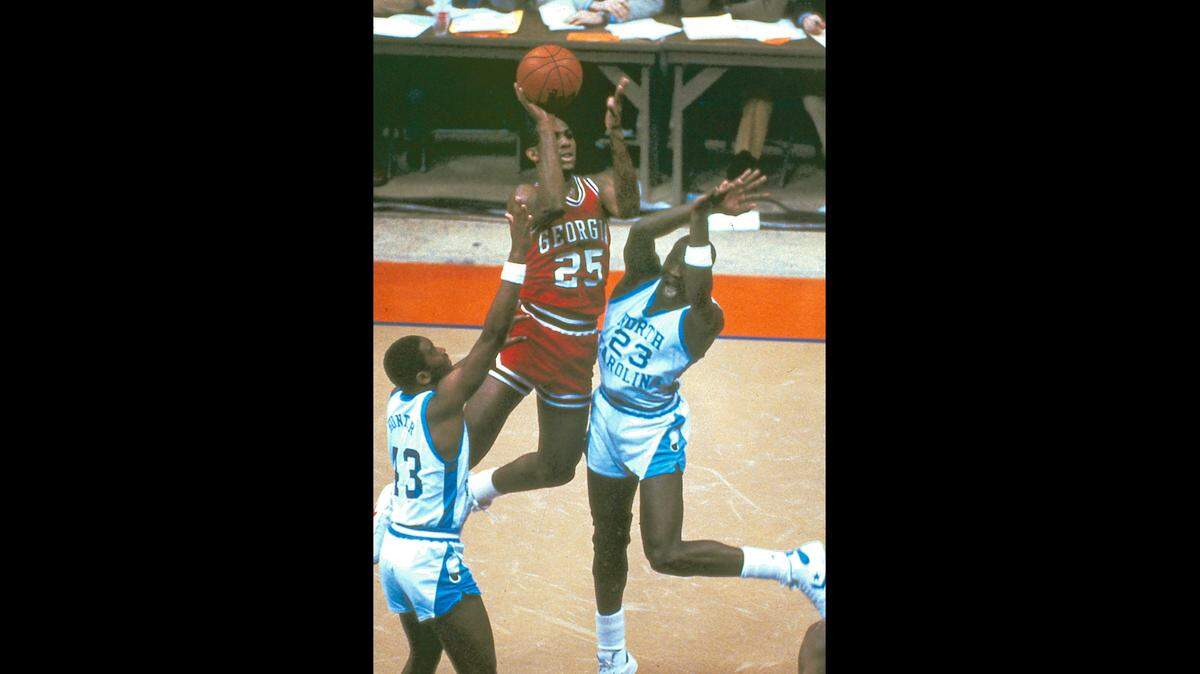
Jordan displayed the flash with two alley-oops in the half, which drew “perfect 10” signs from the North Carolina pep band. He had 16 at the intermission and finished with 26.
LARRY GAY, GEORGIA ASSISTANT COACH: You’re not going to stop Jordan. Nobody’s going to stop Jordan.
BANKS: He had a couple of dunks against the zone on my back end. I thought, “What in the world?” because the guy kept going up. Three of us — myself, Lamar Heard and Terry Fair — jumped up one time and fouled him. All three of us landed. We were on the ground and he was still in the air. We looked at each other like ‘Uhh, did you see that?’ You knew he was something special. He’s the greatest to ever play the game.
PETERSON: I didn’t realize he would be the greatest to ever lace them up. He had a motor that could go, go, go. There was never a time to relax. Once he’s on that 94-by-50, boy, everything’s tuned out. Michael played every game like it was the championship. He’s always got something to motivate him.
DOHERTY: He had an ability to drive to the basket, leave his feet and create a shot through arms. He did it with focus and touch. It was very uncanny. He’s got a love to compete and is the full package. It’s everything you want. He’s the perfect basketball player.
FLOYD: Jordan is Jordan. He got his. He’s a player. It was about making sure they only got one shot.
HARTRY: It didn’t look like he worked hard to have a great day. He still did his thing, but we didn’t allow him to be electrifying. That made a big difference.
BANKS: I thought we could do a better job on Jordan collectively in the second half. We did, as a team. We had to make him earn it and we were fortunate to get him into foul trouble. He was their go-to guy, so we had to step up.
Banks and Crosby had strong halves, and Georgia hung around to the expectation of very few. North Carolina couldn’t find much traction outside of Jordan, and the Bulldogs led 37-35 entering the halftime locker room.
FLOYD: We might’ve been jumping around and going crazy for a minute. We never let excitement take over to forget we were playing North Carolina. There was the possibility of them coming back.
BANKS: We weren’t surprised. The two-point lead felt like 10. We didn’t play as well as we knew we could. We proved we could compete, so the pressure was on them.
DOHERTY: There are certain regrets I have during my basketball career. One is not speaking up at halftime (of that game). I should’ve gotten on Sam. I wanted to say “You got us into this mess. Get us out of it.” I didn’t and should’ve spoken up. When down at halftime, we always felt like we could turn it up a notch and win. I never got that feeling against Georgia.
GAY: We’re talking about being a half away from the Final Four, so these kids were really excited. We, as a coaching staff, had to calm everybody down and say, “We’ve still got 20 minutes to play.” That is Jordan over there. We had to get serious again.
HARTRY: They knew we could play with them, we knew it too. I don’t think they knew they’d be in such a dogfight when they first took the floor. You could see they were relaxed.
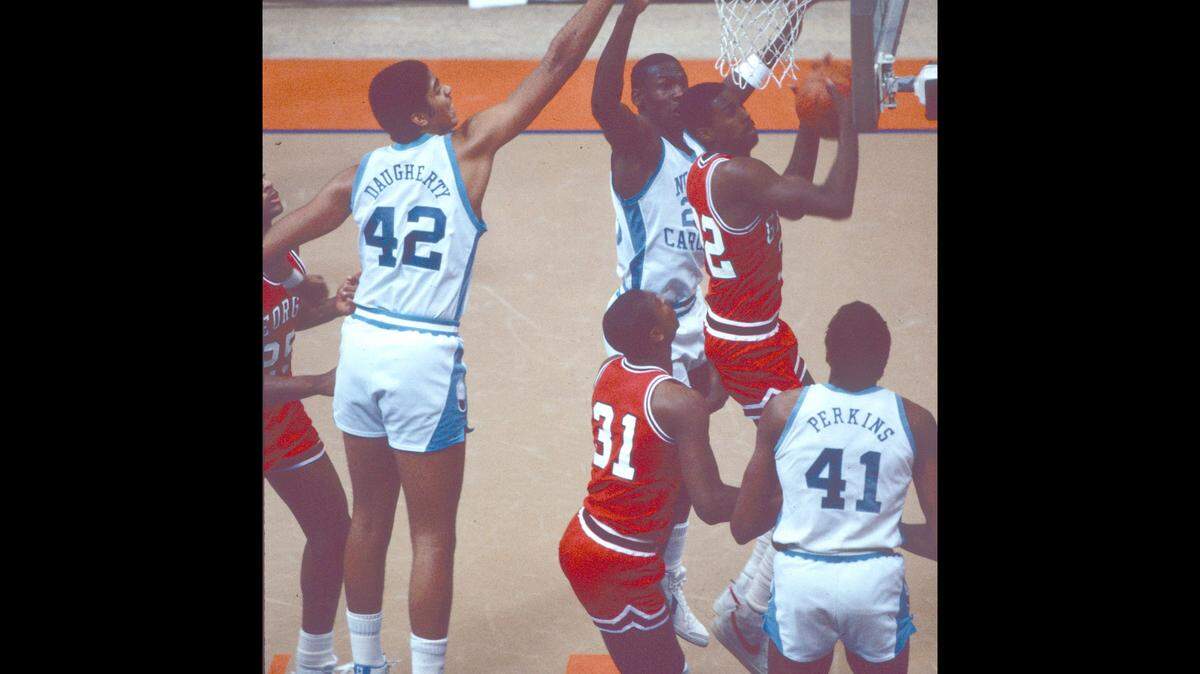
Georgia prioritized the first five minutes of the half, but the lead continued to go back-and-forth. Jordan had seven quick points, and Georgia continued to answer. Then, the late Terry Fair, who had 27 points against St. John’s, got into foul trouble and Richard Corhen entered off of the bench. The Bulldogs were getting ready to go on a run.
HARTRY: You feel uneasy when an upperclassman like Terry has to come out. Richard came into that game and played exceptionally well. He gave us a lot of energy.
CROSBY: That job by Richard Corhen is what catapulted us to win the game. There are no adjustments to make for losing Fair. Everything had to fall into place and it did.
DURHAM: Terry never complained or asked, “Why didn’t I get to play more?” We were playing good, and Fair was just happy we were in the game. Richard was playing well, so we made a decision not to change it. I’m sure he would’ve wanted to play more, but Terry was all for Richard answering the bell.
GAY: They kept hammering. If North Carolina missed, you could count on one of our guys getting a rebound. It made for one of the greatest games I’ve seen with our shooting.
CROSBY: We went into a full-court press and focused on getting the ball out of Jordan’s hands. We needed to put the pressure on (North Carolina guard Jim) Braddock and force turnovers.
DURHAM: Of course, you might hear people say North Carolina could take over at any given time. But we were actually the ones to take over.
The announcers began to use the term “major upset” and ask the question, “Who is Herschel Walker anyway?” in reference to the football team’s legendary running back. With 4:28 left in the game, Corhen gets a block and Crosby earns an and-1 opportunity on the fast break. He throws his arms skyward as North Carolina calls timeout. Georgia led 70-57.
FLOYD: It instantly brings excitement. North Carolina had to stop this water from running. It was getting ready to overflow. There’s no greater excitement in those breaks than knowing you can win the game.
CROSBY: You could feel everything turn. I knew nobody was going to fold, no matter what punch they threw. They threw everything at us and we countered it.
HARTRY: We were feeling it. We had them on the ropes. We never let them go on a big spell, although they tried to have a comeback run at the end.
SCHAEFER: I’m just trying to describe the game to those listening. I’m not thinking about other things. With about six minutes to go, it hit me. Wait a minute, we’re in a position to win this game. I knew this was really something.
DURHAM: We weren’t sitting there thinking we had it in the bag. We were excited, but they’re a couple of baskets and a turnover from tying it up. We certainly didn’t start making reservations for Albuquerque.
As the clock dwindled, North Carolina attempted to make a run. Georgia made enough free throws and finished off the final four-and-a-half minutes of regulation to earn an 82-77 win. A shooting performance of 56% carried the Bulldogs to the only Final Four appearance in school history.
DEAN SMITH, NORTH CAROLINA HEAD COACH, AS TOLD TO THE ATLANTA JOURNAL-CONSTITUTION: It’s the best shooting exhibition I’ve ever seen them play.
SCHAEFER: We went into a four corners offense (by the end), which is what Dean Smith used against everybody else. That cracked me up on the air.
CROSBY: If we had shot halfway decent in those first five or six minutes, we might’ve had a shot at a runaway. Once they start falling, your confidence goes up.
JORDAN, AS TOLD TO THE CHARLOTTE OBSERVER: I don’t think any of us knew they could shoot so well.
PERKINS, AS TOLD TO THE ATLANTA JOURNAL-CONSTITUTION: I guess they got together and figured they were gonna be heard from.
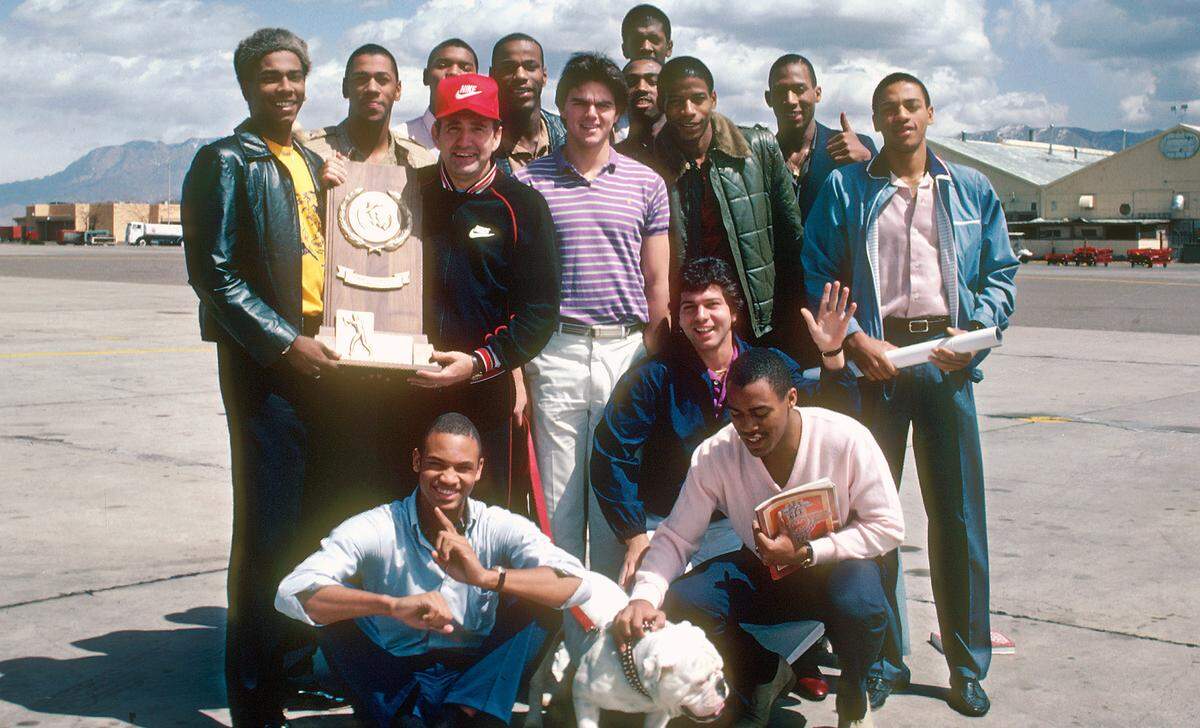
Georgia’s celebration began. The buzzer sounded and players and coaches mobbed each other at the Carrier Dome’s midcourt stripe. The Bulldogs were cutting down the nets, and Floyd suddenly climbed on the rim to hold up a sign that read, “GIVE THAT DAWG A BONE.”
FLOYD: I don’t know how I got up there. I grabbed the rim, climbed up and got up there somehow. I looked around in awe to see our crowd — outnumbered at least 10 to one — as the last group standing. We really accomplished our goal. There was no better feeling on that rim, because we did it with odds against us.
CROSBY: He looked down at us and said, “Hey guys, we’re actually going to the Final Four.”
FAIR, AS TOLD TO THE ATLANTA JOURNAL-CONSTITUTION: We really spoiled the party.
GAY: Terry Fair sits in the locker room after the game is over. He talked to one of the reporters and Terry said, “Ask Sam if he knows where Georgia is now. Tell him it’s between Florida, South Carolina and Tennessee.”
HARTRY: I couldn’t believe we were here. They were saying Georgia wasn’t a basketball school, but we went all the way to the Final Four. No one else put Georgia on the map. Everybody knew where it was only because of the great Herschel Walker.
BANKS: Dean Smith recruited me hard, so he came into the locker room to congratulate me personally and said he was happy for me. He showed a lot of class in defeat. That’s a show of what type of person he was.
It was a pretty daggum good feeling. Georgia had never been, so we made history with that group. We understood that nobody thought we could knock off North Carolina but us. There’s this us against the world mentality. And the older you become, the more you appreciate those accomplishments.
SCHAEFER: Those announcers weren’t saying much of anything. They tore down their equipment silently.
Georgia returned to Athens during Monday morning’s early hours. They arrived at Ben-Epps Airport and went straight to Stegeman Coliseum to celebrate the victory. The early 1980s run had completed the trifecta. Durham’s team joined Andy Landers’ women’s basketball team to make the Final Four in 1983, following the football team’s 1980 national title.
HARTRY: I looked out the bus window and it was like the football players were coming into town. We couldn’t get the doors open, because the fans were pressed up against the glass.
CROSBY: There were 3,000 people at the airport, and we got there at about 1 o’clock in the morning. I couldn’t believe the reception.
GAY: It was pandemonium. Everybody was there. This was why these guys came to Georgia. You saw it all happen.
FELTON: It made for an exhilarating feeling, especially for the players. They’d never experienced anything like that. They were all back-slapping and hugging amidst a ton of people. A great moment in Georgia basketball history.
Georgia fell short once arriving in Albuquerque, but the win over North Carolina remains a program highlight. The Bulldogs beat one of the NBA’s greatest players in Jordan, who went on to play one more season at North Carolina before playing for the Chicago Bulls. He became a six-time NBA Finals champion, two-time Olympic gold medalist, and five-time MVP.
PETERSON: In 1984 (the season after Georgia’s win), we played overseas in a tournament. The first was an Italian team and Michael had 30-plus points in that game. We went in the locker room, changed uniforms, ate a Snickers bar and played again. We played a Yugoslavian team and Michael had 30-plus again. I walked out of that arena with Roy Williams and I said, “Coach, I’ve gotta ask you a question. Is he going to be one of the best of all-time? From what I just saw, there’s vast improvement every season.” There was Magic, Larry Bird and all of these other guys, but then I finally realized that my roommate is really, really good. I knew at that time he could be the best to ever lace them up.
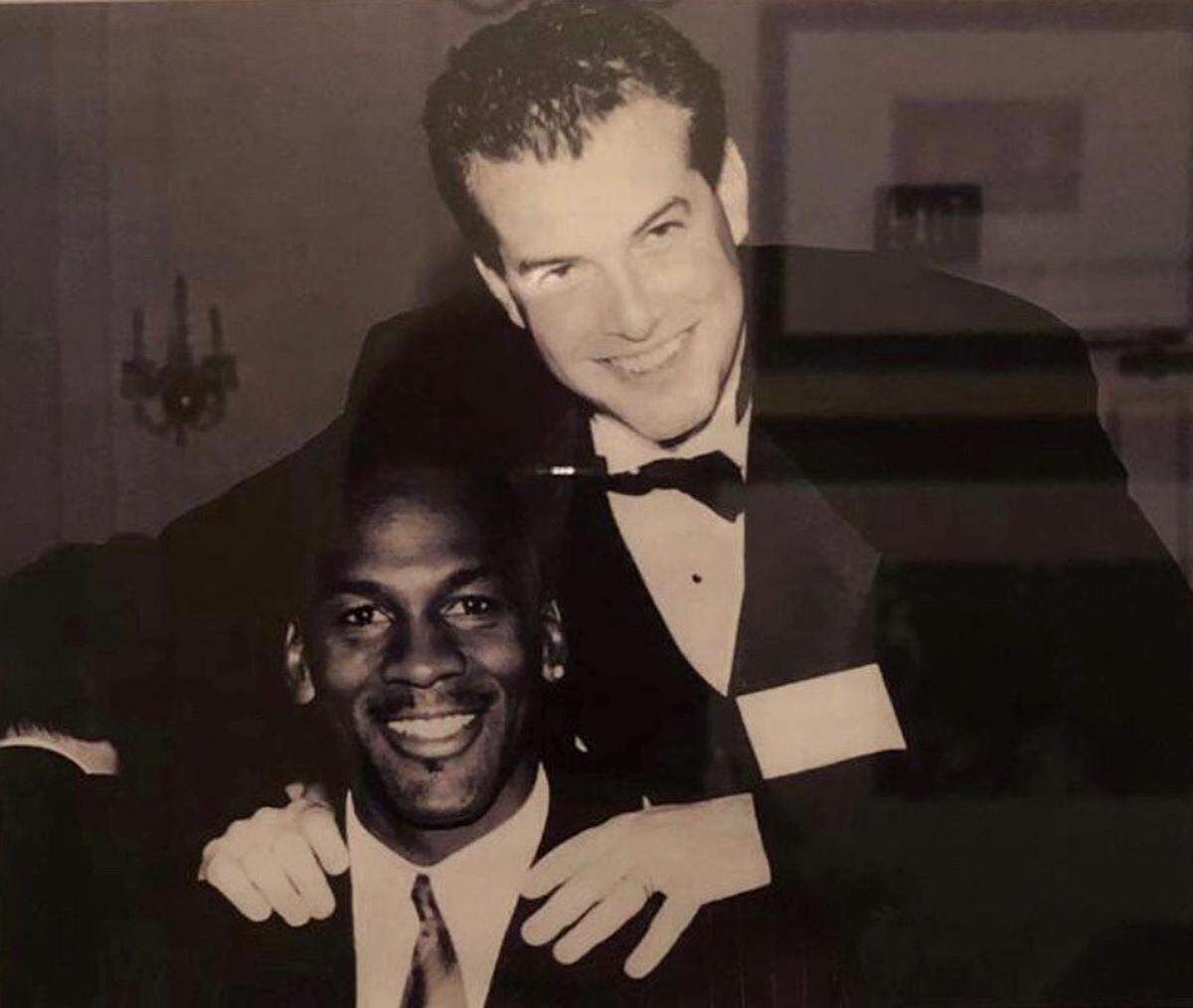
DOOLEY: He was so well-respected. One year, we were searching for a coach. I came back to the office after lunch and heard that Michael Jordan had called me. It was more than interesting to my assistants, because there was quite a buzz around him. They got carried away when Jordan had called. He called on behalf of his teammate Buzz Peterson. I knew he had been at Appalachian State (until 2000), but I already had somebody in mind (Jim Harrick, who coached at Georgia from 1999-2003). I looked into it out of respect for Michael Jordan. It was fun to see that reaction.
FLOYD: I talk to my kids about the game and they ask, “Wow, you beat Michael Jordan?” in awe. Yeah, I guess you can say that.
*Quotes attributed to other publications are from Monday, March 28, 1983 editions
This story was originally published May 17, 2020 at 6:22 PM.