
Georgia working on third-down problems
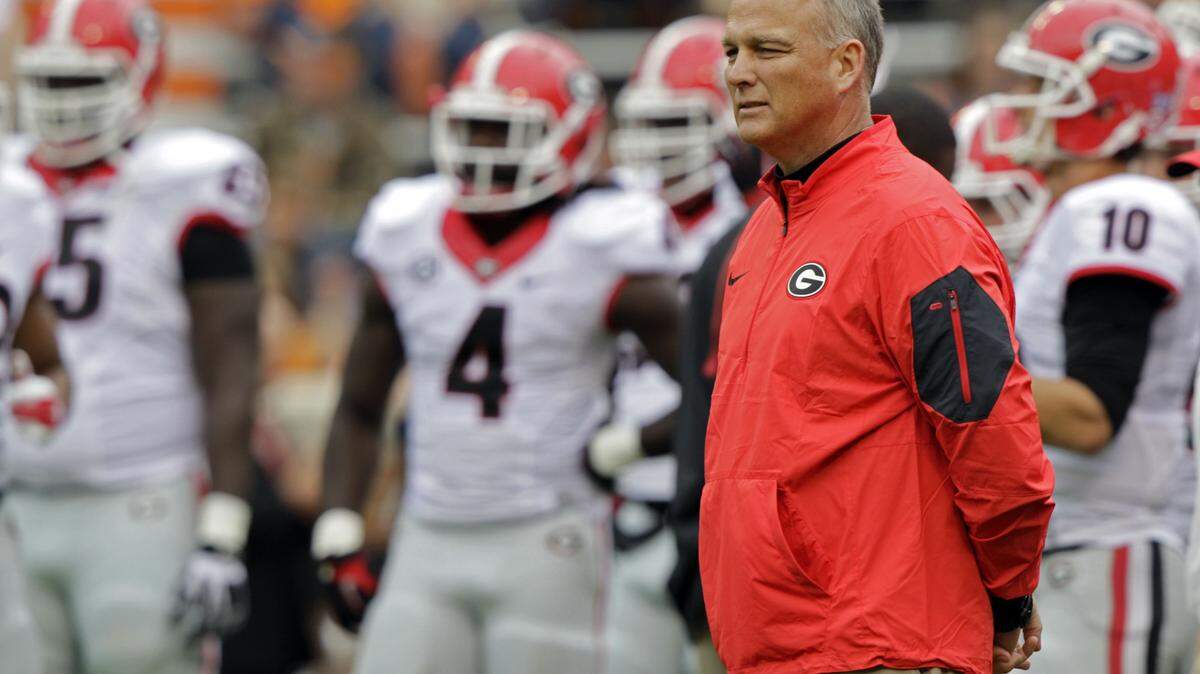
ATHENS -- Georgia's problems on third down have the offensive coaching staff losing sleep.
Monday night, head coach Mark Richt and offensive coordinator Brian Schottenheimer put in "another hour, hour-and-a-half (longer) than normal" watching film trying to put together a plan to solve Georgia's woes, and with good reason.
Out of 128 FBS teams, Georgia ranks 126th in third-down conversion percentage at 29.03 percent, which would be the worst percentage Georgia has had since at least 2008 when cfbstats.com began tracking the statistic. Georgia's 18 successful conversions are the fewest in college football this season.
"Coach Schotty, he emphasizes how important third down is," senior fullback Quayvon Hicks said. "You can't be a winning football team not being successful on that down. That's the money down. You don't want to give away time of possession."
Georgia's problem on third downs is really a twofold issue, and the first has absolutely nothing to do with how the team performs on third down.
"It starts with first and second down," Schottenheimer said.
Maybe Georgia's biggest problem has been that it hasn't put itself in easily convertible positions on third down.
Georgia has attempted 11 plays from a third-down situation with 3 or fewer yards to gain for the first down. In those situations, it has converted about 64 percent of the time, a respectable number.
That being said, those 11 attempts make up just 17.5 percent of Georgia's third down plays. The category of plays that Georgia has had the most attempts from has been third down and 10 or more yards to go -- the Bulldogs' 24 attempts from third-and-10 or more make up 38 percent of their third-down attempts this season.
"You're saying how many times is it third-and-long? Way too many times it was third-and-long, and more times it was third-and-over-10," Richt said. "We need to do a better job on first and second down of letting ourselves have a more manageable third-down situation."
Taking a deeper look at the first and second down problem, it seems like it shouldn't be that much different from last year's Georgia team, which converted on almost 50 percent of its third-down attempts.
Georgia has a higher completion percentage on first and second down passes this season and is getting more yards per attempt. Plus, the running game is producing similarly on both downs as it did last year. So, in theory, Georgia should be seeing a similar number of third-and-1 situations as it did last season, as well. But the number is six percent higher this season.
Sure, Georgia is committing about 1.3 more penalties per game this season, but when distributing those among both the offense and defense, it's not enough to say that the offense is definitely putting itself in those long situations with penalties.
Some of this might be able to be traced back to playcalling. Like most teams, Georgia averages more yards on a pass attempt than a run attempt. But Schottenheimer is calling running plays on 71 percent of first downs and 75 percent of second downs, up from about 68 percent on both downs last season.
"I'm always going to be critical of myself and the plan and the call. There's certainly things that I've called that the defense just had a better answer," Schottenheimer said. "I think the thing we're trying to do is do the things we're doing well. We've looked at that."
That being said, the second part of Georgia's problem has everything to do with the execution on third-down plays, specifically in the third-and-medium range.
Although the Bulldogs haven't had many opportunities on third-down situations from 4 to 6 yards, they haven't taken advantage of them when they have. Georgia has converted just 13 percent of those situations, with quarterback Greyson Lambert going just 1-for-8 for 2 yards and the running backs averaging fewer than 2 yards per carry.
Unfortunately for Georgia, this problem doesn't have a nice statistical explanation.
"I don't really know how to answer that one, I guess it just kind of comes back to (execution)," Lambert said. "I don't know. I don't really have a good answer."
That is where the film study and looking at "the common themes and threads," as Richt put it, might pay off. Of course, Richt acknowledged that the improvements have to be made on the field and not in the film room, and only time will tell whether or not the coaching staff has figured it out.
But one thing's sure, the players believe that their coaches can figure it out.
"I'm not sure what the issue is," senior receiver Malcolm Mitchell said. "But I trust the coaches will fix whatever problems we're having."
This story was originally published October 15, 2015 at 10:22 PM.