What’ll be missing from GOP presidential debate? Trump, sure, but also: Ted Cruz | Opinion
Sen. Ted Cruz has spent the last week or so hopping around Texas, visiting constituents, hailing important projects such as STEM education, and picking fights with a beer company over its marketing.
If things had gone differently, Cruz would instead be preparing for Wednesday’s Republican presidential debate, where he would present himself as the most viable conservative alternative to Donald Trump, who apparently won’t be there to mix it up with his rivals.
Now, spending time in the Lone Star State beats hanging out in Milwaukee with other politicos, even when it’s 110 degrees here. But before the GOP race gallops along, it’s worth pausing to think about how close Cruz came to being his party’s nominee in 2016 — and what might have been had he decided to run again
Cruz essentially finished second to Trump in the 2016 primaries. Had the party realized sooner that Trump could only be stopped if voters and party leaders coalesced around a conservative alternative, Cruz would have been the candidate against Hillary Clinton.
Would he have won? He might not have been able to pivot to populism and reach working-class voters in the key Midwestern states, which enabled Trump’s upset win. But he wouldn’t have had Trump’s baggage, either. And it’s not hard to imagine that Clinton could have lost to just about anyone, given her unpopularity.
After Trump won, Cruz damaged himself in the party by telling Republicans in his national convention speech to “vote your conscience,” clearly suggesting that a vote for Trump might be beyond the pale.
He eventually had to eat crow and endorse Trump. Then came his epic 2018 battle against Beto O’Rourke for his Senate seat. Cruz came closer to losing than almost any Republican running statewide in two decades.
But he won. That positioned him to rebound in the party — and possibly for another presidential run.
In a valuable book published in late 2021, conservative journalist David M. Drucker devoted an entire chapter to Cruz’s efforts to rehabilitate himself in Trump’s Republican party. The book’s title is telling: “In Trump’s Shadow: The Battle for 2024 and the Future of the GOP.”
One of Cruz’s problems is that he doesn’t come across to an average voter as particularly likable. He’s combative, smarter than just about anyone he’s arguing with and unafraid to show it. He rails against elites but doesn’t mention he went to Princeton and Harvard. He can seem smarmy and off-putting.
He didn’t help himself when he tried a please-no-one strategy to object to the 2020 election results — Cruz proposed a commission to examine the inherently flawed claims of a botched or stolen election. He didn’t go quite as far as Trump’s team in seeking to overturn results in several states. But voters should not forget that he based his action in part on claims of fraud that have never been substantiated.
Let’s not forget the infamous Cancun trip while millions of Texans froze in 2021, either.
In the book, Drucker outlines how Cruz, to his credit, assessed his failures after the loss to Trump. He focused on bread-and-butter issues in Texas. He tried to be more of a team player in the Senate. He raised money and campaigned for congressional candidates, building alliances.
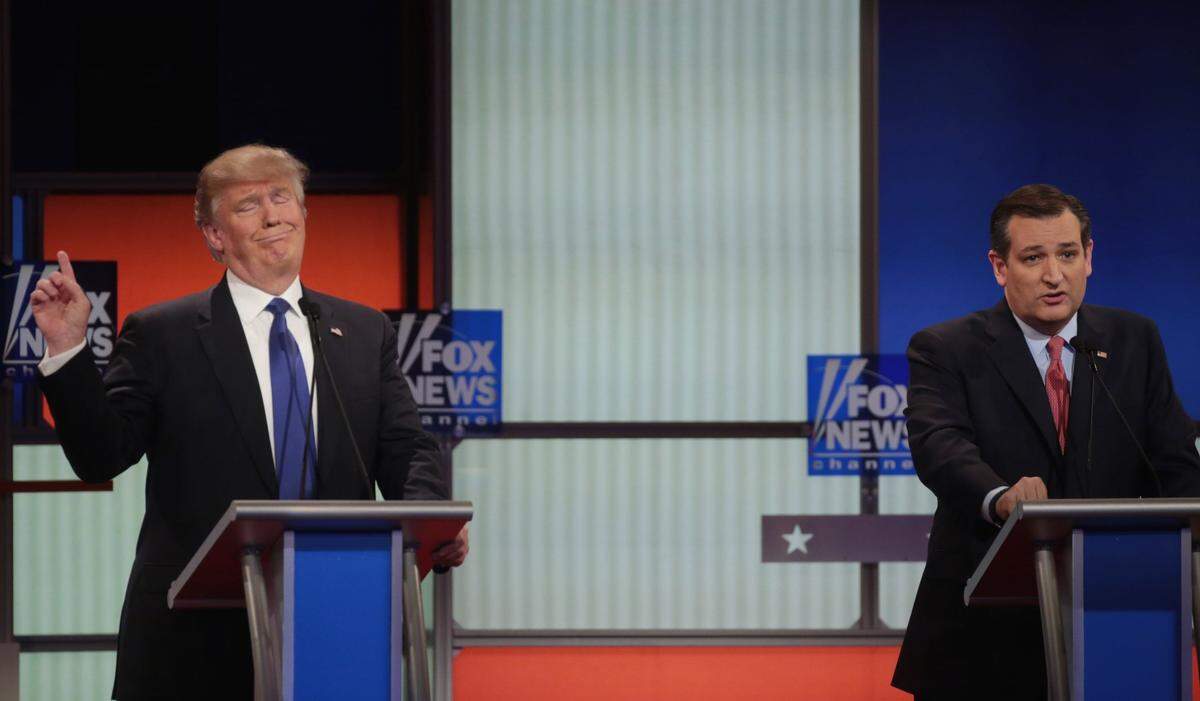
Most of all, he mended fences with Trump. Cruz gets hammered for it, swallowing his pride and forgiving (or at least forgetting) that Trump called his wife ugly and accused his father of participating in John F. Kennedy’s assassination. No question, it’s raw ambition. But another word for that is persistence.
Perhaps Cruz correctly assessed Trump’s continued strength with GOP voters and didn’t see a path to victory. Still, the current Republican field could use him. There’s room for a real challenge to Trump, but it has to be from someone who can bridge the party’s establishment and populist base. Ron DeSantis was supposed to fill the role, but his campaign has struggled.
DeSantis and the other candidates have yet to figure out how to critique Trump and argue against his re-nomination without antagonizing voters who love him. If there’s anyone who could navigate that, it’s a former Supreme Court lawyer and trained debater.
Instead, Cruz opted to seek a third Senate term, and it’s possible he’ll have a fight on his hands again. Democrats want Dallas congressman Colin Allred to be Beto 2.0, and he won’t lack for resources if he wins the Democratic nomination.
Given Republican dominance of Texas, Cruz should win even a competitive race. His fate, ironically, will be shaped in part by who wins the race he decided to sit out. If Trump is on the ballot, Texas’ presidential race will be closer than usual — such is Trump’s singular ability to repel voters who like Republican governance but find him unfit for office.
If Cruz wins, it’s hard to imagine he won’t make another presidential run. He’s just 52, he’s described the 2016 campaign as the “most fun I’ve ever had,” and he’s invested so much work that it’s impossible to see him walking away.
And yet, so much remains beyond his control, starting with where Trump or the candidates in Wednesday’s debate take the party.
This story was originally published August 19, 2023 at 6:32 AM with the headline "What’ll be missing from GOP presidential debate? Trump, sure, but also: Ted Cruz | Opinion."