
Sleepout, new center will help the ‘Calvins’ of the world
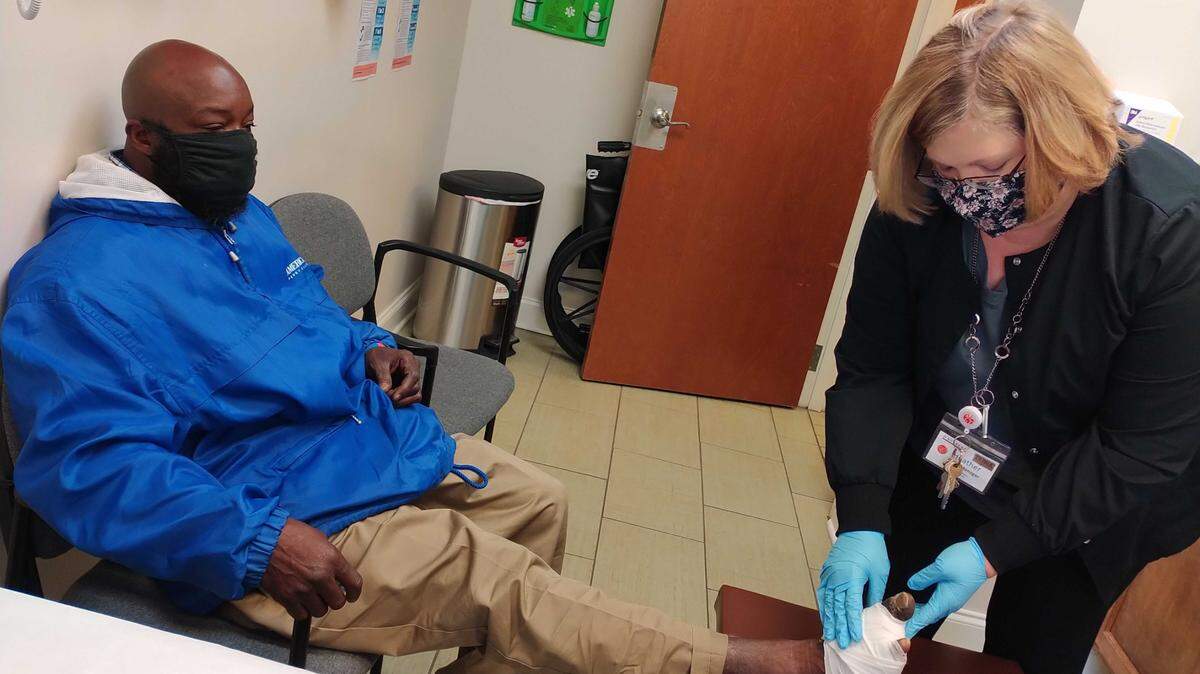
Calvin Taylor watched his life flash before his eyes when he was mowing the grass for a family member last July.
The yard was damp and slick beneath his Nike running shoes.
His foot slipped.
The lawn mower flipped.
As he tumbled to the ground, the push mower went airborne like a helicopter. The blade flew dangerously near his face.
“It was so close I could smell the grass I had just cut,’’ he said.
The trajectory missed his head but landed on top of his right foot, where it severed three toes.
“The first thought that popped into my mind was that I was going to bleed to death,’’ Calvin said.
He took a belt and applied it tightly around his ankle, like a tourniquet. As he waited for an ambulance, he placed a towel over his injured foot and another across his face because he could not bear to watch.
Calvin spent four days in the hospital before he was released to go home.
Except he had no home.
In the words of Sister Theresa Sullivan, the program director at Daybreak Day Resource Center, Calvin is “chronically homeless.’’
He is 45 years old and has been incarcerated almost half his life. Either he has found trouble or trouble has found him.
He does not always seek shelter along the banks of the river or lay down his head in the tent city patch of woods at the lower end of Walnut Street. Family members sometimes will let him back under their roof for a few days, even weeks, before booting him to the streets again.
A woman once allowed him to sleep on her porch. He drifted across downtown to Second Avenue, where he stayed in his late mother’s abandoned house. Other times he has found an available bed at one of the local shelters, such as the Brookdale Warming Center.
For the past six months, Daybreak has helped Calvin get back on his feet. Literally.
He has darkened the door at Daybreak as many as five times a week to get the bandage on his foot changed at the free health clinic. He also was supplied with a walking boot.
“So many times, people are discharged from the hospital with nowhere to go,’’ Sister Theresa said. “There was no way Calvin could have managed his case because he did not know what to do or how to do it.’’
On Thursday, Feb. 24, Daybreak will hold its ninth annual Greater Macon Sleepout (MaconSleepout.com). Campers will spend the night on Daybreak’s property on Walnut Street or participate virtually from their homes, raising money through pledges.
Located in a former warehouse near the entrance to Central City Park, Daybreak opened its doors 10 years ago on the week before Thanksgiving in 2012. The Depaul USA ministry serves about 60-80 homeless people a day, about 1,300 per year and is supported by local churches, businesses and devoted community members.
Last year’s Sleepout raised $230,000, which is about one-third of Daybreak’s annual budget.
February will be a banner month for the center. There will be a groundbreaking on an adjacent vacant lot for the new Central City Apartments and health services building in partnership with the Macon Housing Authority and Depaul USA.
Daybreak has raised approximately $1.79 million in its $2.25 million capital campaign. The three-story facility will include 82 affordable apartment units for homeless and disabled men and women. Construction is expected to be completed in March 2023.
The health clinic will include the first medical respite facility in Middle Georgia, where participants can recover from their medical procedures before transitioning to the housing units.
Sister Theresa sees the project as a win-win commitment to benefit the Calvins of the world – those who no longer need acute care but still require additional resources during their recovery. It will reduce the number of indigent patients who are readmitted after their initial discharge. It frees up beds for other patients and reduces hospital costs, which are subsidized by taxpayers.
“The aftercare is as important as the inpatient care,’’ Sister Theresa said. “If someone doesn’t get the appropriate aftercare their illness or injury can be prolonged, and they won’t reach maximum healing. They go back on the streets and then may have to go back to the emergency room, so it’s a vicious cycle. The hospitals already are under a lot of stress. We need to get people to that next stage of healing.’’
Ed Grisamore teaches journalism at Stratford Academy in Macon. His column appears on Sundays in The Telegraph.