
Other generations knew what it was like to be quarantined
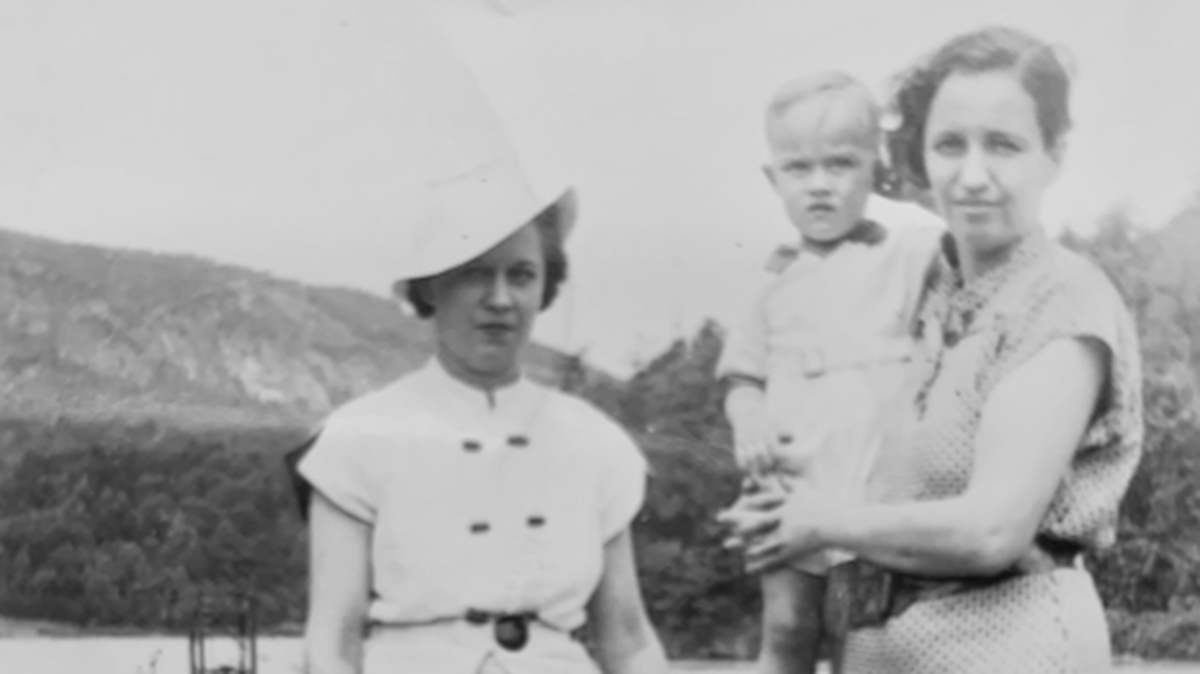
Not long after America changed its address to Avenue Q – as in Quarantine – Hannah Allen began recalling some of the stories of her youth.
She was an only child, with attentive ears to those stories. She heard them on front porches and from the back seat in the car.
Her father, Willis Allen, was a natural storyteller. “He was one of those people who had a story for every occasion,’’ she said. He graduated from Mercer Law School, practiced law, worked for a lumber company and served as Clerk of Superior Court for Wilkinson County for 32 years.
The Allen family would leave from their home in Irwinton on trips to Jekyll Island. They would be almost halfway there when they reached Lumber City – a few miles upstream from where the Ocmulgee River joins the Oconee to become the Altamaha on its way to the sea.
“As we approached the bridge, daddy would point to the left and say there used to be a public swimming pool and clubhouse over there, but they closed it because of concern over the spreading of polio,’’ Hannah said.
Her father was from Allentown, which is a story in itself. It’s a community where four counties converge – Wilkinson, Laurens, Bleckley and Twiggs. It once was named Allen’s Crossroads after her great-grandfather’s general store and later became known as Allentown.
Hannah’s mother, Nellie, was from neighboring Danville and had her share of stories, too. She had an older sister, Ruby, who married and moved to Old Fort, North Carolina, a mill village east of Ashville.
Ruby’s first child was born in January 1935. That summer, there was a polio outbreak in North Carolina. Nellie, her brother and her parents had planned to travel to see the new baby, but they never made it out of the driveway.
“They ended up not going ,’’’ Hannah said. “There was talk of Georgia closing its borders to keep infected people from coming into the state. They knew they could get there, but they were afraid they might not be able to get home.’’
Years later, her aunt would talk about living through those fearful times, which carried a striking similarity to the locked down lifestyle and stay-at-home protocol we have experienced for the past month during the COVID-19 pandemic.
“She told us about a man from Old Fort who moved his wife and children to a cabin up in the mountains to get them away from town to protect them,’’ Hannah said. “But he kept going to work in the mill every day and ended up catching it and spreading polio to his family. He had made all these efforts, and it didn’t do any good. That’s what made it so scary. People could spread it without knowing they were sick.’’
Hannah was born in 1958, three years after Dr. Jonas Salk developed the first successful vaccine for polio. In 1962, Dr. Albert Sabin introduced an oral vaccine that was administered by sugar cubes. Polio now has been eradicated in all but a handful of countries and is considered extremely rare in the U.S., where there are fewer than 1,000 cases per year.
It did hit close to home, though, growing up in the heart of kaolin country. Hannah, who graduated from Wesleyan College and has lived in Macon since 1993, remembers a young man who was a few years ahead of her in school. He limped and had limited use of one arm because of polio. There also was a lady in her church, Irwinton Methodist, who taught Sunday School. She wore braces on her legs and walked with crutches.
Her parents once took her to Warm Springs, where President Franklin D. Roosevelt and other polio patients went for rehabilitation. FDR contracted the disease 12 years before being elected for his first term and used his presidential platform to raise awareness of the crippling disease.
No doubt, many older Americans remember those prolonged polio quarantines of yesteryear. The outbreaks would jump from region to region and summer to summer over a span of almost a half a century. Everyday activities came to a halt. Movie theaters were closed. Swimming pools were empty. Drinking from public water fountains was as dangerous as playing with a rattlesnake.
Newspapers in large cities were known to publish names of citizens with confirmed cases. Signs were placed in the windows of homes where a family member was afflicted. Violations of the quarantine often carried a fine.
“It would flare up in the summer,’’ Hannah said. “I read one article that said if people were passing through a town, they would roll up the windows in their cars because they were afraid to breathe the air. No one would think much about that now because we have air conditioning. Back in those days, you always rode with your windows down.’’
In his autobiography, “A Hole in the World”, historian and Pulitzer Prize-winning author Richard Rhodes wrote about that chapter of American life.
“One day you had a headache and an hour later you were paralyzed,’’ he wrote. “How far the virus crept up your spine determined whether you could walk afterward or even breathe. Parents waited fearfully every summer to see if it would strike. One case turned up and then another. The count began to climb. The city closed swimming pools and we all stayed home, cooped indoors, shunning other children. Summer seemed like winter then.’’
The greatest fear during the polio epidemic was the vulnerability of children. With the COVID-19 pandemic, older people are considered to be at a higher risk.
At 62, Hannah puts herself in that grouping, especially since her health problems include asthma and diabetes.
“I’m very cautious,’’ she said. “I know I’m in the danger category. I don’t see myself feeling very comfortable until there is a vaccine.’’
Ed Grisamore teaches journalism at Stratford Academy in Macon. His column appears on Sundays in The Telegraph.