
What kind of ballot would you vote for, paper or electronic?
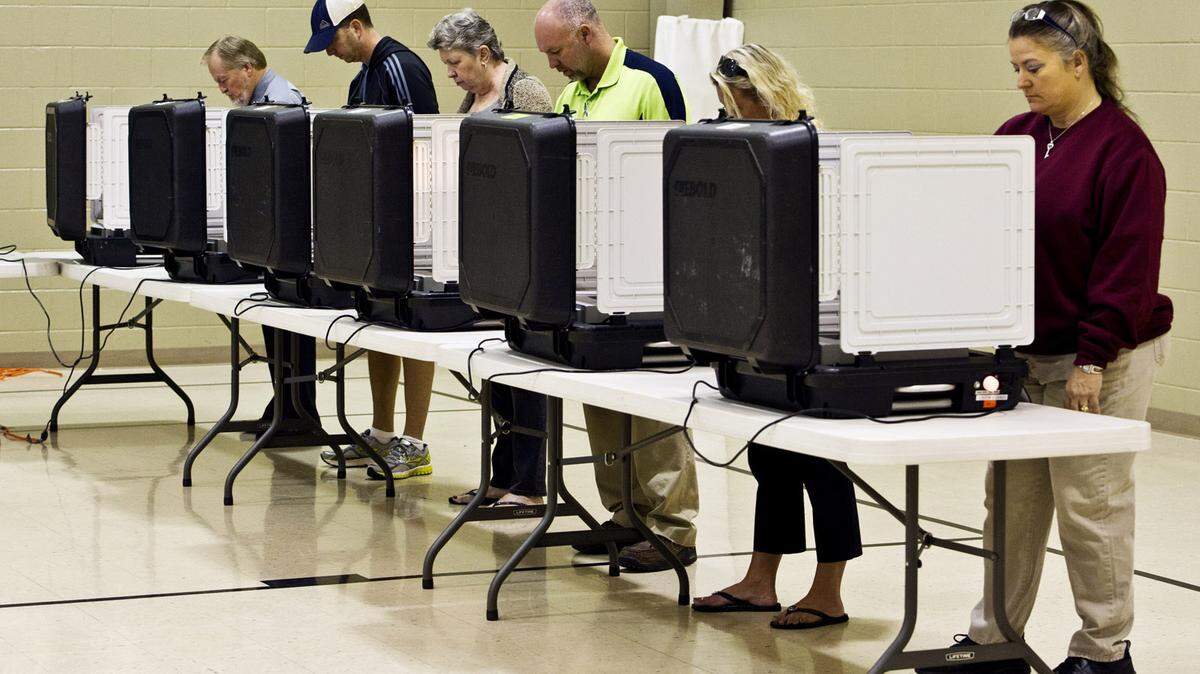
I was delighted to see that former Georgia Secretary of State Cathy Cox had a letter to the editor published last week on this page that was a direct response to my column on Georgia’s electronic voting system. If you haven’t read both my original column and Ms. Cox’s reply I encourage you to surf over to The Telegraph web page and check them both out. But in case you don’t have time to do that I’ll briefly summarize our exchange for you.
In my last column I waxed nostalgic about a simpler time for Georgia voters when we cast our ballots on paper, filling in circles with No. 2 pencils just like kids used to do for standardized testing in school. I went on to express serious doubt that the conversion to all-electronic voting that was accomplished in 2002 was actually an improvement to that old paper-based system, especially given the fact that the state government is now considering a return to some form of paper-based system because of long-standing security concerns inherent to all-electronic voting systems.
Ms. Cox (who oversaw the transition to electronic voting machines during her time as secretary of state) strongly disagreed with my column in her letter to the editor. She pointed out that Georgia lost 96,000 votes during the 2000 Presidential election due to faulty ballots when we were using the old electro-optical scan system. She also proudly stated that “national studies showed that Georgia moved from the second worst state in voter accuracy to second best” after electronic voting replaced the old paper-based system.
If you’ve been following the controversy over all-electronic voting systems that has been much in the news lately you probably recognized the Mack-truck sized hole in the former secretary’s argument. Bragging about the apparent accuracy of a voting system where votes are only stored electronically puts one on shaky ground, because without a paper trail there is no definitive way to verify that vote counts have not been corrupted in ways we will never know by things like software errors, hardware errors, and malicious hacking.
That lack of verifiability is currently the basis of a lawsuit that has been filed by a coalition of voters over the all-electronic voting system we have in Georgia, and it’s also the reason that current Secretary of State and gubernatorial candidate Brian Kemp is taking heat for failing to address the situation during his eight years in office. It’s only now, with the system being criticized publicly and the possibility of that criticism negatively impacting his run for governor becoming apparent, that Kemp’s office has begun soliciting proposals from contractors to change the voting system to one that will produce a paper trail.
As far as those 96,000 “lost” votes in the 2000 election go, it’s worth noting that most the problems with those erroneous ballots cited by Ms. Cox (selections being left blank, more than one selection being chosen on the same ballot item, unreadable ballots) can be attributed to carelessness on the part of the voter. So it’s fair to say that if a voter marked his or her ballot carefully there was an excellent chance that it would be properly counted under the old system.
It’s true that under the current system the chance of voters making careless errors like the ones cited in Ms. Cox’s letter were greatly reduced. The touch screen machines made the voting process virtually idiot-proof, and we all know that the number of idiots who show up at the polls wanting to vote is always quite substantial.
But it’s also true that the possibility that election results could be tampered with or bungled by a software glitch was also greatly increased by the change to all-electronic voting. I don’t believe it was a good tradeoff or a good use of taxpayer funds, and I stand by my preference for the old system or something similar to it.