
Color of skin, size of wallets creating widening gulf that’s hurting Macon-Bibb
If Macon-Bibb County was looking for an opportunity for some serious soul-searching, our debate over what services are worthy of our tax support provides it. Any doubt about the worthiness of this topic will be removed by the recent USA Today report on Macon’s concentrated poverty.
Once one of the leading cities of the Southeast, Macon is divided by a gulf that continues to grow, and we are paying a devastating price. Depending on your situation, Macon is a delightful place or a declining city where much of the populace sees little or no hope for a meaningful future.
Our educational opportunities, our recreational programs and facilities, our arts and entertainment resources, our superb public libraries, our medical facilities, other assets – not the least of which is our location – all say that Macon is a fabulous place. Yet there are also statistics that give us little cause to cheer.
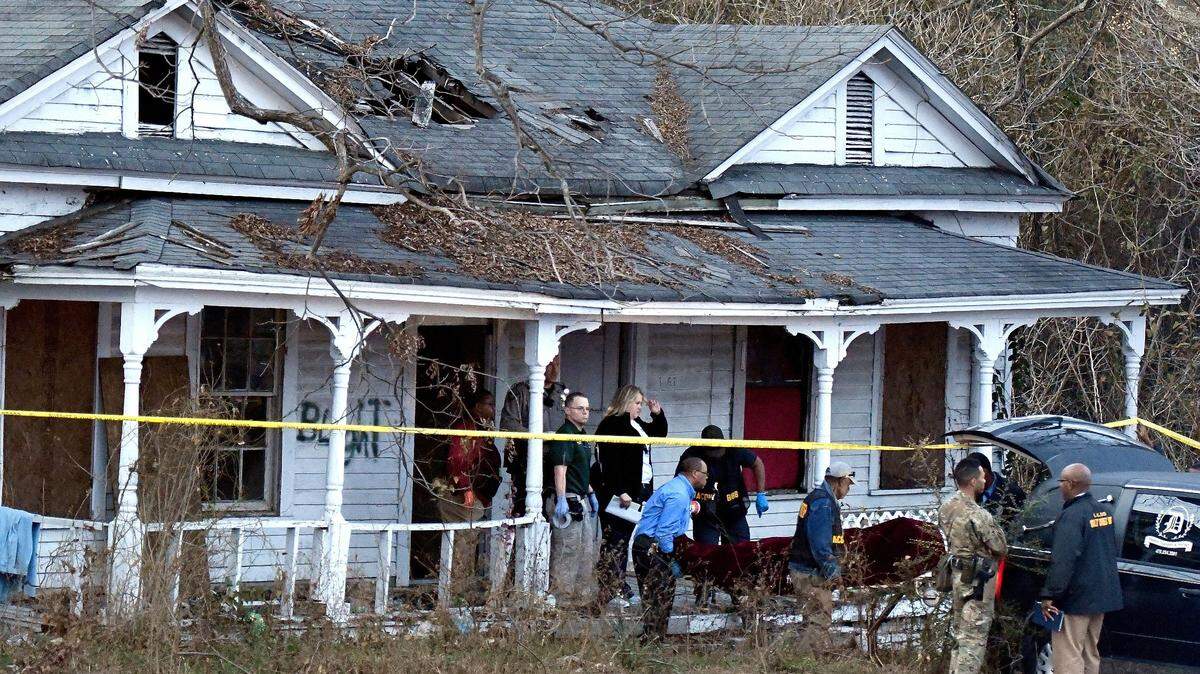
A recent study announced that Macon has one of the highest rates of obesity among America’s larger cities. Test scores in our schools aren’t what we would like them to be. There’s far too much crime, much of it violent. Blight is everywhere, even in the supposedly upscale neighborhoods, and the amount of litter is appalling.
While wonderful things are happening downtown and around Mercer University, even there urban blight continues its inexorable march. Between the Mercer campus and the nearby Central High School with its splendid International Baccalaureate Program there are falling-down and derelict properties likely to intimidate all but the most fearless parents.
Sheriff David Davis may have hit the nail squarely when he suggested a few months ago that the individuals who commit the self-destructive crimes that we read of daily suffer from depression – but it’s not just individual depression: entire neighborhoods seem to be afflicted.
Not only are businesses such as Target and Kroger gone, but organizations fundamental to our civic health have vanished. The YMCA and YWCA have been gone seemingly forever. The Macon Chapter of Prevent Child Abuse Georgia and the Suicide Prevention Coalition are also gone. Other dispiriting signs of large-scale depression are the incredible volume of litter, the trash cans and recycling containers that sit on the sidewalks for months at a time.
Even our chapter of Parents for Public Schools is gone. It was one of several past organizations – the most notable other one being Macon 2000, intended to build community “ownership” for public education – that arose in the hope of building a sense of social cohesion.
Many of our problems originated in the 1960s, when over a dozen private schools were created, often under the leadership of large churches and with the support of Macon’s rich and powerful.
The parents who support these schools today insist that racial considerations do not enter into their decisions and that their motivation is entirely the well-being of their children. Perhaps so, but the supporters of public education often ponder the possibilities had things been different. Many of the ardent supporters of public schools, while they work in Macon, now reside in the contiguous counties, where the county commissions support public education and the schools are not surrounded by blight.
One thing that I learned in the U.S. Army is that building esprit is the prime function of leaders. Some years ago, a pair of visionaries conceived of the “Love Your Neighbor” campaign. With radio jingles and bumper stickers, the idea was to encourage us to see our fellow citizens as children of the same God that created us all. This campaign had vast potential to bring harmony, and when we sadly look around at most of today’s churches and funeral homes, while knowing that the campaign was only partly successful, we realize that, it had the right idea. The solution to Macon’s woes lies at least in part in the spiritual realm.
While religion and spirituality are far from synonymous, it does seem unfathomable that a city known for its churches cannot come together to restore its future. As John Donne admonished humankind several centuries ago, “Send not to know for whom the bell tolls, it tolls for thee.”
I recall when the late Denmark Groover, a former member of the Marine Corps Black Sheep Squadron and someone who had been the governor’s floor leader when the Georgia state flag was modified to include the Confederate emblem, addressed the General Assembly in modern times and called upon the legislators to correct their earlier act of defiance. In doing so he died a hero many times over. Again, just this month, I read that Wesleyan College, shackled with traditions that celebrated a connection with the Ku Klux Klan, renounced those embarrassing views.
What about Macon? Are there lessons here for us? It is true that our political leaders have lacked vision. Vitriol has accomplished little. Do we have spiritual leaders who will step forward and restore Macon to its place as Georgia’s second city? We are famous for our church attendance, but where is our love for our neighbor? Do we really believe that our position in the hereafter will be determined by the size of our pocketbook? Or by the color of our skin?
All of us sometimes make bad decisions: The question is, do we have the moral courage to make amends and then do right? Do we wish to leave this corner of the world a better place? It would seem clear that our future hinges upon our answers. I submit that the solution to our woes has less to do with the size of our millage rate and more to do with the size of our hearts.