
Are you real? Is our world real? Hard to tell as nature of truth keeps shifting
It has been said that we are living in a "post-truth" age, and there is some evidence of that. And in many ways, we do live in a mind-affected universe.
No doubt the search for the nature of reality and truth probably goes back as far as when human creatures became thinking creatures.
This issue has certainly become part of the modern world. Artists and scientists and philosophers have explored it.
For example, the Italian playwright and thinker Luigi Pirandello (1867-1936) dealt with this in such plays as "Six Characters in Search an Author" and "Right You Are If You Think You Are."
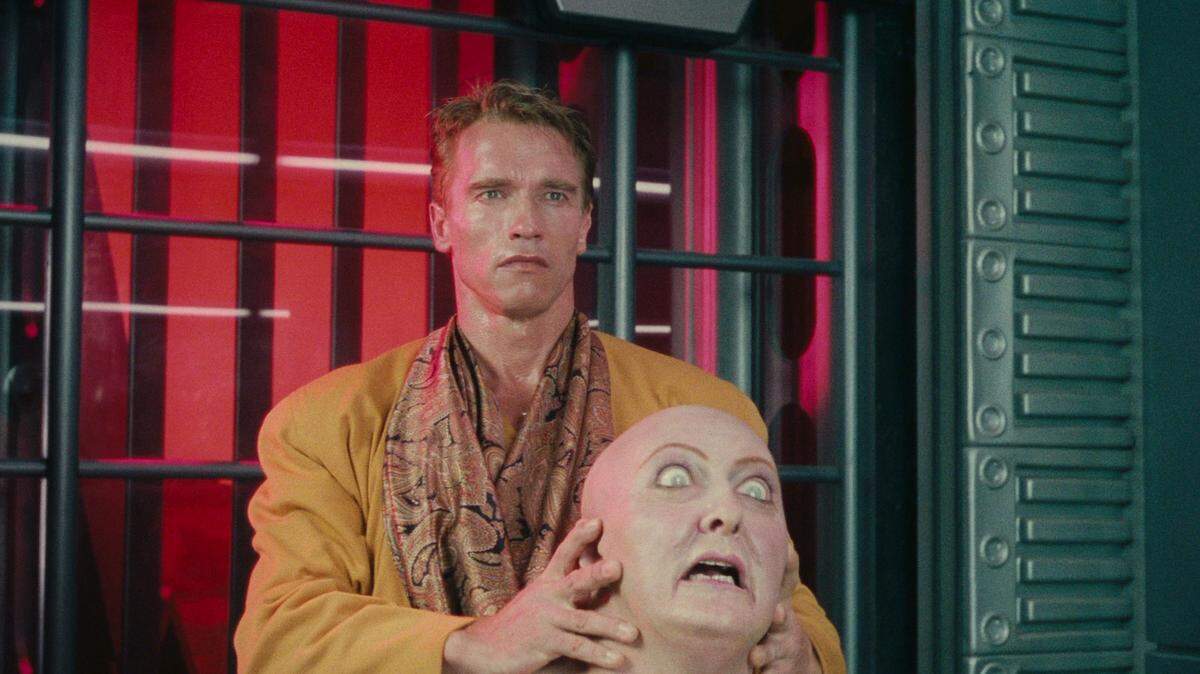
In the last century, Philip K. Dick (1928-1982), a writer of science fiction, often dealt with this theme in many of his works such as "Ubeck" and "We Can Remember It for You Wholesale" (which was the basis of the movie "Total Recall"). A number science fiction films have been based on his works, but they often only scratch the surface of the theme, and to get the full impact one needs to read the works.
These ideas have seeped into the visual arts starting about middle of the last century, infusing the work of many. (You could also check out quantum mechanics.) So why should we should be surprised that they have spread into our culture in general — including our politics.
Advances in technology have created an even more complex situation. Technology is always a double-edged sword. And as author William Gibson points out, "The street finds its own uses." (I remember reading some years ago an article that pointed out that one of the first applications when photography developed was using it for pornography.) This observation is certainly true of the internet. The internet is a marvelous tool for research and sharing information but it is also a source for spreading lies and vileness. Trolls abound!
One of the byproducts of the increased amount of accessible screen time in our age is the merging of reality with illusion. The world has become for many, not a real construct, but a game show. (How do you otherwise explain how a game show host became president?)
Throughout history, popular entertainment has reflected the truths of the age and shaped a version of that truth as well. This can be seen so clearly in the transition from Restoration Comedy of Manners to the Sentimental Comedy of the 18th century in England as power shifted from the aristocracy to the mercantile middle class. (My aunt was a great fan of soap operas, and as a loyal nephew I would often view them with her when I came to visit. The day I saw a ninja on a soap opera I knew they had arrived in America.)
There is perhaps some hope in Dick’s definition of reality: "Reality is that which, when you stop believing in it, doesn't go away." At some point, perhaps the alternate universe that The Donald has constructed, supported by his minions, will collide with the real world.
In his opening monologue in "The Glass Menagerie," Tom talks about the American middle class having its fingers pressed down on "fiery braille" of the economic reality.
Sooner or later, the American public, except for the most fanatic, must come to recognize that wishing it so does not make it so.
Charles J. Pecor is a retired academic living in Macon.