
In celebrating Macon’s first Black council leaders, we’re reminded to shape our future | Opinion
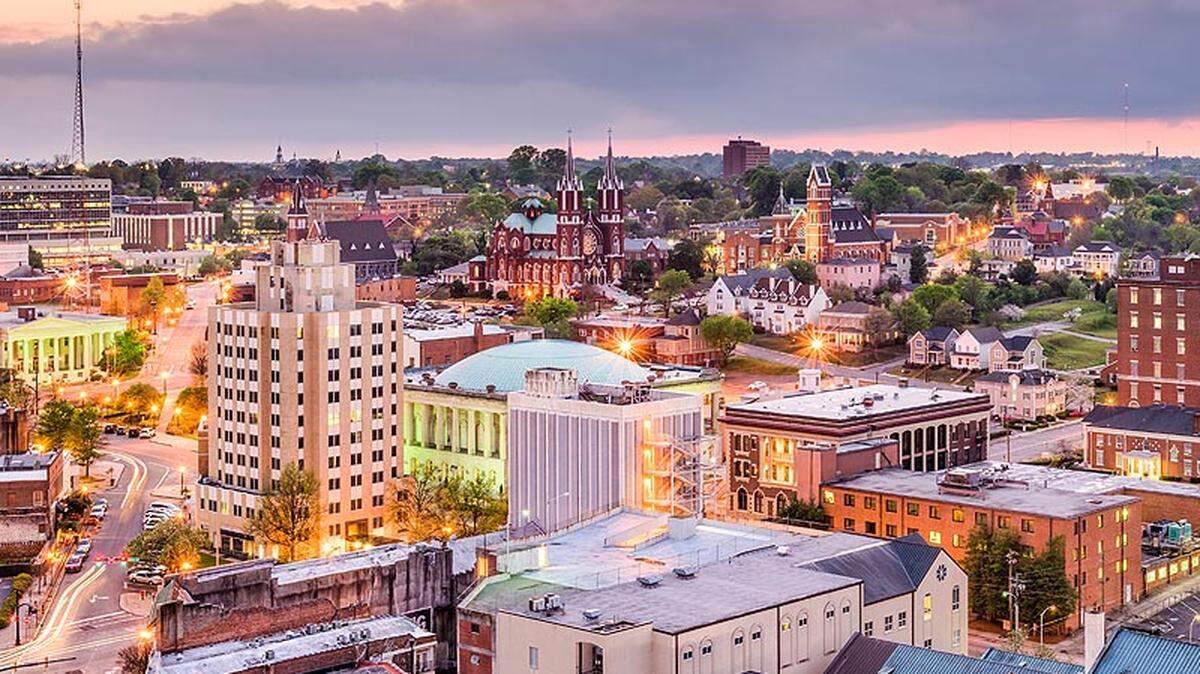
It seems like yesterday that Macon celebrated its 200th birthday, but already there’s another anniversary recently commemorated, and the Bicentennial gave it short shrift.
Just prior to Christmas, a pair of events occurred that remind us of the manner in which the happenings of today frame the future. Spurred by a book penned by Macon native Harold Michael Harvey, “Fantasy Five: An Unimaginable History — The Election of Macon’s First Black Councilmembers,” at least two recent events have celebrated this monumental event.
Author Michael Harvey has produced several books, the most famous of which is “Freaknik Lawyer,” the work that first brought Harvey to my attention. His latest work reminds us that it has been 50 years since the first African American was elected to Macon City Council. Harvey discusses this dramatic event and gives it not only context but spells out the manner in which it shaped the city in which we live today.
Most of the citizens alive today were not present when Black Maconites finally gained political power, and for many years I have contended that every home in Macon ought to have a copy of Andrew Manis’ “Macon Black and White.” But after reading a copy of “Fantasy Five,” I am inclined to add that narrative to the shelf. The Harvey work clearly acknowledges the uncanny way in which the future evolves from the deeds and actions of the present.
The event at the heart of Harvey’s book did not take place until 1975 (leading up to five Black council members joining the 15-member city council). As it happened, at that time Harvey was working as a reporter for Alex Habersham’s “The Macon Courier.”
Harvey begins his story as far back as 1823, a time when the enslaved outnumbered the enslavers and gives extensive coverage to the role of Henry McNeil Turner in local history. Harvey also excels at explaining how the Fantasy Five came to occupy their position and why “fantasy” does seem to be the operative word.
At the 50th anniversary ceremony in City Hall, Mayor Lester Miller presented proclamations to the families of the original five, and later that day a large commemorative luncheon was held at the Tubman Museum, an event that gave many people connected with the rise of Black political power in Macon a platform on which to speak. As I listened to these remarks I couldn’t help but feel that this event, like Harvey’s book, deserved far wider exposure than it was receiving.
At the end of Harvey’s work, he comments on the state of Macon today. Some of those who struggled for the betterment of the city back in 1975 are still at work, most notably my long-time neighbor Henry Ficklin and Alex Habersham. Others from that time are well-remembered: Tom Jackson, David Carter, William P. Randall, Buckner Melton, Willie Hill, Bill Barnes, Robert Brown, Mary Wilder, Delores Brooks, Delores Cook and Eddie D. Smith.
At the very end of his book, the author reflects on some of the extraordinary happenings that he witnessed, assesses the state of the city today and points to the needs of the future.
Early in “Fantasy Five,” Harvey quotes the famed W. E. B. Dubois. I will repeat his words here: “The past is the present, that without what was, nothing is, that, but for the infinite dead, the living are but unimportant bits.”
Harvey is reminding us that today we are shaping our city’s future.
Larry Fennelly can be reached at larney_f@hotmail.com.