
Macon’s downtown had a brush with death. Now it’s resurgent | Opinion.
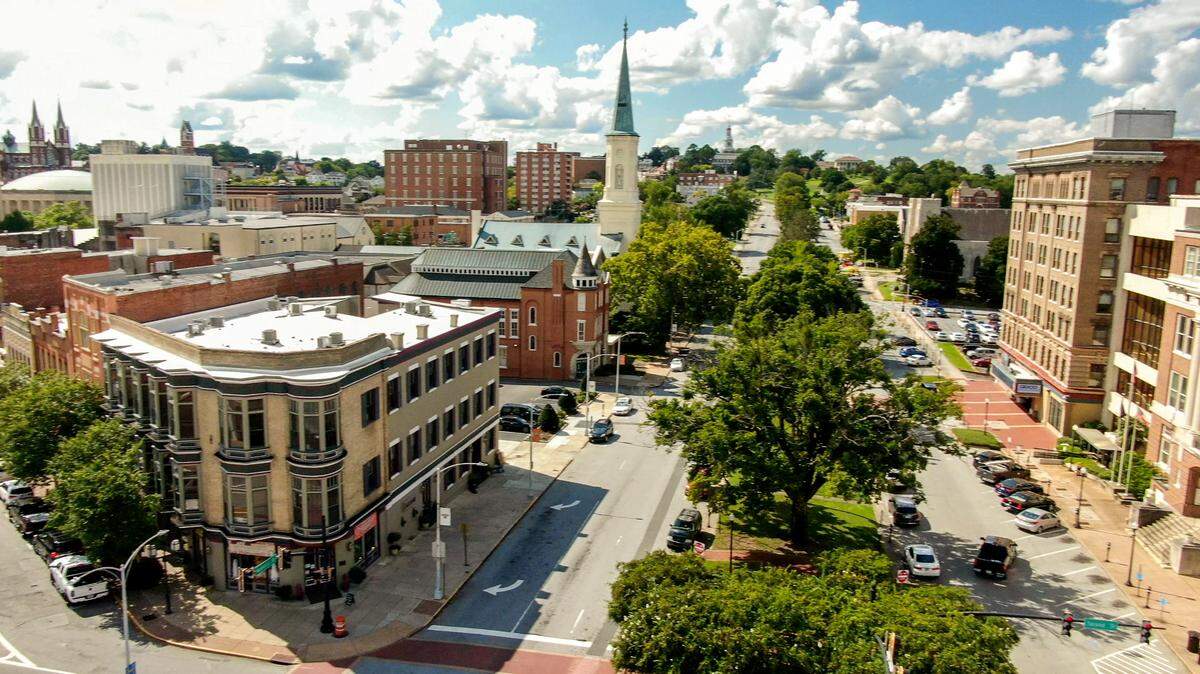
Driving to the funeral of an old friend one day recently, I noticed a vehicle painted to promote the Visit Macon organization.
“Where soul lives,” the lettering proclaimed. I would have added “and more.”
When my deceased friend and I arrived in the early 1970s, a time when the battles over desegregation had barely ended, the grand old homes lining College Street and Orange Street had largely been abandoned and divided into apartments. The downtown business district had been vacated when the Macon Mall arrived. People went so far as to say that downtown – both the businesses and residential areas – was dead. Another blow would have brought the area to its knees. Then, several dramatic events occurred.
In the wake of desegregation, a diverse group of progressives, concerned that the city’s only community theater (at that time) welcomed solely white patrons, banded together to create a new group in the old library on Mulberry Street. While the venture was short lived, it paved the way for yet another progressive theater company, this one led by Jim Crisp, a man of enormous talent who still exerts great influence in our city. Crisp’s establishment of Theatre Macon in the renovated Ritz Theatre on Cherry Street was an epoch-making event that eventually led to the downtown renaissance, complete with the opening of a multitude of restaurants.
The last piece – the capstone, if you will – came in the late ‘70s, when the city concluded that the abandoned historic Douglass Theater should be replaced by a parking deck. A group of foresighted citizens led by one Gus Kaufman intervened just hours before the wrecking ball was slated to arrive, although the adjoining hotel, built to house African American performers unwelcome elsewhere, was not so fortunate. Today the theater is home to a profusion of films, dramas and lectures.
But that was not all. The Rev. Richard Keil, at that time pastor of the racially diverse St. Peter Claver Church, realized that Black culture was but poorly recognized in the community and launched an effort to create the Harriet Tubman Museum. From a modest beginning on Walnut Street, this handsome facility has grown enormously and relocated to Cherry Street.
The Intown Neighborhood, once struggling, was revitalized when the community rose up in alarm at the Board of Education’s proposed closing of Alexander II Elementary. Instead, the magnet school adjacent to Mercer University and Tatnall Square Park was renovated and expanded, becoming one of the most sought-after schools in Macon.
More recently, there has been a move to elevate the Ocmulgee Mounds National Historic Park. Concurrent with that effort, a large amphitheater has opened on the site of the old Macon Mall, and what was once a department store is a huge pickleball facility. What’s more, just this year the Otis Redding Center for the Arts opened. More is coming.
In short, after a brush with death, Macon is doing splendidly, although still handicapped by the residual effects of the dozen or so private schools created during desegregation (compare Bibb with nearby Houston County, which focused on fortifying its public school system).
The rest of the nation has recognized the wondrous things occurring in Macon, and with four institutions of higher learning offering “town and gown” programs, I’m not surprised when I meet people who have moved here to spend their golden years at Carlyle Place, Watercrest and other such impressive facilities.
Our recent celebration of the city’s 200th birthday, looking back 12,000 years, was at times difficult. Yet it forced us to embrace the warts of our past and transform them into diamonds. Today Macon’s soul sparkles.
Contact Larry Fennelly at larney_f@hotmail.com