
4-foot long lizards are terrorizing some GA communities. Here’s what to do if you see one
.jpg "File photo: An adult black and white tegu lizard.")
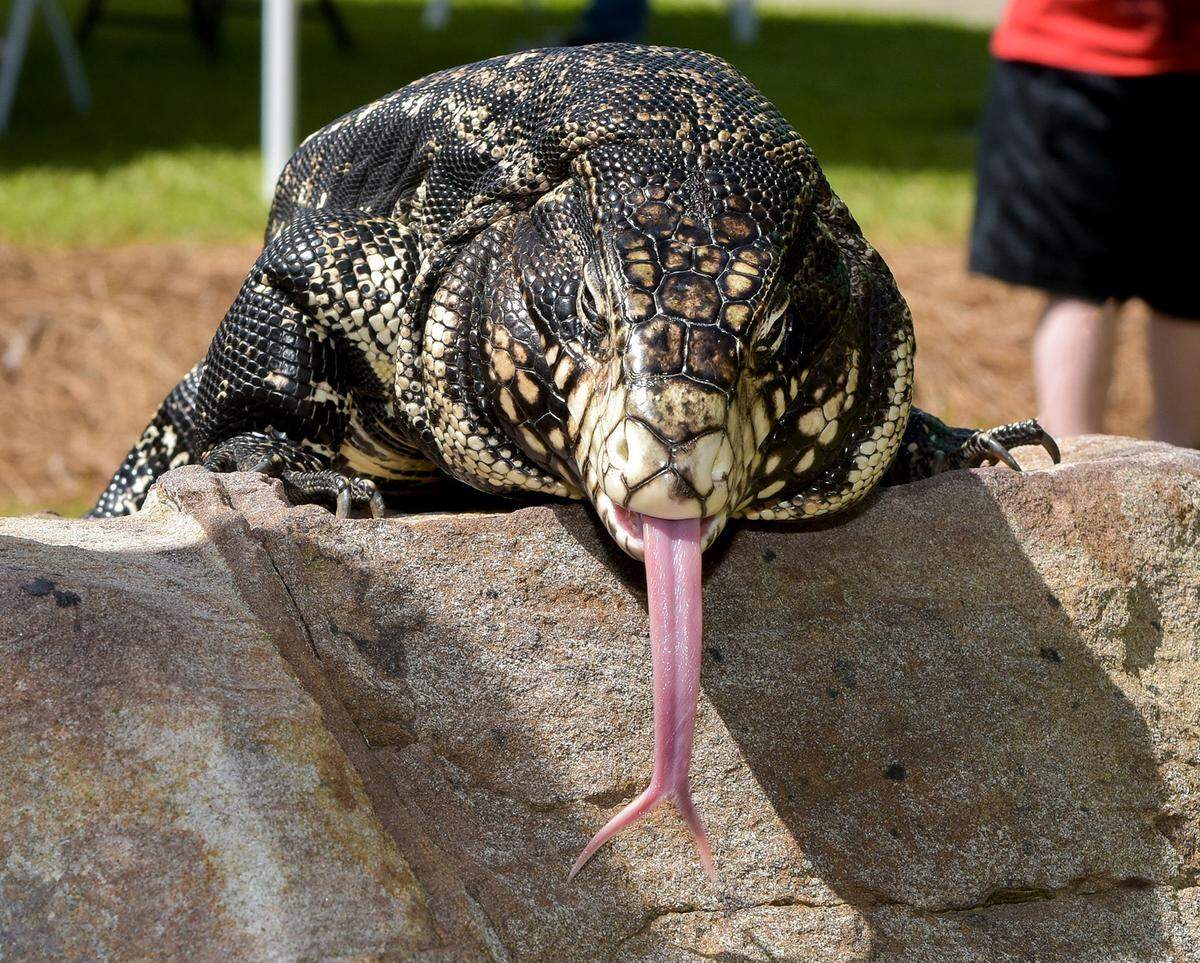
A 4-foot, 10-pound lizard is eating its way through southeast Georgia. It’s raiding chicken coops, threatening protected wildlife and setting up permanent residence.
The Argentine black and white tegu (Salvator merianae) has established a wild population in some Georgia counties, and state wildlife officials are asking the public to help stop it from spreading farther.
What is it, and how did it get here?
This scary critter is not a Georgia native, and, in fact, it was never supposed to be here at all.
What it is:
- Largest of all tegu species
- Native to Brazil, Paraguay, Uruguay and Argentina
- Weighs an average of 10 pounds
- Lives 20 years
- Grows up to 4 feet long
- Hatchlings have a distinctive bright green on their heads.
How it got here:
The Department of Natural Resources (DNR) can’t definitively say how tegus arrived in Georgia, but it was likely a captive animal that escaped or was intentionally released.
- Popular in the exotic pet trade
- Wasn’t added to the restricted wild animal list until 2022
- DNR began investigating reports in Toombs and Tattnall counties in 2018.
Why are the tegus such a big problem?
Tegus aren’t just big and scary; they’re actively destructive to Georgia’s native ecosystem.
They are known to:
- Eat the eggs of ground-nesting birds, including quail and turkeys
- Raid the nests of American alligators (a protected species)
- Eat the young of Georgia’s state reptile, the gopher tortoise
- Go after whatever is available to them, including backyard chickens, garden fruits and vegetables, pet food, carrion and insects
- Possibly spread exotic parasites to native wildlife and cause bacterial contamination of crops.
- Carry salmonella
- Reproduce prodigiously. Females can lay about 35 eggs per year and reach reproductive age quickly.
- Be more cold-tolerant than other reptiles, threatening pervasive spread.
What to do if you spot a tegu in the wild (or in your yard)
Prevention is the best way to protect your home or yard, so prepare it in advance.
Reduce attractants:
- Keep pet food inside.
- Fill in burrow holes.
- Clear brush piles and debris from your yard.
How to report a sighting:
- Note the location.
- Take a photo if you safely can.
- Report any sighting, (alive or dead) online, by phone at (478) 994-1438, or by email at gainvasives@dnr.ga.gov.
_Credit%20required%20for%20use.jpg "Photo_Argentine black and white tegu (Dustin Smith)_Credit required for use.jpg")
Important information for encounters:
- They can be legally trapped or killed year-round on private property with landowner permissions.
- The DNR can work with landowners (in some counties) to provide a live trap, instructions and monitoring support, but a photograph to confirm the sighting is needed first.
- Do not attempt to handle one. They will defend themselves, and they can react fast, lash with their tails and bite with strong jaws and sharp teeth.
- It is illegal in Georgia to own a tegu as a pet unless it was registered with DNR and tagged before Dec. 4, 2023.
- Importing and breeding them is also banned.
These reptiles are wreaking havoc on some Georgia communities, so it’s imperative you follow all guidance and advice from wildlife experts.
This story was originally published May 16, 2026 at 6:00 AM with the headline "4-foot long lizards are terrorizing some GA communities. Here’s what to do if you see one."