GA flu hospitalizations, deaths rage as illness reaches peak activity. Should you wear a mask now?
.png "Flu cases rising across the U.S.")
Winter is here and so is peak flu season.
Historically, flu season outbreaks are the worst between December and February, and this season is no exception to the pattern.
The Centers for Disease Control and Prevention (CDC) is currently tracking flu cases across the country and data is showing a significant increase in the last two weeks.
Here’s what to know about flu cases in Georgia:
Is the flu severe in Georgia right now?
Currently, the CDC placed Georgia in the highest possible level of flu activity, with surrounding states like South Carolina, Tennessee and Alabama reflecting the same.
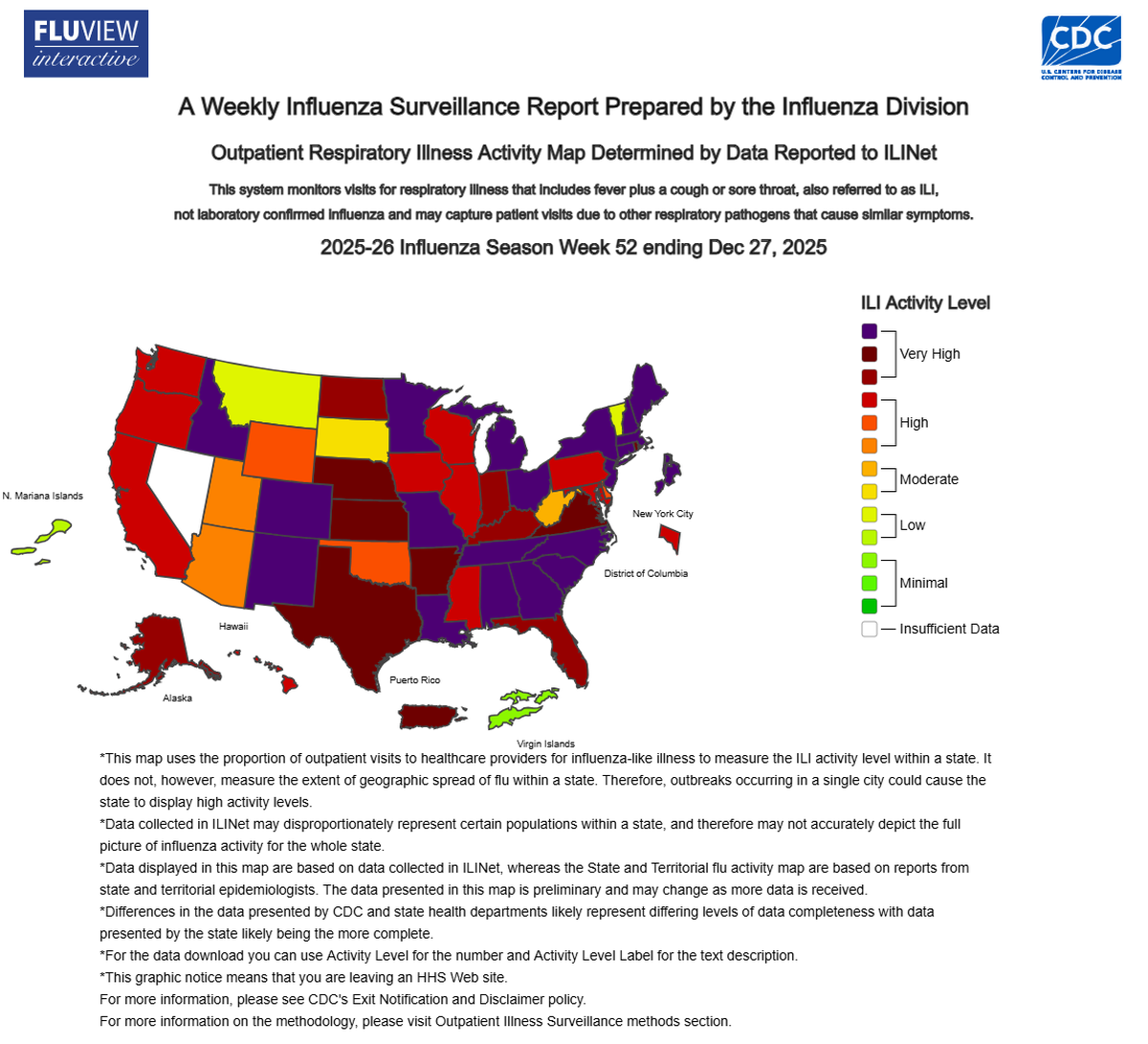
According to the Georgia Department of Public Health’s data, flu hospitalizations rose from 317 to 511 in the last two weeks. Flu deaths also saw an uptick from two to seven in the last two weeks, with a total of 29 deaths since October 2025.
What you can do to prevent the flu
The flu vaccination is recommended for anyone over the age of six months, especially those who are at a higher risk (elderly people or immunocompromised).
“It takes about two weeks after vaccination for antibodies that protect against flu to develop in the body, so now is the time to get a flu shot. Even if you get the flu, the vaccine can help prevent severe illness, hospitalization, and, in extreme cases, death,” as stated on the Georgia Department of Public Health website.
Other than getting vaccinated, here are some other tips to protect yourself this flu season:
- Wear a mask: Although there are no strict mask guidelines for the flu, healthcare workers are urged to wear a mask when handling sick patients. Additionally, postpartum women are urged to wear a mask when nursing an infant if they have flu symptoms. “Wearing a mask is an additional prevention strategy that you can choose to further protect yourself and others. When worn by a person with an infection, masks reduce the spread of the virus to others. Masks can also protect wearers from breathing in infectious particles from people around them,” said CDC experts.
- Cover coughs and sneezes
- Wash your hands often with soap and water.
- Avoid touching your eyes, nose, and mouth. Germs spread this way.
- Improve your air quality by bringing in fresh outside air, purifying indoor air, or gathering outdoors. Cleaner air can reduce the risk of exposure to viruses.
Do you have more questions? Let me know in the comments or email me at cmadden@mcclatchy.com