
Move over GA fireflies. Meet the state’s other more unique glowing critters
Georgia may lead the nation with over 50 species of fireflies (or as some say, “lightening bugs”) but these aren’t the only critters that light up.
Turns out, several local animals can glow, some flicker with bioluminescence while others shine under UV light.
Fireflies, of course
Among the 50 species, the most common in Georgia is the Photinus pyralis, or the common eastern firefly, says The University of Georgia Cooperative Extension.
Fireflies in particular are under threat from habitat loss and light pollution, sparking local conservation initiatives from groups like the UGA Cooperative Extension and EcoReach at UGA
Fun facts about the firefly:
- They aren’t a fly at all, but instead are nocturnal beetles.
- Their glow is a result of chemical reactions of substances like luciferase and luciferin.
- They start the evening flying low to the ground, but fly higher as the night gets darker.
- Flash patterns are unique to each species, with the eastern firefly’s flash being shaped like a J.
- Flashes can vary from yellow to green and their frequency depends on the weather
The Hawkinsville glow worm
Hidden underground, the Diplocardia longa, is sometimes called the Hawkinsville glow worm, because this species was first discovered by zoologist John Penny Moore in 1904.
According to Atlas Obscura, its translated name sounds like something the Creek would have used: “long two hearts,” since it is one of the longest annelids in the US.
Fun facts about the glow worm:
- When disturbed, it oozes a blue bioluminescent slime
- It can grow to as long as two feet
- It is one species of just a handful of glowing earthworms on Earth
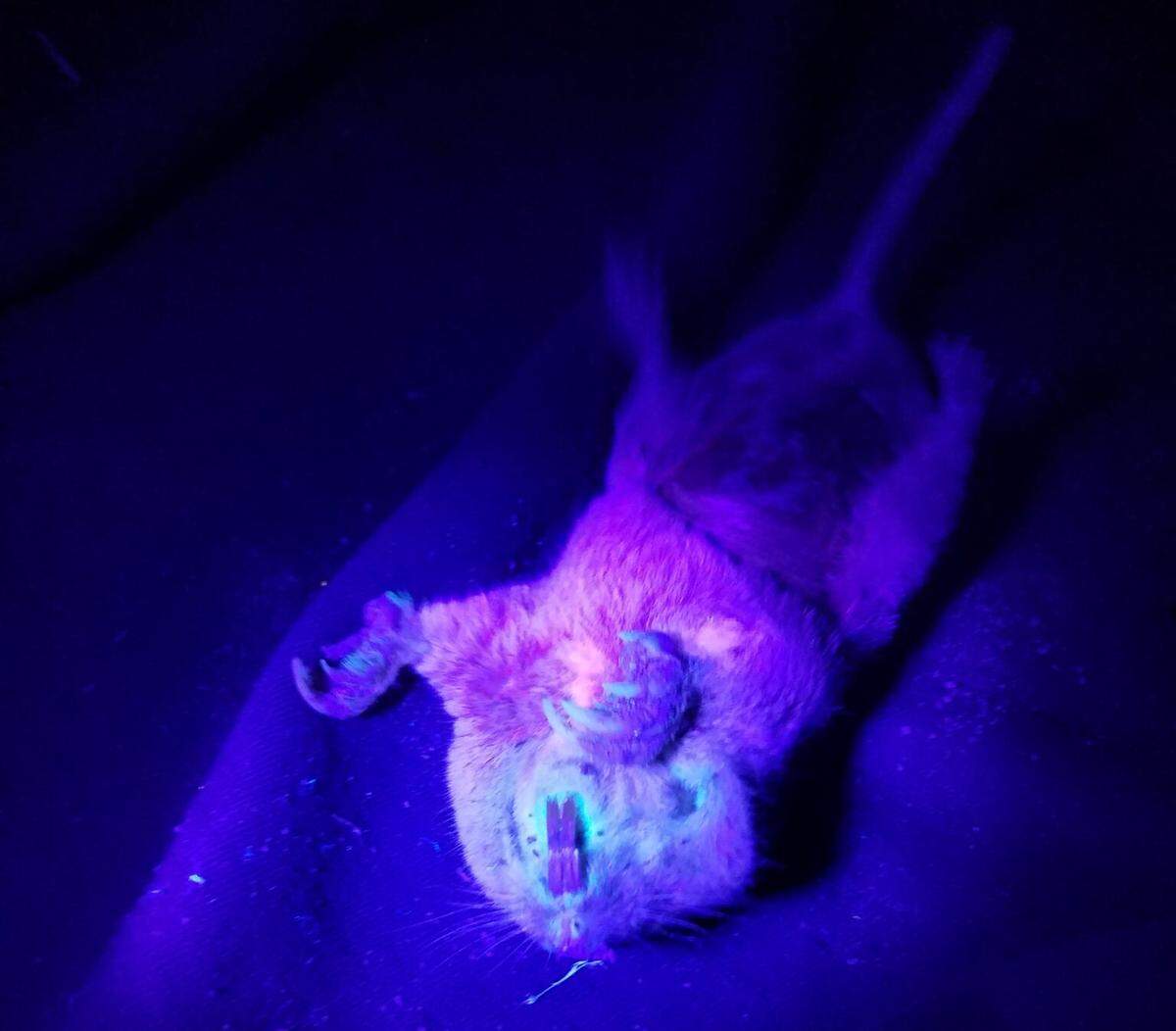
Glowing gopher
The southeastern pocket gopher ( (Geomys pinetis) doesn’t glow with a true light, exactly, but by biofluorescing under UV. Nicknamed “glow-phers” by the Georgia Wildlife Federation, they have also been described as “‘homely, belligerent sausages,’ and ‘angry russet potatoes that glow’.”
They live mostly underground and have evolved and adapted to accommodate that habitat.
Fun facts about the gopher:
- Sandy/loamy Coastal Plain soils are their preferred home.
- Using displaced soil from their tunnels, they can create mounds on the surface
- Because they engineer their surroundings they’re known as “ecosystem engineers”
- Their lips can close behind their teeth to keep dirt out while chewing
- One of only a few species of mammals that glow under light
Glowing jellyfish
Georgia’s coastal waters are home to a variety of jellyfish species, several of which exhibit bioluminescence. Scientists believe this glowing ability largely serves as a defense mechanism, startling predators or attracting even bigger predators to deter threats.
Georgia is home to moon jellies, cannonball jellies, sea nettles, sea wasp jellyfish and lion’s mane jellies.
Fun facts about jellyfish
- Jellies have no bones , brain, blood, teeth or fins
- Jellyfish pre-date dinosaurs and scientists think they’ve been around for 600 million years
- They are both predator and prey in the food web
- Many jellyfish together are called a bloom or a smack
- Dead jellyfish can still sting you
- Use salt water to rinse a sting. Urinating on it (or pouring fresh water) will only make it worse.
The glowing effects of some of Georgia’s critters isn’t just a cool perk of the state’s wildlife, they remind us of the region’s ecological diversity and richness. So, next time you’re out after dark, see if you can catch a glimpse of the light-up animals, and then send it to me.
Email me at srose@ledger-enquirer.com or find me on social media.
This story was originally published July 31, 2025 at 6:00 AM with the headline "Move over GA fireflies. Meet the state’s other more unique glowing critters."