
Here are the 3 stories to watch in coming months at the Georgia Public Service Commission
(Editor’s note: This story has been updated to clarify how commissioners on the Public Service Commission are elected.)
On issues of climate and energy, the most consequential decisions made by elected officials in Georgia often do not occur under the state legislature’s Gold Dome.
Those interested in the decarbonization of the state’s energy grid or in keeping citizen’s power bills in check tend to pay more attention to a five-member body across the street from the Capitol, which is charged with regulating Georgia Power Co., the privately-owned utility company that is granted a legal monopoly over much of the state.
In the coming months, the Public Service Commission will be at the center of a number of news stories that could dramatically impact both your monthly electricity fees and the future of Georgia’s role in mitigating climate change.
Here are three stories we’re watching.
How much will ratepayers foot the bill for Plant Vogtle?
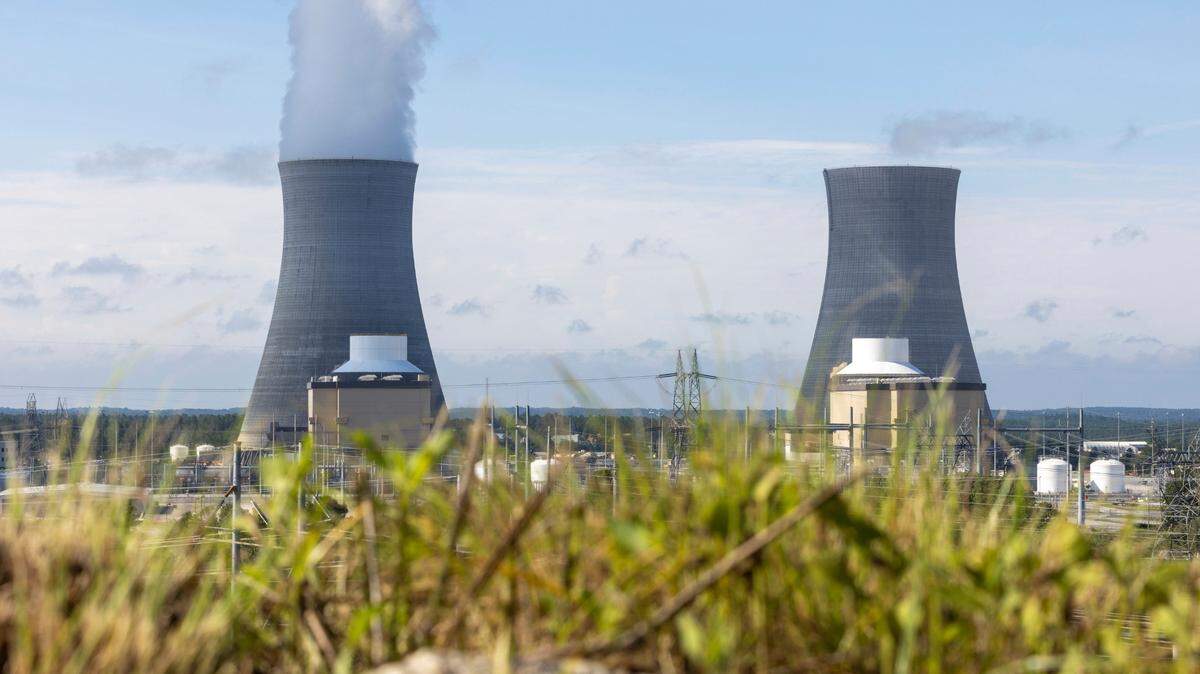
In July, the first of two new nuclear reactors at Burke County’s Plant Vogtle went online — but not after years of delays and budget overruns rendered them the most expensive infrastructure project in American history.
Plant Vogtle’s Unit 3 was the first new nuclear reactor built from scratch in the U.S. in three decades. Unit 4 is scheduled to go into service next year.
The runaway costs, which helped bankrupt the reactors’ builder, Westinghouse, are now the subject of a dispute before the PSC.
The question is simple: how much of the overruns should be borne by Georgia Power’s ratepayers, and how much by its corporate owner, the Southern Co.?
The commission held hearings recently on whether to approve an agreement reached in August between the utility, the Public Service Commission’s staff (who are distinct from the elected commissioners), and clean energy advocates.
That agreement would require the utility to pay for $2.6 billion of its share of the overruns, which is expected to exceed $10 billion.
The remainder — some $7.6 billion — would be paid out of customers’ monthly energy bills, which would increase by an average of 10% a month after Unit 4 is in operation.
The PSC will reach its decision Dec. 19.
A surprise request for a massive increase in fossil fuel generation
Normally, Georgia Power’s plans for changes to the energy grid are submitted on a three-year cycle, and deliberated by the PSC in a series of quasi-judicial hearings with expert testimony and cross-examinations.
The last such plan, known as an Integrated Resource Plan, was approved last year — but in October, the utility surprised observers by asking the commission to amend its most recent IRP in dramatic fashion.
Georgia Power is now asking for additional generation capacity of 17 times more electricity that it had initially requested and had approved in 2022.
The utility’s proposal would increase the new fossil fuel-generated electricity by 30% from the original plan, including an additional 1,400 megawatts of natural gas.
In its request, Georgia Power argued that the change is necessary because of an unforeseen growth in projected demand due to the large amount of new industry expected to move to Georgia in the coming years.
If the update is approved, “Georgia would go from having very little to no additional fossil capacity planned to one of the largest gas buildouts in America,” said Daniel Tait, an Alabama-based researcher at the Energy and Policy Institute, a utility watchdog. “It happened overnight.”
The PSC is scheduled to hold hearings on the proposed update beginning in January, before announcing its decision on April 16.
Rescheduled elections, after overturning of a Voting Rights Act decision
Elections for two of the five Public Service Commissioners were suspended last year after a U.S. District Judge ruled that the structure of the commission’s elections unlawfully diluted the voting power of Black citizens of Georgia.
This ruling was reversed by an appellate court on Nov. 24.
In the current system, commissioners are required to live in one of the five districts but are elected statewide. This was to ensure that South Georgia always got at least one representative on the PSC.
This means that, regardless of the demographic makeup of a given district, the statewide numerical majority of white voters makes it unlikely for Black voters to elect their candidate of choice.
In the PSC’s 100-year history, just two Black people have sat on the commission — and both were appointed to their seats by the governor to fill vacancies.
After last month’s court ruling, it is up to the state to decide when special elections will be held.
But some advocates have noted that, until those elections occur, two of the PSC’s members are holding seats beyond the expiration of their term in office — and making consequential decisions despite being technically unelected.
In October, two environmental groups, Nuclear Watch South and Georgia WAND, filed a petition asking the commission to postpone the vote on the Plant Vogtle cost recovery until after those elections are held.
The commission did not do so.
This story was originally published December 15, 2023 at 9:52 AM.