
Sturgeon tagged 14 years ago recaptured in Georgia river. And it was double the size
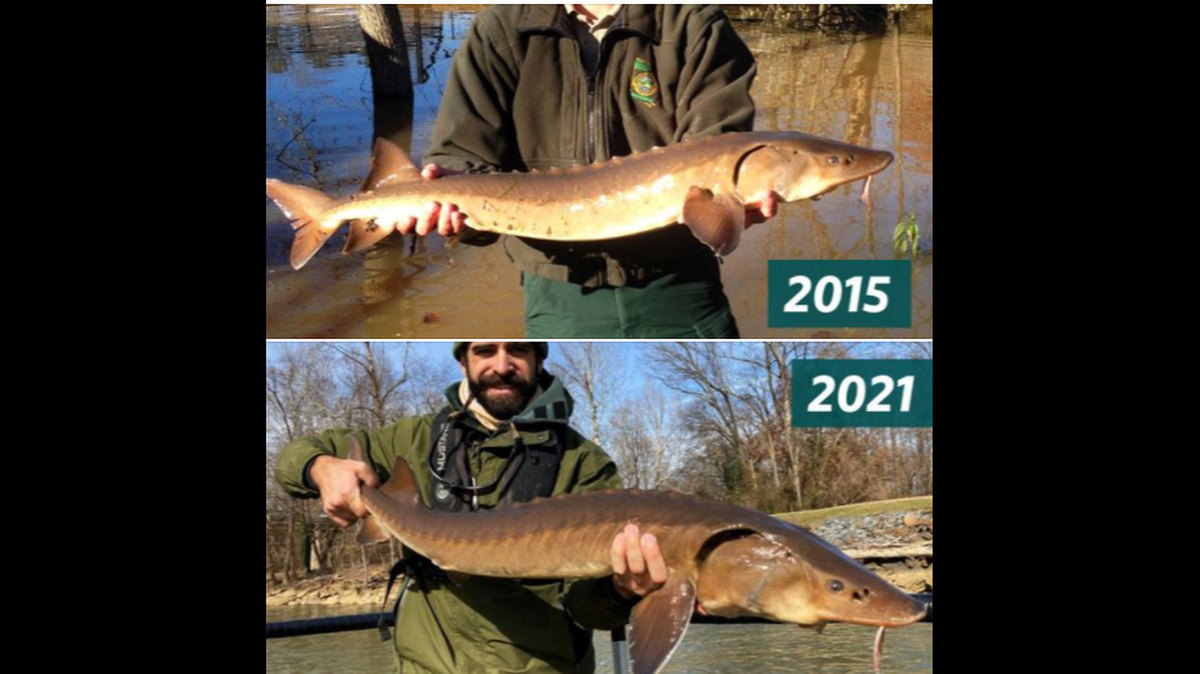
The world’s unluckiest lake sturgeon has been caught for the third time in 14 years, providing Georgia wildlife officials with a rare opportunity to see how fast the prehistoric species can grow in the wild.
In this case, the fish was tagged by researchers in 2007 at 22 inches and just over a pound, the Georgia Department of Natural Resources revealed in a Jan. 24 Facebook post.
“During our latest encounter on the Coosawattee River, the fish had grown to 42 inches and 13.4 pounds!” the department said.
So, the fish nearly doubled in length and gained just under a pound a year.
It marked the third time the fish found itself in the hands of state researchers. In 2015, it was rescued after being “found trapped within the old historic lock at Mayo Lock and Dam Park in Rome during a flood event,” the department wrote. “Biologist John Damer netted the fish out of the lock, and safely returned it to the Coosa River.”
Much is unknown about lake sturgeon in Georgia, because the species all but vanished in the state during the 1960s, experts say.
The Georgia Department of Natural Resources has been trying to reintroduce sturgeon to the Coosa River system since 2002, and has made it illegal to harvest the species until it is firmly reestablished. State biologists say “the fish suddenly disappeared” more than 50 years ago due to a combination of factors, including dams, over fishing and pollution.
Old photos indicate sturgeon in Georgia grew to a maximum of about 40 pounds, but most found today weigh less than 20 pounds, the state says. The biggest caught in the state since reintroduction began was 19 pounds in February 2020 on the Etowah River, the DNR said. Records show it had been 2 pounds when tagged in 2006.
“Generally speaking, sturgeon are an ancient group of fish that date back to the age of the dinosaurs,” the DNR reports. “One lake sturgeon on record lived to be 154 years of age and another tipped the scales at 310 pounds. Both these records were from northern states in the early 20th century and few, if any, such fish exist today.”
This story was originally published January 25, 2021 at 2:34 PM.