
‘Unconvinced ... that politicians care.’ Why Hispanic voter turnout was low in Macon primary
Reality Check is a Telegraph series digging deeper into key issues and focusing on accountability. Have a suggestion for a future story? Email mynews@macon.com.
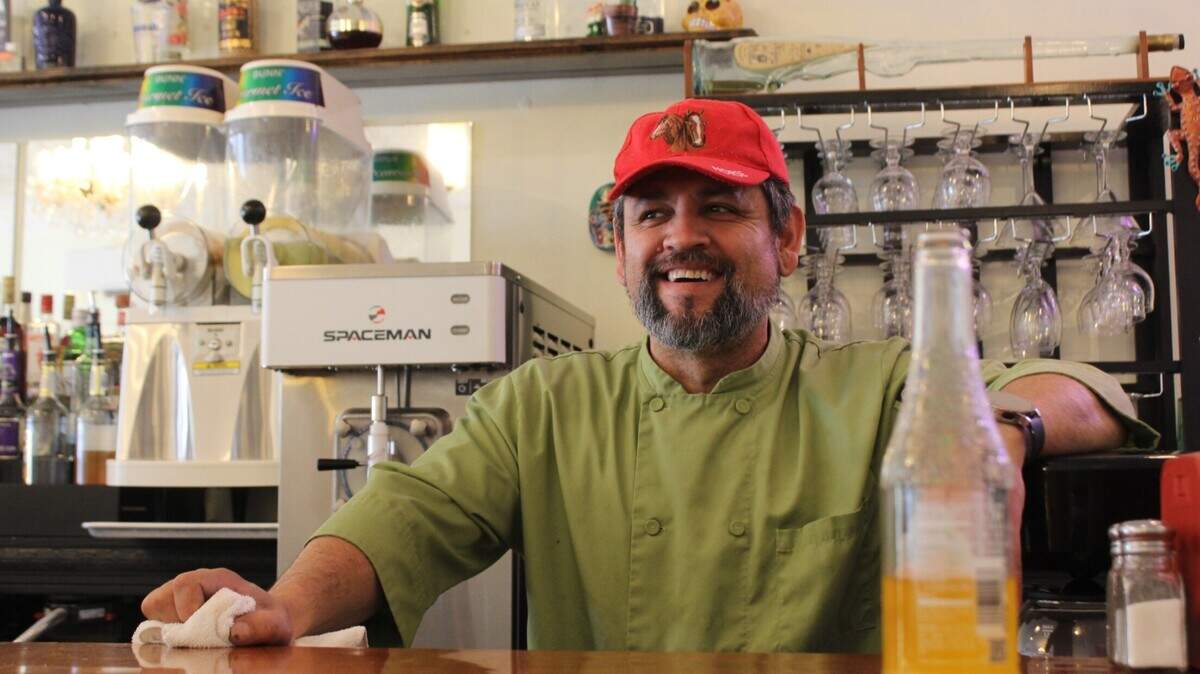
As Daniel Figueroa stands behind the bar counter on a slow Thursday afternoon at Three Countries restaurant in Macon, he’s honest about why he doesn’t vote, and he’s not alone among the city’s Hispanic population.
For one, he’s too busy working.
“In the morning time I’m a mechanic Monday to Friday, and after that I come here (to Three Countries) to help my mom out,” said the Georgia native. “When I test out the cars, I see the ‘where to vote,’ signs … I just don’t have time to go. I have to support my family.”
For two, “it’s not a priority” when there are other issues to worry about, Figueroa said.
Plenty decided not to vote in the May primary, which saw an overall turnout of just 19.2% and an even lower turnout for Hispanic voters, according to Macon-Bibb County Election Supervisor Thomas Gillon.
“I’d assume the number (of Hispanic voters) was relatively small,” Gillon told The Telegraph, though he’s not sure how small because his office had limited access to demographic records of voters after the county’s network was breached May 11.
While work and other priorities can get in the way of voting, some Hispanic voters don’t feel like politicians are speaking to them in their campaigns or in their work.
A common misconception about Hispanic voters, according to Clarissa Martinez De Castro, vice president of Latino Vote Initiative, is they are “apathetic toward politics.”
“Some of our folks are unconvinced right now that politicians care about them. Others may not know how to go about voting,” Martinez De Castro said. “So the approach and invitation to be part of the process is important.”
Only 3.7% of Macon residents are Hispanic, according to the U.S. Census Bureau.
A lack of civic engagement is usually linked to insufficient outreach from candidates and political parties, Martinez De Castro said.
Two-thirds of Latinos in Georgia reported they were not contacted and asked to register to vote, according to a 2023 survey of 500 people by Galeo, a Georgia-based Latinx political advocacy group.
“If you’re a candidate, you tend to look for the people who always vote,” said Martinez De Castro. “Very seldom are they going to look at actually going out and finding new voters, meaning investing in voter registration.”
Most candidates invest in voters who voted in three or four recent elections, and they very rarely contact voters who only cast a ballot in one or two recent elections, she said.
Mexican immigrant always votes. But he sees roadblocks
Mario Barragan, a chef at Tzango Mexican restaurant on Second Street and Mulberry Street Lane, hasn’t missed an election since he began voting in 1997 – the year he was granted U.S. citizenship after emigrating from Mexico about 20 years prior.
Barragan said it was not difficult to register to vote because he is bilingual and learned about the election process in school. But he thinks Macon officials have not provided enough outreach to Hispanic and impoverished people on how to register to vote.
“I don’t think they are even campaigning for the normal, average person … regardless of race,” Barragan said. “They should also reach out to people that have low income levels, not necessarily on an ethnic perspective.”
Like Barragan, the majority of Latinos “think it is important that they build coalitions and work with other minority communities,” the Galeo study found.
Figueroa’s reasoning that he’s too busy may be a viewpoint that others in the Hispanic community share. Latino men in Georgia have higher labor force participation rates than men of other races, according to the University of California, Los Angeles’ Latino Policy and Politics Institute. Latina women have the second-highest participation rate.
Figueroa’s mother, at Three Countries, was granted legal residency after moving to the U.S. from Mexico, is unable to vote until she receives legal citizenship status.
Even so, Figueroa, leaning over the bar top at the Cuban-Mexican-American restaurant on Spring and Walnut streets, explained that voting “is not a priority for us.”
“I just go with the flow,” he said.
Many are just trying to survive day-to-day.
The Galeo survey found over half of Hispanic Georgians had to postpone medical or dental care, and almost half delayed paying their bills. One-third had to move to a cheaper home or apartment in 2023.
Martinez De Castro suggested local organizations and news outlets should bring more awareness to evolving voting restrictions in Georgia. News outlets such as NotiVisión and ¿Qué Pasa? or “What’s Happening?” translate and cover issues impacting central Georgia’s Hispanic community, but the chef argued larger outlets were lacking.
“You start seeing a bunch of legislation trying to restrict vote by mail, or a lot of myths and disinformation trying to seethe doubt in people about trusting the process of voting by mail,” Martinez De Castro said. “Maybe some of the larger outlets can partner with the small ones to put this information together, get it translated and make it more available to navigate.”
‘You just have to figure it out on your own’
The national website to vote, Vote.gov, offers translations in English, Spanish, Chinese, French and other languages and dialects.
Kike Fuentes is a Warner Robins resident and the DJ for Latin Nite at Late Nite club in Macon. Fuentes also is owner of Radio Rumba, “Tu Voz Latina,” or “Your Latin Voice,” a statewide radio station dedicated to Latin entertainment and culture.
Fuentes was born in Mexico City and became a U.S. citizen in 2019. He found it difficult to stay civically engaged after his citizenship ceremony in Atlanta.
“After you finish the ceremony, there’s actually people right there telling you how to vote … but of course I don’t live in Atlanta. So when I came to more rural areas down here, it’s kind of hard to figure out what’s next,” Fuentes said. “There’s no follow up. You just have to figure it out on your own.”
Retrieving information about candidates was “probably the biggest hurdle,” he said.
Resident says Macon mayor, others don’t represent Hispanics
Fuentes said Hispanic people in Macon have been underrepresented by Macon officials and in local media outlets.
“I would like to see more stories in Spanish. It is hard in rural communities, like (Warner) Robins or Macon, because there’s a lack of information … and also media that are bias toward one type of Hispanic,” Fuentes said, noting that the majority of Hispanic representation in Macon is Mexican, but others are left out.
Fuentes said he is “not satisfied” with how Macon Mayor Lester Miller supports Hispanic citizens.
Fuentes recalled an incident when he took on janitorial duties as an intern at a local museum. Fuentes said Miller treated him differently until he became more active in community affairs.
“He didn’t speak to me because I was a janitor, but then he saw me in a different environment not too long ago, because now that I have my master’s degree and do a lot of things for the community, and he was just the nicest guy ever,” Fuentes said. “I’m like, nah bro. I’m sorry but it doesn’t work like that… It’ll take more than that to get a vote.”
Amy Morton, campaign manager for Macon-Bibb Mayor Lester Miller, said the mayor connected with Hispanic voters during the 2020 and May 2024 primary elections.
“My experience with Mayor Miller is that he has been very proactive in building a diverse coalition who support the vision for Macon that provides opportunities for everyone,” Morton told The Telegraph.
During Miller’s campaigns, he met with voters first-hand, and campaigned through digital media outlets ¿Qué Pasa? and NotiVisión, Morton said. She also mentioned Miller helped organize Macon-Bibb’s Hispanic Festival.
“He initiated meetings with the Hispanic community to hear from them about how to best conduct outreach in that specific community, and has also received endorsements,” Morton said.
During the meetings, Hispanic voters expressed concerns about pandemic recovery, economic opportunity and public safety, which Morton said were the same issues facing most voters, regardless of ethnicity.
Morton said Miller’s campaign mail advertisements include Spanish and English translations; phone calls and other communications are translated as needed.
“He followed (Hispanic voters’) lead in terms of communication within that community to overcome language barriers, so that is something we pay attention to,” Morton said. “I think that every candidate, every campaign could do more of that.”
She addressed the nationwide deficit of outreach to Hispanic voters and minorities.
“It is very difficult because there is so much noise in the political environment, and sometimes just normal people who don’t eat, sleep and breathe politics just tune it out,” Morton said. “It’s really difficult to get them to pay attention and vote, because sometimes they feel their vote doesn’t matter. They don’t feel energized, and so that is a puzzle that campaigns across the country are trying to solve.”
Miller did not speak to The Telegraph directly for this story.
This story was originally published June 4, 2024 at 5:00 AM.